
When a procurement team receives hospital bed technical documentation from competing suppliers, the challenge isn’t finding specifications—it’s knowing which parameters predict real performance. Hospital bed specifications can list two dozen measurements and still leave a buyer uncertain about whether the bed will hold up after three years of continuous use. After nearly twenty years in hospital bed manufacturing, I’ve learned that the specifications worth scrutinizing first are rarely the ones printed on the front page of a brochure. Load capacity ratings, frame material grades, caster locking mechanisms, and panel thickness tolerances tell you more about real-world service life than any marketing claim.
What Hospital Bed Technical Specifications Actually Cover
A complete hospital bed specification document should address four distinct categories: dimensional parameters, structural materials, functional capabilities, and safety compliance data. Procurement engineers who treat all four categories as equally weighted often miss the fact that structural and safety specifications carry far more weight in determining total cost of ownership.
Dimensional specifications include overall bed length, width, height adjustment range, and individual section measurements for the backrest, seat, and leg panels. For the electric three-function hospital beds we manufacture at Yingyun Hardware, the standard dimension is L2170×W1030×H430mm with a height adjustment range of 430–840mm. These numbers matter most when matching beds to existing ward layouts and door clearances. Material specifications are where the durability story lives. The bed frame steel grade, panel material, and caster construction directly determine how many years the bed will perform under continuous load. Our beds use Liuzhou steel for the bed top and iron for the frame, with ABS or PP headboards and footboards. The guardrails come in aluminum alloy combined with iron.
Function specifications describe what the bed can do mechanically: backrest tilt angle (0–75° ±5°), knee board tilt (0–40° ±5°), and whether Trendelenburg and reverse Trendelenburg positions are supported. For electric beds, the motor count determines available functions—two motors control backrest and overall height, three add leg adjustment, and five-function beds add forward and backward tilt. Safety compliance specifications reference the testing standards the bed has passed. Most international tenders require IEC 60601-2-52 compliance for medical electrical equipment, and ISO 13485 for quality management systems in medical device manufacturing.

Understanding the full scope of a specification sheet requires knowing what each parameter means in practice. <What is an [Adjustable Hospital Bed](https://hospitalbedaccessories.com/product-category/hospital-bed/) and How Does It Work: A Comprehensive Guide> explains the functional configurations behind the specification numbers, covering how backrest angles, knee breaks, and height adjustments translate to clinical positioning that affects both patient recovery and caregiver ergonomics.
Structural Parameters That Determine Bed Longevity
If I had to pick one section of a specification sheet that separates a five-year bed from a fifteen-year bed, it would be the structural parameters. The bed frame is the skeleton, and the steel grade and tube dimensions determine whether the frame develops play in the joints after two years or remains rigid through a decade of patient transfers.
The bed top material is the first longevity indicator. Stamped steel panels made from quality-grade steel with a thickness of 0.8–0.9mm resist deformation under repeated loading cycles. We use willow steel for our stamped bed panels, available in configurations ranging from two-section single-crank designs to four-section multi-function formats. The difference between a 0.8mm panel and a thinner alternative becomes visible after roughly 18 months of use—thinner panels develop subtle depressions around the high-pressure zones where patients sit and transfer. ABS plastic panels offer an alternative with advantages in infection control because the non-porous surface resists bacterial colonization, but they require precise mold design to avoid stress cracking at mounting points.
The frame material grade matters equally. Most hospital bed frames use Q195 steel tube with wall thickness from 1.2mm to 1.5mm. A 1.2mm wall tube in a properly welded frame supports the rated 250kg load without issue. The failure point is rarely the tube itself; it’s the weld quality at the joints. A specification sheet that lists the steel grade but omits the welding standard is incomplete. Look for references to MIG welding with post-weld grinding and powder coating finish. The powder coating process itself is a durability signal—antibacterial powder coating using imported Aksu technology, which we apply at Yingyun, creates a surface that resists both corrosion and microbial growth.

Caster specifications deserve their own scrutiny. A bed with a 250kg load rating sitting on casters rated for 50kg each creates a weak point that manifests as caster deformation, locking mechanism failure, and uneven rolling within the first year. TPR (thermoplastic rubber) casters provide quieter operation and better floor grip than hard plastic alternatives. Central-locking systems should be tested under full load, not just when the bed is empty—I’ve seen locking mechanisms that engage smoothly unloaded but refuse to lock completely under a 180kg patient because the linkage deforms under weight.
Performance Testing Standards and How to Verify Them
A specification sheet that lists testing standards without describing the test methodology should raise immediate questions. The most relevant standards for hospital bed procurement are load capacity testing, cycle testing, and safety system verification. Each uses a specific methodology, and a manufacturer who cannot describe their testing procedure probably is not performing it systematically.
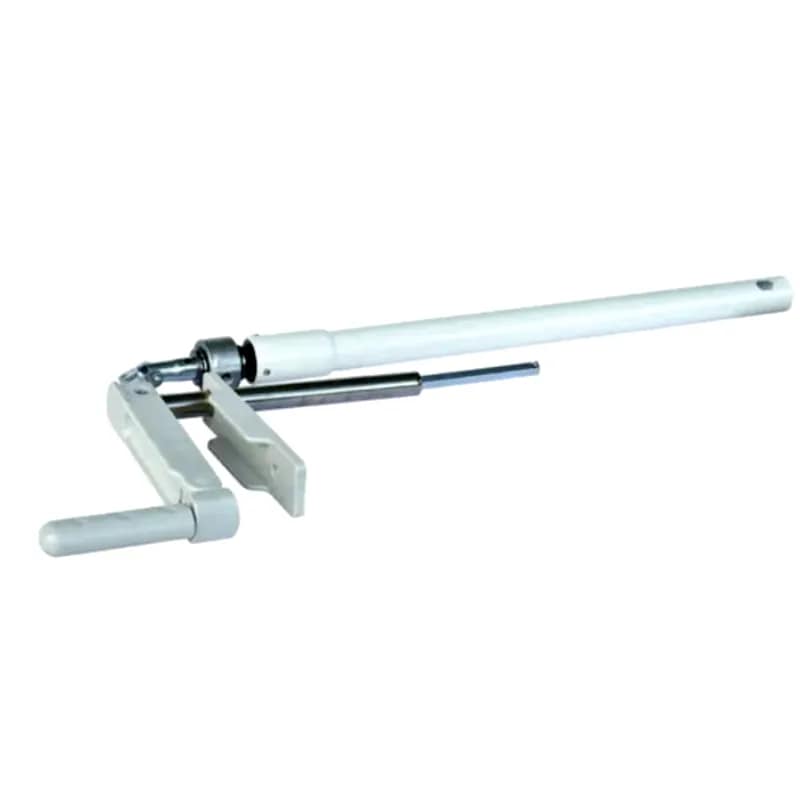
Load capacity testing applies a static load exceeding the rated weight across the bed surface for a specified duration. For our beds rated at 250kg, the pass criterion is not simply that the bed holds the weight—it is that after the load is removed, no permanent deformation exceeds the tolerance defined in the standard. Cycle testing subjects the mechanical systems to repeated operation. The backrest mechanism on a three-function electric bed rated for 75° tilt should complete 20,000 cycles without failure or degradation in adjustment precision. Manual crank systems undergo similar endurance testing. Our crank systems with in-place protection use a bidirectional limit protection screw mechanism that prevents over-rotation damage.

Safety system verification covers guardrail locking mechanisms, caster brake holding force, and electrical safety for motorized beds. Guardrails must withstand a horizontal force test without disengaging. Door-style guardrails with locking buttons, which we manufacture in configurations from two to ten bars, are tested for both intentional and accidental release resistance. The test applies lateral force at multiple points along the rail and requires that the locking mechanism neither release nor deform.
If your procurement involves beds that will operate in ICU or high-acuity settings, the performance testing regimen becomes even more critical. <Essential Safety Features for Adjustable Medical Beds> details the specific safety mechanisms that distinguish ICU-grade beds from general ward models, including rail gap standards, brake redundancy, and emergency positioning features that specification sheets may list but not fully explain.
Comparing Specification Sheets Across Manufacturers
When you line up three specification sheets from different hospital bed suppliers, the natural instinct is to compare numbers directly. A 250kg load rating from Manufacturer A equals a 250kg load rating from Manufacturer B. In practice, this comparison is only valid if both manufacturers test to the same standard using the same methodology. A manufacturer who self-certifies to an internal standard is making a fundamentally different claim than one who certifies to IEC 60601-2-52 through an accredited testing laboratory.
| Specification Parameter | Direct Comparison Valid? | What to Verify |
|---|---|---|
| Load capacity rating | Only if testing standard matches | Request test report; confirm static vs. dynamic rating |
| Backrest tilt angle | Yes, if reference point is stated | Confirm 0° reference position |
| Height adjustment range | Yes | Verify measurement taken under load |
| Motor count | Yes | Confirm each motor drives an independent function |
| Frame material | No | Request steel grade and tube wall thickness |
| Caster type | No | Request material grade, bearing type, and per-caster load rating |
| Warranty term | No | Compare coverage scope and exclusions, not just duration |
Warranty comparison is particularly deceptive. A three-year warranty that covers only the frame but excludes motors, casters, and electrical components leaves the most failure-prone parts unprotected. Our standard warranty covers mechanism and structure for one year, with each covered component category specified explicitly. A specification sheet that says “warranty: 3 years” without a component breakdown is a specification with missing information, not a better warranty.
Another red flag in specification comparison is the absence of tolerance ranges. A backrest tilt specification that reads “75°” without “±5°” suggests the manufacturer either does not understand manufacturing variance or chooses not to disclose it. Every mechanical system has tolerance. Our specifications list backrest tilt as 75°±5° because we measure and verify every production batch.
When comparing suppliers, the specification sheet is only one part of the overall evaluation. <Choosing a Reliable Hospital Bed Parts Manufacturer: A Comprehensive Guide> covers what to examine beyond the documentation—factory audit indicators, quality management certifications, and the supply chain questions that reveal whether a manufacturer’s specifications match their production reality.
Customization and Final Verification
Standard specifications describe a standard product. Most hospital bed procurement, especially for projects exceeding fifty beds, involves some degree of customization. A specification sheet that does not address customization parameters leaves the procurement team guessing about what modifications are possible and how they affect pricing and lead time.
Dimensional customization is the most common request. Standard bed widths of 900mm or 840mm may not suit every ward layout, and bed length adjustments are frequently needed for bariatric applications or taller patient populations. Our stamped bed panels are available in widths from 820mm to 900mm, and we manufacture custom panel dimensions with modified tooling. The specification sheet should indicate which dimensions are fixed and which can be modified, along with the minimum order quantity that applies to custom sizes. Color and finish customization affects both aesthetics and functionality—we offer OEM color matching for ABS headboards, footboards, and powder-coated metal frames, with standard options including white, blue, and wood grain finishes.

When you have narrowed your supplier list to two or three candidates, the final evaluation step is to request the test reports behind the specification numbers. A manufacturer who can provide cycle test data, load test certificates, and material certifications within 48 hours is operating a mature quality system. A manufacturer who hesitates or provides only summary statements is signaling that their specifications may be aspirational rather than verified. The procurement decisions that produced the best long-term outcomes in my experience shared a common pattern—the winning bid was rarely the lowest price or the most feature-rich specification sheet. It was the submission where the specifications aligned with documented testing evidence and the manufacturer demonstrated willingness to customize parameters to the specific clinical environment.
If your upcoming hospital bed procurement requires technical specification review, material verification, or custom configuration assessment, our engineering team can walk through the relevant parameters for your specific clinical environment. Send your bed count, ward type, and any special requirements to [email protected] or call +8613528198959, and we will provide a detailed specification review with supporting test documentation.
Common Questions About Hospital Bed Specifications
What load capacity rating should a general ward hospital bed carry?
A 250kg safe working load is the current standard for general ward beds, and this rating should represent a tested static load with a safety factor, not a theoretical maximum. In our manufacturing, we test beyond the rated capacity to confirm structural integrity. Bariatric beds for patients over 200kg require higher ratings with reinforced frames, and the specification sheet for these beds should explicitly state the reinforcement method used, not just a higher number.
Do all manufacturers test to the same standards?
They do not. IEC 60601-2-52 provides a harmonized testing framework, but manufacturers can self-declare compliance or use third-party accredited laboratories. Self-declaration relies on internal quality systems that vary significantly between manufacturers. When comparing specifications, ask whether compliance was verified by an accredited test lab and request the certificate number. A manufacturer using ISO 13485-certified quality management adds an additional layer of process verification beyond the product test itself.
How do I verify that caster specifications match real-world performance?
Caster specifications should include material type, wheel diameter, load rating per caster, bearing type, and brake holding force. The simplest verification is to request the caster supplier’s datasheet. Most hospital bed manufacturers source casters from specialized suppliers rather than producing them in-house, so the original caster manufacturer’s specifications should be available. If a bed supplier cannot provide the caster sub-supplier’s specifications, assume the casters are a generic commodity part and apply a conservative derating factor to the stated load capacity.
What is the difference between stamped steel and ABS bed panels in specifications?
Stamped steel panels use cold-rolled steel sheet, typically 0.8–0.9mm thick, formed under pressure and finished with powder coating. They provide high structural rigidity and are the standard for beds expected to serve ten or more years. ABS plastic panels are lighter, inherently resistant to cleaning chemicals, and offer more design flexibility for integrated features, but they require precise mold tooling to avoid stress concentrations at mounting points. The specification should state the panel material, thickness, and whether an antimicrobial additive is incorporated.
How long should hospital bed technical documentation be retained?
Hospital bed technical documentation should be retained for the full service life of the equipment plus any period required by local medical device regulations, typically ten to fifteen years from the date of last manufacture. This includes the original specification sheet, revision history, material change notifications, and test certificates. For procurement teams building long-term supplier relationships, a manufacturer’s documentation retention policy is a useful proxy for overall quality maturity. Share your documentation format requirements with us at [email protected] and we will ensure your specification package matches your record-keeping standards from the start.
If you’re interested, check out these related articles:
Essential Certifications for Medical Bed Parts Manufacturers
Essential Safety Features for Adjustable Medical Beds
Can Adjustable Hospital Beds Be Customized for Homecare Needs