
A medical bed guardrail stuck in the raised position creates an immediate fall risk, and a guardrail stuck in the lowered position makes patient transfer harder than it should be. In our work, most sticking guardrails are not the result of a weak user or a badly bent rail. The usual causes are dirt inside the latch, misalignment between the rail tube and the fixed bracket, or a worn spring that no longer returns the locking pin. That order matters, because forcing the rail is the fastest way to turn a small cleaning job into a bent mechanism and a full replacement. The checks below follow the same sequence we use when a hospital sends us a stuck guardrail question.
Where Does a Medical Bed Guardrail Actually Stick?
Most rail designs fail at one of three points. The first is the locking latch, where a steel pin or nylon block slides into a slotted plate. Dust, dried disinfectant, and polymer wear particles collect in that slot. The second is the tube pivot, where the rail swings or folds. If the bed has been stored sideways or moved through narrow doorways, the tube can shift just enough to drag on the mounting plate. The third is the release button or cable, which may move but no longer transfer enough travel to retract the pin.
Before applying any force, we ask the user to identify which of those points is resisting. The test is simple. Press the release button while watching the latch. If the button moves but the pin does not retract, the problem is in the latch or cable. If the whole rail is tight at the pivot, the problem is alignment or debris at the hinge.
| Symptom | Likely cause | First action |
|---|---|---|
| Button moves but rail stays locked | Pin not retracting in latch | Clean and inspect the latch slot |
| Rail moves slightly then stops | Tube binding on the mounting plate | Check pivot bolts and alignment |
| Button hard to press | Disinfectant residue in the release channel | Flush with warm water and dry before oil |
| Rail locks with a snap but slips | Weak or broken locking spring | Replace the spring before patient use |

How Do You Free a Stuck Guardrail Without Damaging the Mechanism?
Start with the bed at a safe work height, wheels braked, and the patient out of the bed. Release the rail with the handle in its natural position. Do not push down on the top rail while trying to retract the pin. That side load is what bends cast aluminum brackets and ovalizes the tube holes.
- Remove surface residue. Wipe the latch with a soft cloth dampened in warm water, not alcohol or aggressive solvent, because those can wash lubricant out of the release channel.
- Blow out or pick out packed debris from the pin slot. A wooden toothpick or plastic scraper works. Metal tools nick the plating and give corrosion a starting point.
- Check the pivot bolts. A guardrail that sticks midway often has a loose shoulder bolt or a bent spacer. Tighten to the bed manufacturer’s torque, not past it.
- Lubricate only the specified points. A thin dry silicone or PTFE spray on the pin and pivot is enough. Grease and penetrating oil attract dust and gum up the latch again in a few weeks.
- Cycle the rail five or six times with no weight. If the motion cleans up, the problem was residue. If it binds only at one angle, continue to the replacement checks below.
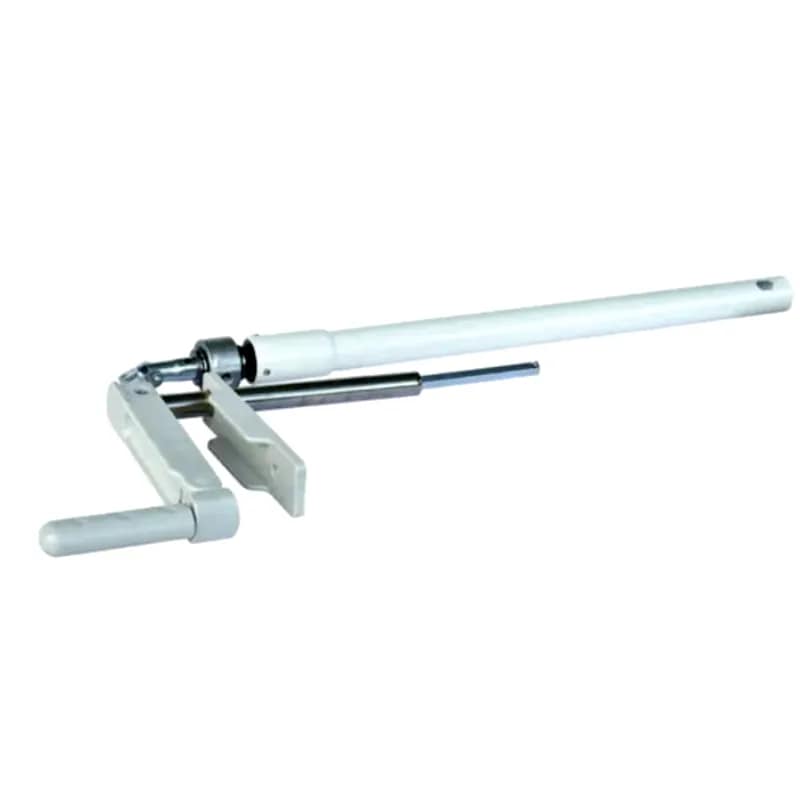
When Should You Stop and Replace the Guardrail Assembly?
There are three signs that continued repair work is unsafe. First, if the release button does not return to its seated position after cleaning, the internal spring has lost tension and the rail can release unexpectedly. Second, if the aluminum bracket shows a white line or visible crack at the pivot boss, the casting has already started to fail. Tightening it will not close the crack. Third, if the rail post wobbles more than a few millimeters after the bolts are tightened, the tube or the frame hole is wallowed out and the locking position is no longer repeatable.
In those cases, we do not try to salvage the rail. The cost of a replacement guardrail is low compared with a patient fall, and a rail that passes a workbench test can still fail when a confused patient leans into it at night.
If your rail has an unusual latch style or mixed brand mounting, it is worth confirming the replacement type before ordering parts. Send a photo of the release mechanism and the mounting plate to [email protected] so the correct bracket is identified.
When replacement hardware is needed, <Understanding Lead Times for [Hospital Bed](https://hospitalbedaccessories.com/product-category/hospital-bed/) Parts Manufacturing> covers how order timing affects repair downtime.
What Should You Check Before Returning the Bed to Patient Use?
After any service work on a side rail, run the same functional checks a new rail would receive.
- The rail locks firmly at the upper, middle, and lower positions without needing an extra hand push.
- The release button returns fully when released, with an audible click.
- The gap between the rail and the mattress side is narrow enough that a patient cannot slide a limb through, and the mattress is not pushing the rail outward.
- The bolts are dry and torqued, not just fingertip tight.
- No sharp burr, split plastic, or exposed fastener face is left where an arm would rest.

What to Do When a Medical Bed Guardrail Cannot Be Safely Restored?
If the cleaning work does not restore a firm lock, the safest decision is to replace the rail assembly rather than modify it. We have supplied guardrails for both original equipment and replacement programs, and the key detail is matching the tube length, latch type, and mounting pitch to the existing bed. Send the bed model, a clear photo of the latch and mounting plate, and the rail length to [email protected] with the subject line “Stuck guardrail replacement”. Our team will confirm the compatible guardrail and current lead time before you commit to an order. If the bed is out of service and you need an urgent check, call +8613528198959.
What Else Do Care Teams Ask About Stuck Medical Bed Guardrails?
Can a stuck guardrail be fixed without replacing the whole bed?
Most stuck guardrails can be repaired on site without replacing the bed. The repair usually involves cleaning the latch slot, correcting a loose pivot bolt, or replacing the small spring inside the release mechanism. What matters is stopping before any metal part is bent, because a bent bracket cannot be straightened reliably. If the rail locks firmly after six unloaded cycles and the release button returns fully, the original assembly can stay in service.
Why does the guardrail stick again a few weeks after cleaning?
The common fix that creates the next failure is spraying grease or penetrating oil into the latch. The problem is that sticky lubricants trap dust, hair, and disinfectant residue. A few weeks later the same pin feels tight again. Use only a dry silicone or PTFE spray on the pivot and pin, and first remove the old residue with warm water. If the latch keeps gumming up after that, the plastic guide inside the release channel has worn enough to require replacement.
Does a stuck guardrail affect patient safety if the bed is not moved?
It depends on the patient’s mobility and where the rail is stuck. For an alert patient with low fall risk and the rail stuck down, the bed may stay in use if transfer safety is not affected. For a confused patient, a heavy patient, or a rail stuck up with a wide gap at the exit, the bed should be taken out of service until the rail is repaired or locked in the safe position. Document the decision so the next shift does not assume the rail is functional.
Should the facility keep using the bed while waiting for a replacement rail?
In the facilities we supply, a bed with a damaged locking mechanism is usually kept out of service once nursing staff know the rail can slip. A rail that tests well on a workbench can still fail when a patient leans on it at night. The safer path is to park the bed in a maintenance area and borrow or rent a replacement until the correct guardrail arrives. This is also why keeping one spare rail per ward speeds up the return to service.
What photos should we send when asking about a replacement guardrail?
Instead of a general photo of the bed, send the detail shots that let a supplier identify the rail: a full side view, a close view of the release button, the latch plate, and the mounting bracket, plus the rail length measured between mounting points. The bed model on the headboard is also useful. If you send those four images and measurements to [email protected], the replacement rail can be matched before ordering, and you will know the lead time before any commitment.
If you’re interested, check out these related articles:
Ensuring Quality Control in Hospital Bed Parts: A Comprehensive Guide
What is an Adjustable Hospital Bed and How Does It Work: A Comprehensive Guide