
Selecting a hospital bed casters manufacturer is less about the lowest unit price and more about matching wheel, brake, and mounting details to how the bed will move under load. A wheel that rolls quietly in a showroom can drift on a wet corridor floor if the tread compound and brake linkage were specified separately. We evaluate casters as part of the complete bed system, not as a generic hardware item. That approach changes which specifications matter first and which suppliers can meet them.
Start with Load and Braking Data When Choosing a Hospital Bed Casters Manufacturer
Most caster failures we investigate start at the specification stage. Buyers compare wheel diameter and price, but they do not always confirm how the brake system behaves when the bed is loaded and locked. A hospital bed caster has to hold position during patient transfer, not only roll down a corridor. That means the brake linkage, pedal travel, and load path through the bed leg matter as much as the wheel tread.
Four casters under a 250 kg bed do not share that load equally. Backrest elevation transfers more weight toward the head-end casters, and Trendelenburg does the reverse. Bariatric beds concentrate the load still further. Before quoting, we ask buyers to confirm maximum patient weight, mattress and rail weight, and whether the bed will be moved with the patient in it. Those answers drive the wheel material and the brake rating.
Why Central Locking Beats Individual Wheel Brakes
Individual wheel brakes work only when staff reach all four casters. In a busy ward, one wheel often stays unlocked, and that is enough for the bed to rotate during a transfer. Central locking connects the pedal to a hexagonal pad and transmission sleeve inside the bed leg, so one action locks or releases the whole set. We prefer central locking casters for any bed that changes position frequently, especially ICU and long-term care.
How to Set a Practical Load Rating
Take the fully loaded bed weight and add a comfortable safety margin for uneven floors, thresholds, and dynamic movement. If the bed will carry a 200 kg patient, specify casters with a duty rating above the bed’s stated safe working load and verify the housing material. The YY-C51 combines a 5 inch 304 stainless steel housing with TPR tread for frequent cleaning, and it is one of the models we suggest for general ward beds that need central control.

Caster selection is one part of qualifying a bed parts supplier. <Choosing a Reliable Hospital Bed Parts Manufacturer: A Comprehensive Guide> covers factory documentation, sample approval, and process control checks that reduce sourcing risk.
Check Material and Wheel Design Before Choosing a Hospital Bed Casters Manufacturer
Material choices affect noise, floor marking, and how the bed moves over hospital flooring. TPR is our standard recommendation for hospital beds because it rolls quietly and resists chemical cleaning. Hard nylon wheels are easier to push but can slide on wet vinyl and make more noise over tile. Polyurethane offers good abrasion resistance but can be firmer than TPR, which matters when the bed rolls into a patient room at night.
Wheel diameter also matters. A 3 inch wheel works for lightly loaded carts, but a hospital bed crossing elevator thresholds or bathroom door strips moves with less push force on 5 inch or 6 inch wheels. We usually keep 5 inch as the starting diameter for adult hospital beds and move to 6 inch when the bed has to clear larger floor transitions.
| Model | Size | Material | Brake type | Best fit |
|---|---|---|---|---|
| YY-C51 | 5 inch | 304 stainless steel and TPR | Central control silent | Hospital beds and carts |
| YY-C20/C21 | 5 or 6 inch | TPR | Central-locking double face | Adult hospital beds |
| YY-C22/C23 | 5 or 8 inch | TPR | Central-locking single face | Mobile medical equipment |
| YY-C3/C10/C13 | 3, 4, or 5 inch | PP and TPR | Full-wrapped, with or without brake | Carts and mobile equipment |
Verify Mounting, Stem, and Frame Compatibility for Hospital Bed Casters
The most common fitting issue after a caster replacement is not the wheel. It is the stem, plate, or locking sleeve. Hospital beds use threaded stems, grip ring stems, and plate-mount casters. If the replacement does not match the bed leg socket, the caster will sit at the wrong height or loosen after a few weeks. A photo of the old caster from the side and from below usually tells us which interface is needed.
Central-locking beds add another layer. The hexagonal pad and sleeve tube above the wheel connect to the bed’s brake transmission rod. When we replace ordinary casters with central-locking casters, we check that the rod length and pedal travel still match. We have rejected casters that passed wheel load testing because the brake pedal travel left one wheel unlocked.
If your program mixes manual and electric frames, stem height and mounting plate position may vary by bed generation. Before finalizing the bill of materials, send the bed model, caster photos, and the distance from the bed leg bottom to the floor to [email protected] so we can confirm the correct stem and locking interface.
Use OEM Hospital Bed Casters Manufacturer Programs to Control Specifications
OEM caster programs make sense when a bed is sold across multiple markets with different flooring and cleaning requirements. Instead of buying a generic caster and adapting, we fix the wheel diameter, tread compound, housing material, brake type, stem, and color on a single drawing. That keeps installation consistent and reduces field complaints from floor marking or brake drift.
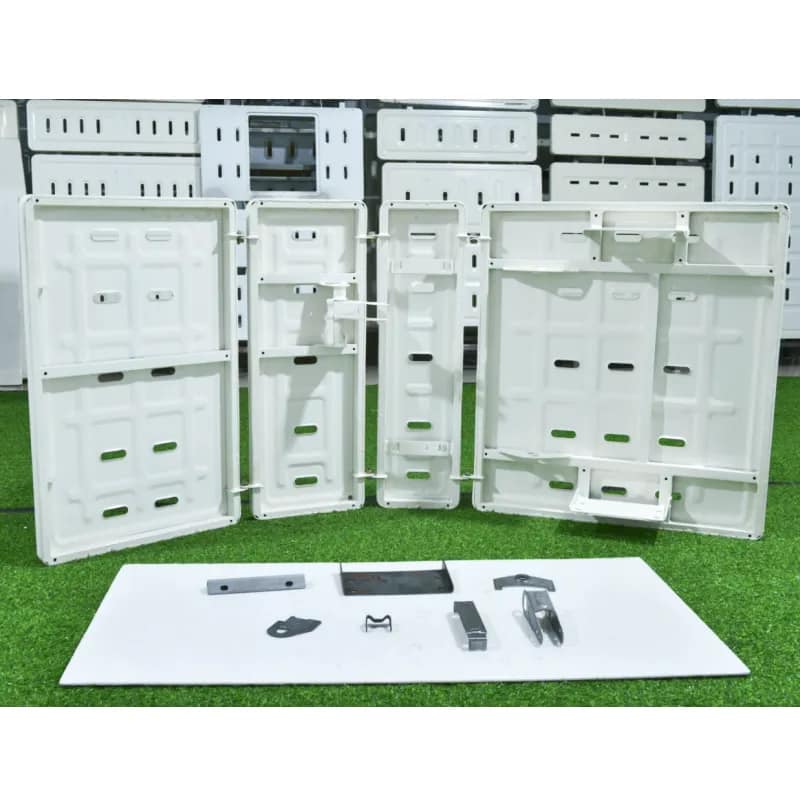
The same factory that stamps bed panels also produces caster brackets and central-locking pedals, which helps control fit between the caster and the bed frame. We stock 3 inch, 4 inch, and 5 inch TPR and PP models with or without brakes, plus central-locking single-face and double-face variants. MOQ is 50 pieces, so a pilot order can start small before a hospital or distributor commits to larger volumes.

Once a caster design moves from sample to production, lead time and process control become the main schedule risks. <Understanding Lead Times for Hospital Bed Parts Manufacturing> covers material preparation, stamping, and surface treatment steps that affect delivery dates.
Confirm Caster Specifications with the Manufacturer Before Final Order
Caster failures rarely trace back to one bad wheel. They usually come from mismatched brake linkages, wrong stem lengths, or floor conditions that were never stated on the order. We work through those details before production so the casters arrive ready to install. Send your bed model, caster photos, patient load range, and annual quantity to [email protected] or call +8613528198959. We will confirm load, stem, brake, and packaging details and return a production drawing for approval.
Review Common Questions About Hospital Bed Casters and Sourcing
What should I check before buying replacement hospital bed casters?
Start with the stem type and mounting plate dimensions, then check wheel diameter, brake type, and whether the bed uses central locking. A photo from the side and below the bed leg socket resolves most fit questions. If the bed has a central-locking pedal, do not replace a single caster with an ordinary swivel model unless the full linkage is changed. We ask for the bed model and caster quantity because these details decide whether a standard caster fits or an OEM stem is needed.
Can hospital bed casters be customized for a specific bed model?
Yes. We supply custom configurations for wheel diameter, TPR tread hardness, stem type, housing finish, and brake style under OEM. The minimum order is 50 pieces, which lets a hospital test one ward set before a wider rollout. Customization is most useful when the bed frame has an unusual leg socket or when the facility needs a specific color or reduced rolling noise.
What is the typical lead time for hospital bed casters?
Standard caster orders are usually produced within 15 to 20 working days after sample approval. Packaging is eight pieces per carton with foam and export-grade carton protection. OEM orders with custom stem or color may need a few extra days for sample confirmation, but the same production window usually applies once the drawing is signed. We confirm the exact date when the order is placed.
How do I replace hospital bed casters safely?
Block the bed securely before removing any caster. Release the central lock, remove the fastener at the stem or mounting plate, and install the replacement caster with the same orientation. If the bed has central locking, replace the full set so the brake linkage operates evenly. After installation, lock the bed and push against the headboard to confirm the bed does not creep. If your bed is heavily loaded or the old caster is not a standard model, send the bed model and caster photos to [email protected] and we will confirm the correct replacement set before you order.
If you’re interested, check out these related articles:
What is an Adjustable Hospital Bed and How Does It Work: A Comprehensive Guide
Identifying Reliable Brands for Adjustable Hospital Beds
Essential Safety Features for Adjustable Medical Beds
Choosing a Reliable Hospital Bed Parts Manufacturer: A Comprehensive Guide