
A hospital bed ABS panel might look like a simple plastic component, but it determines how easily a bed can be cleaned, how securely the headboard locks in place, and whether the panel cracks under daily impact or repeated disassembly. At Yingyun Hardware, we have manufactured bed components for nearly two decades, and I have seen panels that fail within months because buyers only compared catalog photos rather than verifying how the supplier processes raw ABS and controls molding tolerances. The difference between a panel that lasts five years and one that degrades in one is rarely visible in a brochure. It lives in the material grade, the injection cycling parameters, and the dimensional consistency that determines whether every panel snaps onto every bed frame without force.
Understanding Material Selection for Hospital Bed ABS Panels
ABS engineering plastic is the standard for hospital bed panels because it resists impact, withstands repeated cleaning with strong disinfectants, and can be molded into complex shapes with anti-collision corners and cable routing channels. However, not all ABS is equivalent. Virgin ABS resin maintains consistent mechanical properties and surface finish over its lifespan, whereas recycled or mixed-grade material often becomes brittle after a few hundred cleaning cycles and may develop stress cracks around mounting points.
We work primarily with virgin ABS supplied by established resin manufacturers. The material arrives as uniform pellets with certified melt flow index and impact strength data. This traceability matters when you are outfitting a 200-bed hospital and need to know that every headboard will survive the same usage patterns. I have seen cases where a supplier switched to a lower-cost feedstock without informing the buyer, and the resulting panels warped within six months because the polymer blend could not handle thermal cycling from hot-water cleaning.
The surface finish of an ABS panel is another material-dependent characteristic. A smooth, gloss-free finish that resists staining and does not trap bacteria is not achieved by simply polishing the mold. It requires additives in the resin compound and precise temperature control during injection to prevent flow lines. When you ask a supplier for technical documentation on their ABS panels, the first document you should request is the raw material certificate, not the finished product photo.

Key Manufacturing Quality Indicators for ABS Panel Suppliers
The most revealing signs of a capable ABS panel manufacturer are not in the showroom. They are on the factory floor, in the tooling maintenance logs, and in the dimensional inspection records for each production batch.
Warpage and shrinkage are the two dominant failure modes. ABS contracts as it cools inside the mold. If the cooling channels are not designed to extract heat evenly from all sections of the part, the panel will warp and no longer sit flush against the bed frame. A supplier that cannot provide dimensional deviation data per batch is relying on luck rather than process control. We measure every batch of headboards and footboards against a fixed inspection jig, and our tolerance for flatness is within 0.5 mm across a 900 mm span. If your current supplier does not have a go/no-go fixture for panel flatness, you are accepting parts that may fit one bed and jam on the next.
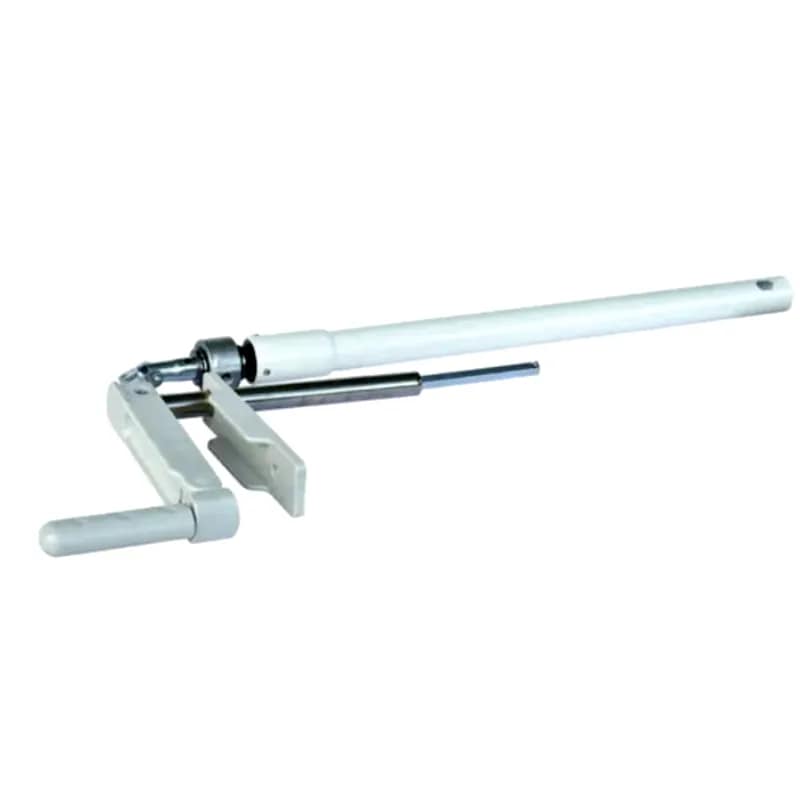
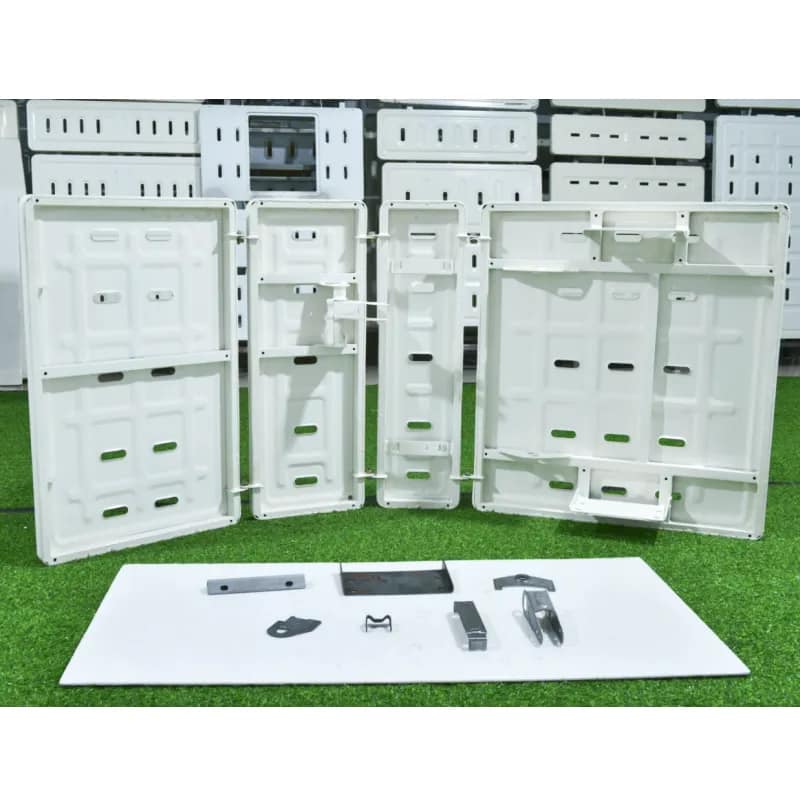
The snap-fit mechanism is another quality marker. ABS engineering plastic headboards and footboards on our beds use an interlocking structure that can be disassembled by hand in under 30 seconds for emergency access or washing. If the locking tabs are molded too thin, they snap off after a few cycles. If they are too thick, the panel will not release. A proper mold design accounts for ABS shrinkage in the tab dimensions and leaves a small draft angle for reliable engagement without permanent deformation. Ask your supplier how many insertion and removal cycles their snap-fit joints are tested to. If they cannot give you a number, they have not tested it.
The following table summarizes key quality indicators to verify with any hospital bed ABS panel supplier:
| Quality Parameter | What to Ask | Typical Acceptable Range |
|---|---|---|
| Raw material origin | Virgin ABS resin certification | Traceable brand and grade |
| Flatness tolerance | Deviation across length | ≤0.5 mm per 900 mm |
| Snap-fit cycle life | Insertion/removal cycles tested | ≥500 cycles without failure |
| Surface hardness | Impact resistance rating | No cracking at 5 J impact |
| Color consistency | Batch-to-batch ΔE value | ΔE < 1.5 |
Customization and OEM Capabilities of ABS Panel Manufacturers
Not every ward calls for a standard white headboard. We regularly produce panels in custom colors matched to a hospital’s branding, with wood-grain finishes for elderly care facilities that want a warmer aesthetic, and in non-standard widths to fit legacy bed frames that are no longer in production.
Customization at the panel level involves mold inserts for the desired surface texture and masterbatch color matching in the resin before injection. This is not a post-production painting process that will chip off after six months. The pigment is dispersed throughout the polymer, so even if the panel surface is scratched, the color remains consistent.
The tooling cost for a new set of headboard and footboard molds is often the entry barrier that buyers underestimate. A single-cavity mold for a standard headboard can cost several thousand dollars, and if you need multiple color variants or different sizes, the mold investment multiplies. A factory that owns its own mold-making workshop, as we do, can offer lower tooling amortization and faster design iterations than one that outsources mold fabrication to a third party.
When discussing OEM projects, confirm whether the supplier runs trial shots and sends pre-production samples for your approval before cutting production molds. We follow a three-sample stage: T1 for initial fit check, T2 after mold adjustments, and T3 as final approval. If your supplier proposes moving directly to mass production after a CAD review, you are taking on risk that should belong to the manufacturer.
How to Verify Quality Control Systems and Certifications
A certificate on the wall tells you what a supplier claims. Quality control records tell you what they actually do. When I evaluate a potential component partner for our own supply chain, I look for three documents: the incoming raw material inspection log, the in-process dimensional check sheet, and the final assembly test report.
For ABS panels, the in-process check should include shot weight consistency, part weight, and critical dimension measurements at multiple points across the cavity. A drop in shot weight indicates that the injection barrel temperature has drifted or that the screw is wearing, both of which produce porous, weak parts. We log shot weight for every production shift and halt the run if the moving average drifts outside ±1%.
Formal certifications such as ISO 13485 for medical device quality systems add confidence, but they are not a substitute for on-site process audits. Before placing a bulk order, I recommend either visiting the factory or commissioning a third-party inspection agency to witness a production run and collect random samples for dimensional and mechanical testing. If the supplier resists a process audit, you should ask why.
If your program involves specifying panels for a high-humidity tropical climate or for frequent hot-water pressure washing, it is worth confirming the supplier’s thermal cycling test protocol before finalizing your bill of materials. This is the type of detail that separates a supplier who understands medical environments from one who simply molds plastic parts.
Balancing Cost and Durability When Selecting an ABS Panel Supplier
ABS panels carry a higher unit cost than stamped steel panels because the mold investment is larger and the material price per kilogram is higher. The trade-off is not simply cost versus aesthetics. ABS panels absorb impact without permanent deformation and do not rust in high-humidity environments where condensation forms on bed frames overnight. In coastal hospitals or facilities without full climate control, stamped panels can show surface corrosion within two years unless they receive a high-quality powder coating, which itself adds cost and a process step that some suppliers shortcut.
The per-bed savings from choosing cheap stamped panels often disappear the first time a corroded panel needs replacement, because the labor to swap a bed panel in a fully occupied ward costs more than the panel itself. I see more procurement teams now factoring in a five-year lifecycle cost rather than the initial purchase price. For a 100-bed order, the difference in panel material may account for a few percent of the total bed cost but determines whether the bed still looks acceptable when the next accreditation inspection occurs.
A reliable supplier will be transparent about material selection and will provide a written warranty covering structural integrity of the ABS components for a minimum of one year under normal hospital use. Our ABS headboards and footboards carry a one-year mechanism and structure warranty, and we have shipped container-load quantities of beds with ABS panels to multiple regions without warpage-related claims. That track record is what to probe for when speaking with any prospective supplier.
When you are ready to move forward, send your part number, intended quantity, and any customization requirements to [email protected]. We will confirm material specifications, provide a dimensional drawing for approval, and give you a production timeline that includes the pre-production sampling stage. This is not a sales pitch. It is the same process we follow for every OEM project that comes through our factory.
Common Questions About Hospital Bed ABS Panel Sourcing
What is the real difference between ABS panels and stamped metal panels?
ABS panels are injection molded from engineering plastic; stamped panels are formed from steel sheet and then powder coated. The critical functional difference is that ABS panels do not corrode and can incorporate complex features such as snap-fit interlocks and anti-collision edges directly in the mold. Stamped steel panels are stronger in pure load-bearing tests, but modern bed frames transfer patient weight through the frame rather than the headboard, so impact resistance and cleanability usually matter more than ultimate tensile strength at the panel level. We supply both types, and the choice depends on the facility’s cleaning protocols and ambient humidity rather than a simple cost comparison.
Can hospital bed ABS panels be customized with different colors?
Yes. Because the pigment is mixed into the ABS resin before injection molding, the entire cross-section of the panel carries the chosen color. Custom color matching adds approximately 7–10 days to the lead time for the initial masterbatch preparation and T1 sample molding. We can match colors from a Pantone reference or a physical color chip. For brands that require precise shade consistency across multiple order batches, we suggest retaining a small reference sample from the first production run as a color standard for future orders.
What certifications should a quality hospital bed ABS panel supplier hold?
At minimum, the supplier should hold ISO 9001 for quality management and should be able to provide material certificates for each batch of ABS resin processed. ISO 13485 is increasingly required by hospital procurement departments, particularly in Europe and markets regulated under MDR. However, certification alone does not guarantee quality. Ask for a recent dimensional inspection report and thermal cycling test data. If the supplier declines, that signals either a missing testing capability or a lack of transparency, both of which are reasons to reconsider.
How can I verify panel durability before placing a bulk order?
The most reliable method is to commission a third-party inspection during a production run. Request that the inspector select 10 random samples from one production batch and measure critical dimensions against the agreed drawing. Then have those same 10 samples undergo a snap-fit cycling test (100 insertions and removals) and a drop test from one meter onto a concrete floor. If any sample cracks or fails to re-engage properly, the entire batch should be quarantined pending root cause analysis. This is a standard procedure for OEM buyers who cannot visit the factory in person. Share your requirements and we will confirm the testing documentation available for your order.
If you’re interested, check out these related articles:
How to Choose the Right Adjustable Medical Bed for Your Clinic: A Comprehensive Guide
Unlocking Comfort and Care Benefits of Adjustable Hospital Beds
Comparing Prices for Hospital Bed Parts Manufacturers Effectively