
Bringing a hospital bed to market under your own brand means far more than printing a logo on an off-the-shelf frame. From my years overseeing bed component manufacturing, I’ve seen too many procurement teams discover late that their white label OEM partner lacked the engineering depth to deliver a compliant, durable product. The real differentiator is the manufacturer’s ability to manage structural validation, material compliance, and documentation with the same rigor as the assembly line. This article walks you through the technical checklist that protects your investment and ensures your beds meet international safety and performance expectations.
What Does “White Label OEM” Actually Mean for Hospital Beds?
In hospital furniture, “white label” and “OEM” are frequently used interchangeably, but they describe different levels of manufacturer involvement. A strict white label arrangement means the manufacturer supplies a finished bed from an existing catalog, and the buyer applies their own brand identity. The design, tooling, and regulatory file belong to the factory. OEM, by contrast, implies the manufacturer builds to the buyer’s specifications. That could mean modifying an existing chassis, re-engineering a component, or creating a fully custom bed.
In practice, most projects fall somewhere in between. The factory might offer a platform bed with selectable options: manual or electric actuation, ABS or stamped steel head and footboards, specific side rail types, and color-matched trim. I tell buyers to think of it as a configuration matrix rather than an unlimited blank canvas. The closer you stay to validated platform specifications, the faster you move through design review, and the lower the regulatory risk. A fully bespoke bed can double the development timeline and require a fresh round of structural testing, something many buyers underestimate when they first reach out.
Which Engineering Specifications Determine Bed Performance and Compliance?
A hospital bed’s performance is not defined by the brand badge on the headboard but by a handful of engineering parameters that directly affect patient safety and caregiver workflow. The table below summarizes the key specifications across common bed types.
| Bed Type | Load Capacity | Backrest Tilt | Knee Tilt | Height Range | Typical Material |
|---|---|---|---|---|---|
| Manual Single-Crank | 250 kg | 75° | — | Fixed (480 mm) | Liuzhou steel frame, ABS/PP boards |
| Manual Double-Crank | 250 kg | 75° | 40° | Fixed (480 mm) | Iron frame, aluminum alloy side rails |
| Electric Three-Function | 250 kg | 75° | 40° | 430–840 mm | Steel frame, ABS panels |
| Electric Five-Function | 250 kg | 75° | 40° | 460–720 mm (plus Trendelenburg) | Steel frame, ABS/PP boards |
These values are not marketing bullet points. Each one has a direct compliance consequence. For instance, a bed that barely achieves a 40° knee tilt on the test bench may fail under a heavier patient over time if the actuator mount was never validated at the full load cycle. The frame steel grade matters too. We use Liuzhou steel for bed tops because it offers a predictable yield strength after stamping. Substituting a cheaper low-carbon equivalent can produce the same geometry but fail fatigue testing after a few thousand cycles.
The raw material choice affects not just static strength but long-term wear and infection control. <Essential Materials for Quality Medical Bed Parts Manufacturing> covers why substituting even a visually identical material can shorten a bed’s service life and increase cleaning-related degradation.
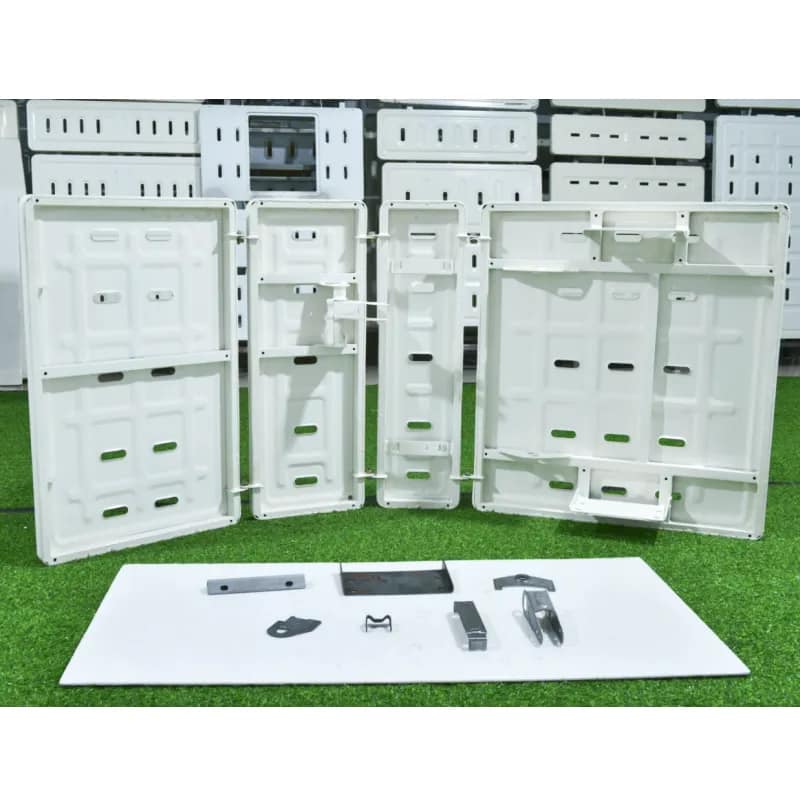
Small dimensional decisions also cascade. A bed width of 900 mm is standard in many Asian markets, but a 970 mm width fits most European mattress sizes. A 40 mm difference might seem trivial until the bed rail gap fails the IEC 60601‑2‑52 entrapment requirement, or the mattress no longer lies flush. Always confirm that the manufacturer has test reports for the exact width‑and‑rail combination you plan to order.
How Do You Evaluate a Hospital Bed OEM Manufacturer’s True Capability?
A factory’s capability reveals itself long before you see the first sample. I split the evaluation into three layers: engineering documentation, in‑house testing, and material traceability.
Start with the documentation package. A manufacturer that cannot produce a complete Design History File, or at minimum a Technical File structured for the target regulation (e.g., EU MDR, FDA 510(k), will stall your project at the border. Ask to see a redacted example from a previous export. If the factory hesitates or sends only a certificate of conformity, that is a clear signal they have never been through a serious regulatory audit.

Next, in‑house testing. A credible hospital bed factory should own at least a static load test frame, a cycle test rig for mechanisms, and a pull‑force tester for side rail locking systems. They should be willing to share raw test logs, not just a pass/fail summary. When I audit a supplier, I look for the resolution of their data logging. A factory that records “passed” without attaching measured values cannot provide traceability if a field failure occurs two years later.
Material traceability is the third leg. Casters, side rail plastic, and actuator housings all need batch-level records. For example, our facility casts central‑locking pedals from aluminum alloy and stamps bed panel connecting ears from a specific cold‑rolled steel stock. Each batch is linked to a mill certificate. If the part later degrades prematurely, we can trace it to the raw material lot. Buyers should request the factory’s incoming inspection procedure for raw materials and confirm that it covers at least the top‑level bill of materials.
Price comparison matters, but it must be weighed against engineering depth. <Comparing Prices for Hospital Bed Parts Manufacturers Effectively> explains how to separate a factory that invests in its own testing capability from one that passes on cost savings by skipping structural validation.
If your project involves a specific medical device classification or regional certification (e.g., FDA 510(k), CE marking), the engineering files the factory can produce are as important as the bed itself. Confirm the manufacturer’s documentation capabilities before finalizing the commercial terms — reach out at [email protected] with your regulatory requirements to verify feasible support.
The Production and Documentation Pipeline: From Tooling to Container
Understanding the typical production timeline helps you set realistic expectations and avoid schedule compression, which often leads to quality shortfalls. The process generally follows six stages.
- Design confirmation: The factory takes your specification — bed width, functions, rail type, color — and generates a 3D assembly model and a bill of materials. This stage should include a tolerance stack‑up review, especially on the bed‑to‑rail interface.
- Tooling and pattern making: For stamped panels, new press tooling may be required if your width or hole pattern differs from stock. Tooling lead time ranges from two to four weeks.
- First‑article sample: A single bed built from production‑intent parts. This is where you validate fit, finish, and function. Do not skip a full‑scale test here. One sample bed that passes cycle testing is worth a hundred CAD screenshots.
- Pre‑production run: Typically 5–10 units to prove the assembly line and packaging before the main batch. We flag any assembly fixture issues at this point.
- Full production: Raw material staging, stamping, welding, coating, electronics integration (if electric), final assembly, and packing.
- Documentation and shipment: Test reports, certificates of analysis, packing lists, and regulatory documents are compiled in parallel with loading. For export, ensure the manufacturer has experience with fumigated wooden crates if required by your destination country.

Throughout these stages, a factory that provides weekly photographic progress reports and dimensional spot‑check records saves you from unpleasant surprises at the port. If the manufacturer pushes back on providing such data, ask yourself what they might not want you to see.
What Are the Common Pitfalls That Derail OEM White Label Orders?
Even experienced buyers stumble on a few recurring traps. One of the most frequent is assuming that all manufacturers follow common international standards by default. A bed that passes China GB 9706 testing does not automatically comply with IEC 60601‑2‑52. The side rail locking force, the mattress retention geometry, and the electrical creepage distances all differ. I’ve witnessed a shipment held at a European customs office for three months because the importer provided a generic conformity certificate instead of the required EU‑specific test reports.
Another pitfall is ignoring environmental conditions at the destination. A bed with standard powder‑coated steel components works perfectly in a climate‑controlled hospital in Dubai, but the same bed shipped to a coastal clinic in West Africa will begin corroding within six months if the buyer never specified stainless steel hardware or TPR‑sheathed casters. Specify the material grade for every external part, not just the frame.
Underestimating lead time is a third trap. A 40‑day production cycle sounds fast until you add two weeks for tooling, one week for sample freight, and a possible re‑validation loop if the sample fails any test. Build a 30% time buffer into your project plan from the start. A manufacturer that promises to accelerate a schedule without detailing how they will maintain quality control is not doing you a favor.
Finally, beware of the “one sample looks perfect” illusion. A single hand‑crafted sample tells you nothing about production consistency. I’ve personally seen a factory deliver an immaculate first‑article bed, only for the first production batch to show inconsistent weld penetration because the sample had been built by their lead welding technician, not the line operators. Ask to see the pre‑production run units, unannounced, before you approve mass production.
Common Questions About Hospital Bed OEM White Label Procurement
How long does a typical OEM white label hospital bed project take?
From the moment you finalize specifications, a platform‑based white label bed can be ready for shipment in 45 to 60 days, including sample approval. A fully customized bed adds another 30 to 45 days for engineering design and new tooling. Transport and customs clearance typically add two to five weeks depending on the shipping route, so plan six months from purchase order to receiving dock if this is your first project.
What MOQ should I expect?
Most hospital bed factories set a minimum order quantity based on the raw material procurement cycle and production line setup cost. For standard platform beds, a mixed container with 25 to 50 units is common. For fully custom beds, MOQ often rises to 50 to 100 units. The exact number depends on whether your bed can share components with other orders. If your specification can use off‑the‑shelf panels and rails already in the factory’s inventory, the MOQ becomes more flexible.
Can I get full design customization or just logo branding?
You can get both, but the cost and timing differ enormously. Logo printing, color‑matched headboard inlays, and custom‑labeled cartons are low‑impact; they add a few days and a small per‑unit charge. Changing the bed width, backrest angle, or side rail locking mechanism is a full engineering exercise. I always advise starting with an existing platform bed that matches most of your requirements and customizing only the branding and a few user‑facing components for the first order.
How do I verify the manufacturing quality before placing a bulk order?
Request a factory audit, either in person or through a third‑party inspection company. Look beyond ISO 13485 certificates and check whether the factory maintains its calibration records for welding equipment and load test frames. Ask for a failure‑mode review: what went wrong in the last product iteration and how was it fixed? A factory that can discuss its own past quality issues openly is far more trustworthy than one that claims a perfect zero‑defect record.
What documentation will I need for importing the beds?
The minimum set includes a certificate of origin, a bill of lading, a packing list, a commercial invoice, and any region‑specific conformity documents (CE Declaration for Europe, FDA Importer Registration for the U.S., or equivalent). I’ve seen shipments held up because a buyer assumed a CE mark was sufficient without a Notified Body certificate. Clarify the exact documents the factory has previously supplied for your destination country before you sign the order. Share your requirements with us and we’ll confirm which documentation can be provided as part of the standard export package.
Managing a white label bed project involves far more than a purchase order. The chain from raw material certification to container delivery rests on the manufacturer’s engineering discipline. At Yingyun Hardware, that means making sure every stamped panel, every castor bolt, and every test report is verified before it leaves the factory. We’ll work with you from first specification to final container, the same way we’ve supported hospital bed projects in over a dozen countries since 2006. Send your bed requirements and target quantities to [email protected] or call +8613528198959 to begin the design review.
If you’re interested, check out these related articles:
How Much Does an Adjustable Hospital Bed Cost on Average
Essential Materials for Quality Medical Bed Parts Manufacturing