

A hospital bed urgent order service is measured by one date, the day the beds are packed and ready to load, not the transit time quoted after the fact. Most delays in a rushed order begin earlier than buyers expect: a specification that keeps moving, a color that has to be sprayed, a panel width that is not on the shelf, or packing that nobody confirmed in writing. Speed is usually bought in the configuration, long before freight enters the conversation. This guide sets out where the time actually goes, what a supplier’s fast-delivery claim can and cannot prove, and how to structure a request so the answer you get back is a real date.
What an urgent hospital bed order service can and cannot do
An urgent hospital bed order service is a scheduling arrangement, not a shipping product. It covers the period between your confirmed requirement and the moment the goods are packed, documented, and handed to a freight forwarder. What it can compress is decision time, queue position, and paperwork. What it cannot compress is an ocean schedule, a vessel’s fixed departure, or a customs authority’s processing time in your own country.
It helps to describe any urgent order by four gates. The specification has to stop moving. Materials and components have to exist. Production and inspection have to run. The shipment has to be documented and booked. Each gate has a different owner and a different lever, and buyers who treat urgency as a single negotiation over price and freight often discover that the binding constraint was the first gate.
This is where a freeze point becomes useful. A freeze point is the moment after which a change restarts part of the schedule: a different panel width means a different stamped panel set, a custom color means a separate coating batch, a new logo means a new print run on the headboard and footboard. Suppliers rarely state the freeze point explicitly. You can ask for it, and once it is written into the order confirmation, urgency stops being an adjective and becomes a date.
An honest supplier will also tell you what the service does not include. It does not guarantee a vessel slot, it does not clear customs in your country on your behalf, and it does not turn a custom product into stock. A page that promises otherwise is describing marketing rather than logistics.
Where the time goes between your request and the loading dock
Break the order into stages and the pattern becomes visible. The long pole is usually not the factory floor, and it is almost never the vessel.
| Order stage | What usually takes the time | Lever that shortens it |
|---|---|---|
| Specification confirmation | Waiting for approval on panel width, color, guardrail type, or accessory list | Freeze the configuration in one written document before the quote is issued |
| Component availability | Actuators, control boards, casters, or a specific stamped panel not held as finished stock | Ask which line items are finished goods and which must be built |
| Production and assembly | Queue position behind existing orders, plus frame welding and assembly time | Accept a standard finish and fewer optional features to move up the queue |
| Inspection and packing | Function checks, foam and carton packing, wooden box on some models | Agree the inspection record in advance so it is not rewritten later |
| Documentation and booking | Certificate of origin, invoice, packing list, declaration of conformity, vessel space | Send the consignee details and HS code with the purchase order, not after it |
| Sea transit | Fixed sailing schedule and route | Choose a port with frequent sailings rather than a cheaper one with one departure a month |
The first two stages are where most urgent orders lose a week. A buyer who sends a total quantity without a model breakdown forces the supplier to build the schedule twice, once to quote and once to correct. A buyer who asks for a custom color after the purchase order has been accepted adds a separate coating run, and that run waits until the spray line has enough volume to justify it.
Component availability deserves a direct question. Finished beds sitting in a warehouse can usually be inspected and loaded within days. A bed assembled to order depends on actuators, control boards, and casters arriving from sub-suppliers, and those items have their own lead times. Ask specifically which models are finished goods on the date of your enquiry and which are not. The answer changes the entire plan, and it is a question a supplier can answer in one working day.
Lead time is rarely a single number, and breaking it into component, assembly, and booking stages is the only way to see which part you can actually negotiate. <Understanding Lead Times for Hospital Bed Parts Manufacturing> covers how those stages are sequenced for bed parts.
Which hospital bed configurations can actually ship fast
The bed type you choose sets the floor under your delivery date, before any commercial discussion begins.
| Bed type | Functions | What usually controls the wait | Where it fits |
|---|---|---|---|
| Single crank manual | Backrest lift only | Stamped panel set and crank availability | Low-acuity wards and basic units |
| Double crank manual | Backrest and knee lift | Panel set plus frame assembly queue | General wards and nursing homes |
| Three crank manual | Backrest, knee, and height adjustment | Height mechanism parts | Wards that need a working height for staff |
| Electric two or three function | Powered back, knee, and height | Actuator and control board supply | Mainstream wards with stable power |
| Electric five function | Adds tilt and battery backup | Motor count plus longer function testing | ICU and high-dependency units |
Manual beds sit at the fast end for a structural reason. They have fewer purchased components, fewer functions to test, and fewer failure points to document. A single crank bed carries one adjustment mechanism, while a five function electric bed carries five motors, a control handset, and a battery backup system that each need to be verified before packing.
Electric beds also bring a standards question that affects how long inspection takes. Medical beds with electrical functions fall within the scope of IEC 60601-2-52, which sets particular requirements for basic safety and essential performance [1]. A supplier who can show the test records matching that scope is not necessarily faster, but a supplier who cannot answer the question at all is telling you something about how inspection is handled. Ask for the specific function tests performed on the model you are buying, not for a general certificate.
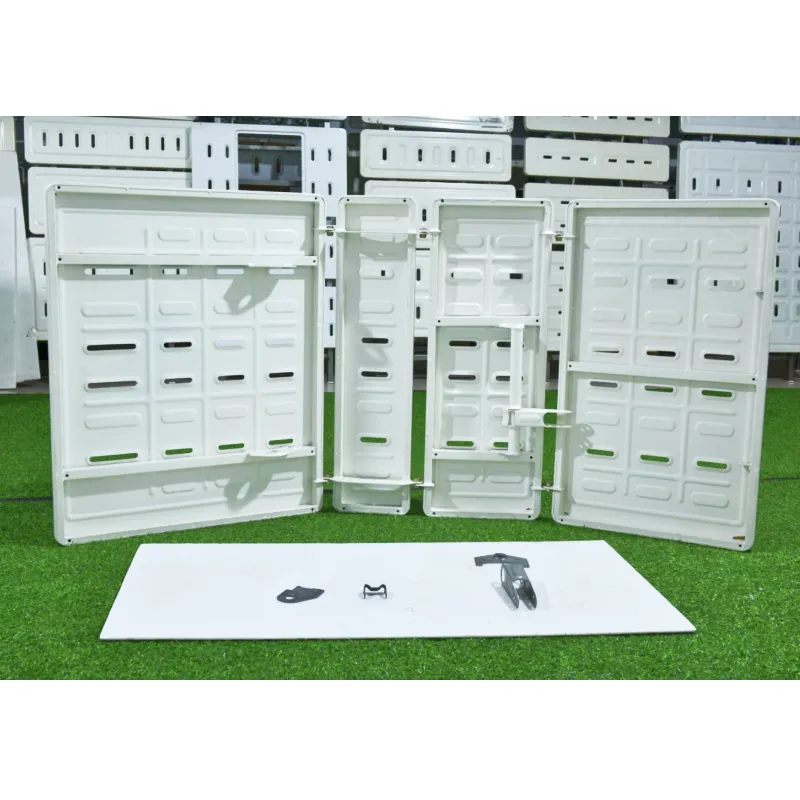
Panel width is the quiet variable. A 900 mm stamped panel and an 820 mm stamped panel are different parts with different tooling, and a buyer who changes width late restarts the stamped part stage. If your wards already run a standard width, staying with it removes one decision and one risk.
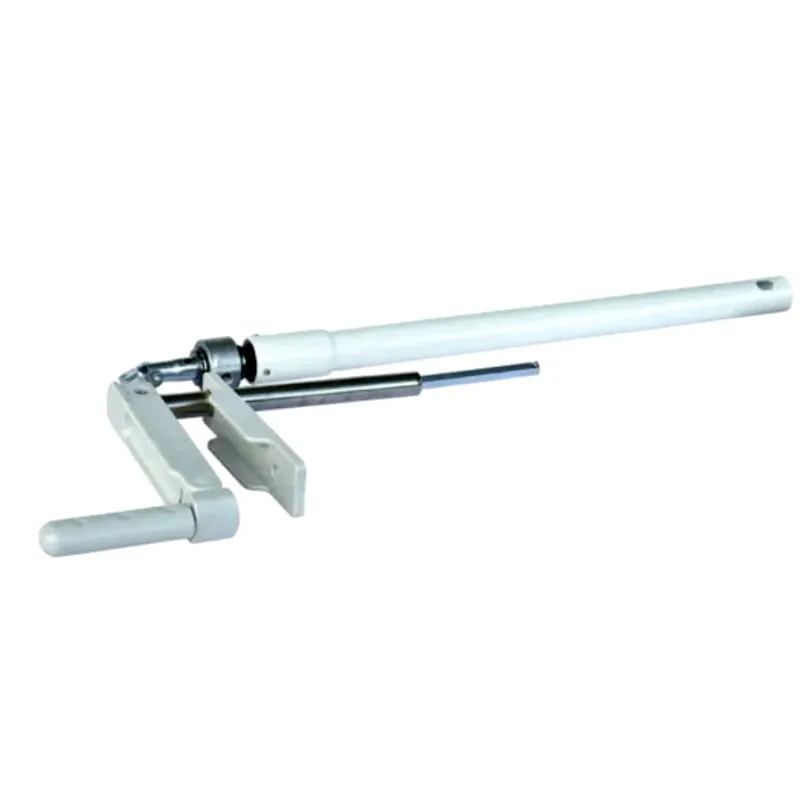
The crank assembly is the other part that decides whether a manual order can be pulled forward. ABS and iron crank variants are catalogued as separate part numbers, YY-00038 and YY-00040, which matters when an urgent order is placed to top up an existing fleet rather than to equip a new ward. Matching the part already in service avoids a mixed fleet where two beds of the same model adjust differently.
Manual and electric beds differ far more in service life and repair path than in purchase price, and the choice made under time pressure tends to stay in the ward for a decade. <Electric vs Manual Adjustable Beds: A Comprehensive Comparison> covers the operational differences behind that decision.
What to put in an urgent order request so the quote comes back usable
An urgent request fails in the same way every time. It contains a total quantity, a deadline, and no configuration, so the supplier has to guess, and a guessed date is not a date.
| Field | What to state | Why it changes the date |
|---|---|---|
| Quantity by model | Number per bed type, not one total | A mixed order is scheduled line by line |
| Panel width | 820, 840, or 900 mm | Width determines which stamped panel set is used |
| Finish and color | Standard white, or a stated color with batch size | Custom coating adds a separate spray batch and curing cycle |
| Guardrail type | Folding, ABS European style, straight tube, or door style | Guardrail hardware is ordered against the bed frame and may not interchange |
| Packing method | Carton with foam, wooden box, assembled or knocked down | Wooden box and assembled packing consume volume and handling time |
| Delivery terms | Port, Incoterm, and target loading date | Booking cannot start until these three are fixed |
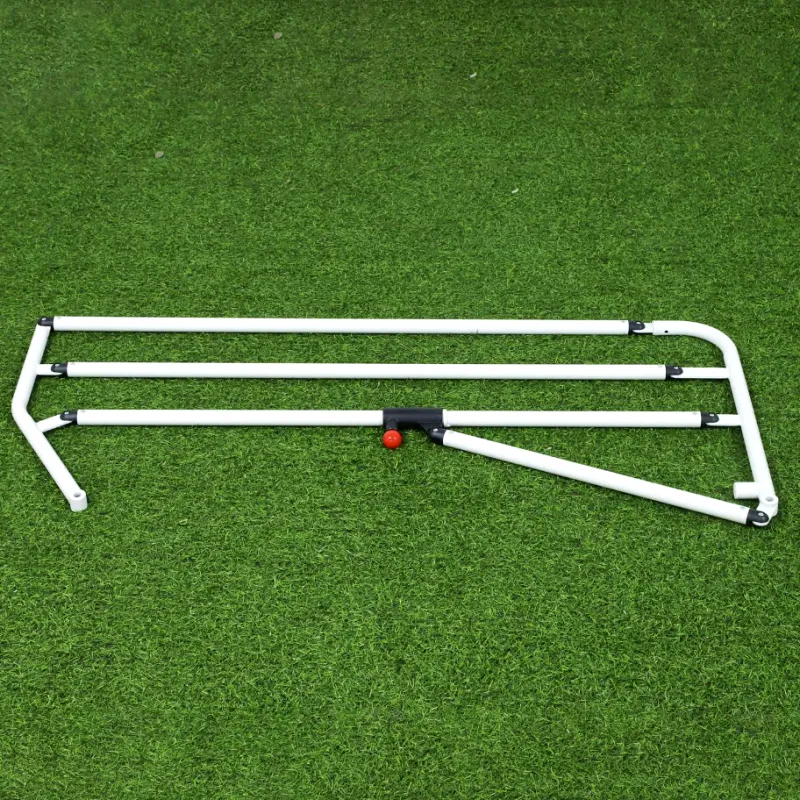
The guardrail line is worth more attention than it usually gets. A horizontal tube folding guardrail and an ABS European style guardrail mount differently and are not interchangeable on the same frame, so a late change to the guardrail is a frame change, not an accessory swap.
A useful discipline is to rewrite one vague line before sending the request:
Reject this line: “200 hospital beds, urgent, best price, ship as soon as possible.”
Replace it with: “200 three crank manual beds, 900 mm panel width, standard white, horizontal tube folding guardrails, carton packing, FOB Shenzhen, target loading date 25 March, drawings attached for confirmation.”
The second version can be answered with a schedule, a price, and a question list. The first can only be answered with another question, and that exchange costs days that no amount of freight spending recovers.
How to verify a fast delivery claim before you pay a deposit
Fast-delivery claims are easy to make and hard to check, because the evidence that would prove them sits inside a factory you have not visited. The realistic approach is to separate what each record actually shows from what you might assume it shows.
| Record you may be shown | What it actually is | Responsible use | Do not infer |
|---|---|---|---|
| “Ready stock” on a product page | A catalogue statement that some units exist for that model at some point | Ask for quantity by model and a photo of packed units with a date | Does not prove the units are finished, tested, and packed today |
| A quoted lead time of 15 to 20 working days | A standard figure for catalogue parts under normal scheduling | Use it as a planning baseline for standard configuration | Does not apply to a custom finish, a new panel width, or a new logo |
| A photo of a loaded container | A shipment record from a previous order | Confirms the packing method the supplier actually uses | Does not prove your quantity is inside or that the vessel has sailed |
| An ISO 13485 certificate | Certification of the quality management system within a stated scope | Confirms the scope covers the product category you are buying | Does not certify each bed individually or replace your incoming inspection |
| A load test report | A bench result on a specific sample and configuration | Supports the tested frame and panel combination | Does not transfer to a different frame, panel width, or mounting method |
ISO 13485:2016 is the quality management system standard for medical devices, and a certificate is issued against a defined scope [2]. Read the scope line rather than the logo. A certificate covering bed frames and metal parts says something different from one covering complete electric beds, and the difference should be reflected in what you ask to inspect.
Documents that belong in the first reply
Ask for the certificate of origin, the declaration of conformity where applicable, the packing list in draft, and the inspection record template before you pay. A supplier who has these ready is organised. A supplier who produces them only after payment is improvising, and improvised documentation is what holds a container at destination.
Questions that expose a soft date
Three questions separate a scheduled date from an optimistic one. Which models are finished goods today? Which purchased components are on open order, and when do they arrive? Who signs the inspection record before packing? Answers that name models, dates, and a role are credible. Answers that repeat the delivery promise are not.
A claim that a part meets a specification and evidence that it does so are two different things, and the gap shows up at incoming inspection rather than at the quotation stage. <Ensuring Quality Control in Hospital Bed Parts: A Comprehensive Guide> covers how that evidence is structured for bed parts.
Shipping and paperwork that decide whether the container clears on time
Loading is the visible milestone, but clearance is where urgent orders quietly stop. The usual cause is a mismatch between the commercial invoice, the packing list, and the declaration, often over a model description that was updated in email but not in the documents.
A quick volume check before you book
Do the volume arithmetic before you accept a loading plan, because it tells you whether the shipment is volume-limited or weight-limited. Packing dimensions for a three crank manual bed are listed at 2020 × 950 × 340 mm, which works out to roughly 0.65 m³ per carton. A 40-foot high cube offers about 76 m³ of internal volume. At a practical fill of around 85 percent, that leaves close to 65 m³ of cartons, or approximately 100 beds. At a gross weight of 80 kg per unit the total stays near 8 tonnes, nowhere near the payload limit, so the load is volume-limited rather than weight-limited.
Treat that figure as planning arithmetic, not a loading guarantee. Knocked-down packing, added mattresses, wooden boxes, and a mixed order all change it. The useful part is the direction of the answer: for hospital beds, adding units costs container space long before it costs payload capacity, which is why splitting a large urgent order across two containers is often a scheduling decision rather than a weight one.
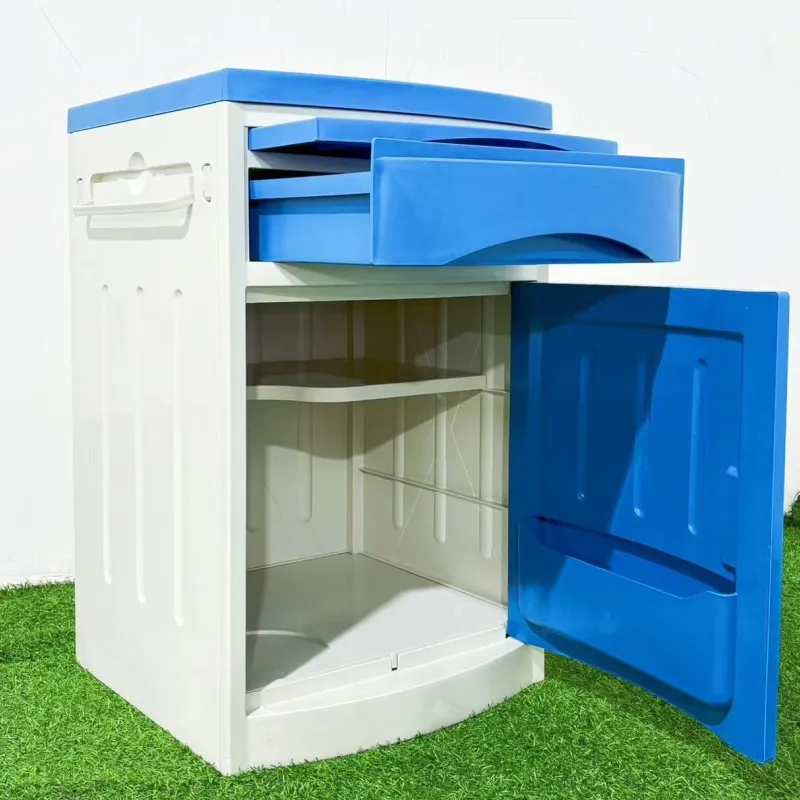
Ward packages make the same point. A bedside cabinet is light but bulky, and it competes for the same cubic metres as a bed frame. If a hospital project includes cabinets, overbed tables, and IV stands, confirm whether they travel in the same container and what that does to the bed count. A package that arrives complete two weeks later is usually better than beds that arrive first and cabinets that arrive after the ward opens.
When paying for speed is worth it and when it is not
Speed has a price, and the price is not always freight. Ranking the available levers by what they actually buy is the most useful financial exercise in an urgent order.
Air freight sits at the bottom of that ranking for complete beds. A cartoned bed occupies about 0.65 m³ and weighs 80 kg, which makes air freight a volumetric charge against a low-value-per-kilogram product. It can make sense for a small number of critical spares, a control handset, or a set of casters that is holding a ward offline. It rarely makes sense for the beds themselves, and it never fixes a delay that began in production.
Accepting a standard finish buys more than most buyers expect. A white powder coat already running on the line requires no separate setup, no minimum batch, and no additional curing slot. A specified color adds all three, and the added time is usually longer than the transit saving it was meant to protect.
Splitting the order is the third lever. Sending the models that are finished now and the remainder on the next production run gets a ward opened sooner, at the cost of two shipments, two sets of documents, and a second clearance. It is the right trade when the alternative is an empty ward, and the wrong trade when the whole order is needed for a single commissioning date.
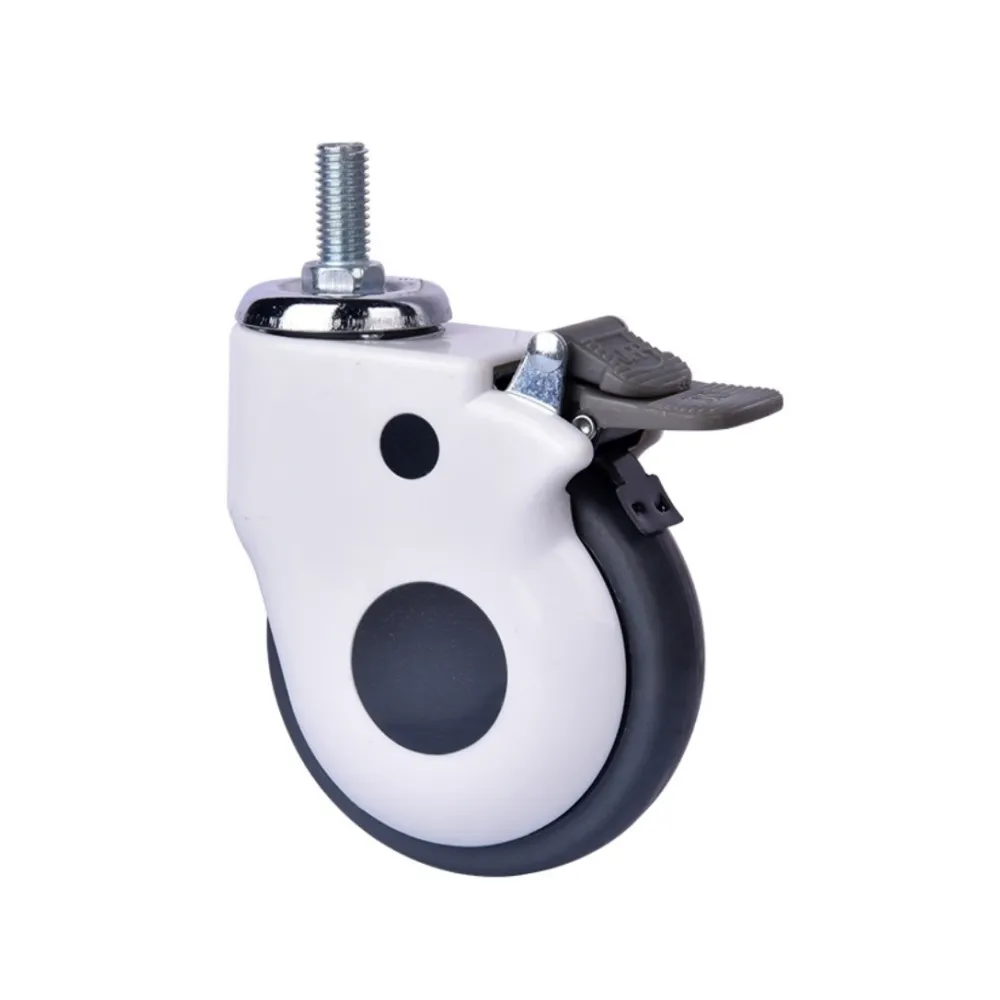
Spare parts are the lever buyers most often skip. A modest kit of casters, cranks, and guardrail hardware shipped with the beds costs little in volume and removes the scenario where a single failed caster takes a bed out of service for a month. On an urgent order, that kit is part of the delivery, not an afterthought.
Send your order details and get a dated answer
Tell us the bed type and function count, the panel width, the quantity by model, the finish or color, the guardrail and accessory list, the packing preference, the destination port, the Incoterm, and the date you need the goods loaded. With those fields in hand, ZhongShan YingYun Hardware Products Co., Ltd can confirm which models are finished goods, which require a production slot, and what the freeze point would be for your configuration.
Email lily@yingyunmic.com or call +8613528198959 with the list above, and include the drawings or reference photos if the order is meant to match an existing fleet.
FAQs
How fast can an urgent hospital bed order realistically be delivered?
For standard manual beds held as finished goods, packing and loading can often be arranged within days of a confirmed order. Beds built to order depend on component arrival and queue position, so the honest answer requires a model-level check rather than a general promise. Ask which models are finished today and work backwards from your loading date.
Can custom colors or logos be added to an urgent order?
They can, but they move the order out of the fast lane. A custom color adds a separate coating batch and curing cycle, and a logo adds a print or mould step on the headboard and footboard. If the date matters more than the branding, keep the standard finish for the urgent batch and apply customization to the next replenishment order.
What documents should arrive with an urgent shipment?
At minimum, a commercial invoice, a packing list matching the cartons actually loaded, a certificate of origin, and a declaration of conformity where the destination requires one. Ask for drafts before payment so any mismatch in model descriptions is corrected while there is still time to correct it.
Is air freight ever worth it for hospital beds?
Rarely for complete beds, because the cartoned volume is large relative to the value. It can be justified for small critical items such as casters, cranks, or a control handset that is keeping a ward out of service. Air freight does not solve a delay caused by an unfinished specification or a production queue.
What if only part of the order is needed immediately?
Split the order by model and send what is finished first. Expect two sets of shipping documents and two clearance events, and confirm that the second shipment will match the first in configuration. Partial delivery works when the early batch can open a ward on its own.
References
[1] IEC 60601-2-52:2009, “Medical electrical equipment — Part 2-52: Particular requirements for the basic safety and essential performance of medical beds,” International Electrotechnical Commission, 2009.
[2] ISO 13485:2016, “Medical devices — Quality management systems — Requirements for regulatory purposes,” International Organization for Standardization, 2016.
If you’re interested, check out these related articles:
Are Adjustable Hospital Beds Covered by Insurance or Medicare
Can Adjustable Hospital Beds Be Customized for Homecare Needs