
Hospital bed safety testing standards are not a single certificate. They are a set of verification points that show how a bed behaves under load, repeated use, side rail force, caster braking, and electrical fault conditions. I have spent nearly twenty years reviewing these reports from the manufacturing side, and the pattern is consistent: buyers who treat whole-bed certification as enough tend to miss failures that begin in one component. This article moves through the standards, the tests that expose real failures, and the documentation you should request before ordering.
Hospital Bed Safety Testing Standards and What They Cover
A hospital bed is regulated as a medical device in most export markets. The core reference for medical beds is IEC 60601-2-52, the particular standard for basic safety and performance requirements under the IEC 60601 series. It sits alongside risk management under ISO 14971 and quality system controls under ISO 13485. When I evaluate a supplier, I do not start by asking whether the bed has a certificate. I ask which clauses of IEC 60601-2-52 were applied, whether the test plan covered the exact bed configuration, and whether the report belongs to the same model revision being quoted.
The standard is useful because it treats the bed as a collection of failure points, not a single object. Side rails, mattress platforms, actuators, casters, control systems, and power interruption behavior each get separate verification. A bed can pass a visual factory walkthrough and still fail an entrapment gap test or a loaded brake test. For procurement teams, that means the test report list matters more than the certificate cover page.
Load Capacity and Side Rail Safety Verification
Before any electrical test, the mechanical safety checks catch most field failures. We run load tests with the bed platform in its highest and lowest positions because actuator and frame stress changes with height. Our manual and electric bed frames are rated at 250 kg static load, but sales documentation should never stop at that number. The buyer should confirm what that rating means: is it maximum patient weight or static test load, and what deflection or deformation is accepted? In our production, a bed that deforms visibly at rated load is not released. The frame must return to its original geometry.
Side rail checks come next. A guardrail can look stiff on display and still fail after shipping because the locking spring seat was stamped from thinner stock. We check locking force, the gap between raised rail and mattress platform, and the dimensional zones that can create head or neck entrapment. On hospital beds for adult patients, side rail gap and fit are not cosmetic. A small difference in mattress thickness changes the entrapment risk.

These are the first test points we confirm when a buyer sends a new bed specification.
| Test point | What we verify | Acceptance we work to |
|---|---|---|
| Frame load | 250 kg static load at raised and lowered height | No visible deformation or permanent set |
| Side rail locking | Raised rail under outward pull and repeated cycling | Locking device holds without release |
| Side rail gaps | Rail to mattress and rail to headboard zones | No entrapment dimensions in specified zones |
| Mattress retention | Platform retention under backrest movement | Mattress does not slide into gap zones |
| Bed exit gap | Gap between split rails or split sections | No open entrapment area in raised position |
| Labeling and instructions | Warnings, safe working load, and test reference | Matches quoted bed and manual |
A 250 kg frame rating does not mean every customized configuration is automatically validated for homecare or bariatric use. <Can [Adjustable Hospital Bed](https://hospitalbedaccessories.com/product-category/hospital-bed/)s Be Customized for Homecare Needs> covers why changed widths, low height positions, and rail configurations need a fresh look against the patient environment.
Caster, Brake, and Actuator Test Points
Casters and brakes are often the first components to expose a weak safety margin on a real ward floor. We test bed movement with the rated load on a hard surface, not only on smooth factory concrete. A caster that free spins on a workbench can still bind under load or lose its locking position after repeated central lock cycling. Our range includes TPR and PP medical casters in 3, 4, and 5 inch sizes, with full wrap, double face, and central locking options. The safety question is not whether the caster is white and smooth. The question is whether the brake holds the loaded bed on a slight incline and whether the release remains accessible for staff.

Actuator tests then focus on travel limits, emergency lowering, and duty under repeated adjustment. Our electric five function bed is rated for backrest angle 75°±5°, knee board angle 40°±5°, and reverse Trendelenburg no less than 12°. Noise level is specified at no more than 45 dB. These are not marketing numbers. They are production acceptance limits that a test report should show. If a supplier cannot produce the actuator travel and sound report, the bed may still work on site, but the buyer cannot compare it against the next offer.
Manual crank systems have a similar acceptance point. The crank must reach its stop without forcing the threaded rod beyond the safe range, which is why the ABS crank in our range is fitted with in-place protection.
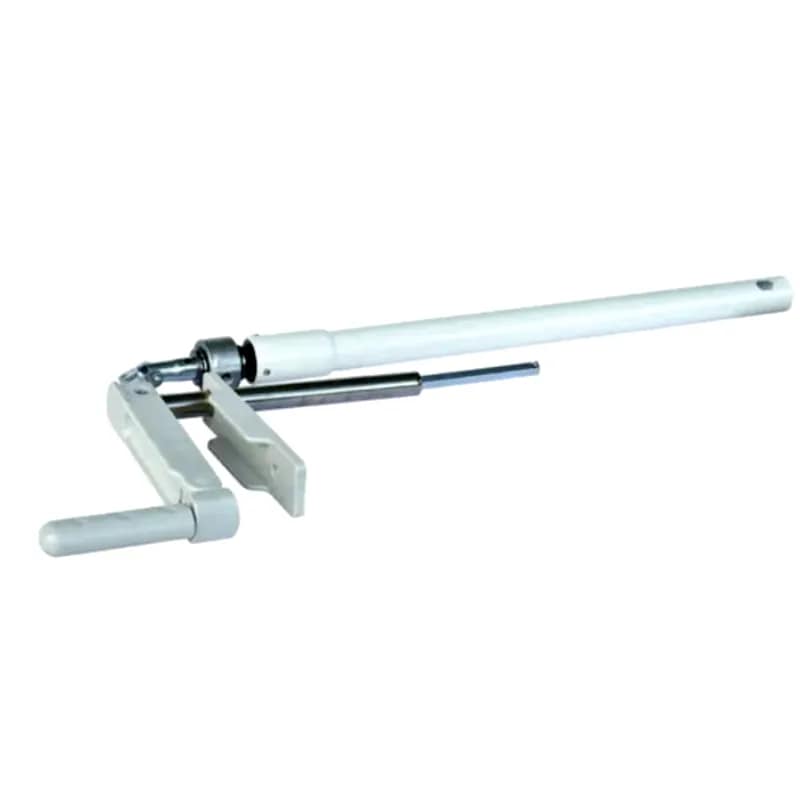
If your project includes bariatric patients, low-height fall management, or door clearance restrictions, do not stop at the standard 250 kg frame rating. Confirm the safe working load, side rail locking design, and caster configuration for the exact bed model before you commit. Send the bed function list and patient profile to [email protected], and we can identify which test record applies to that configuration.
Factory Test Records and Audit Checks
The difference between a consistent manufacturer and a supplier that forwards certificates is in the working documents. A useful factory test record includes the bed model, revision, date, batch or serial number range, test equipment used, and the pass criterion. When these fields are missing, the report is only paperwork. I have worked with several hospital groups that started with a certificate summary and then could not match it to the quoted bed revision. That gap usually appears after the order is placed and becomes expensive to correct.
A basic audit should cover incoming material records for steel, ABS, TPR, and fasteners. It should also cover welding and stamping process checks for bed panels and side rail parts, followed by finished bed mechanical tests for load, side rail, caster, and actuator function. The quality management system holds those records together.

For buyers who cannot visit the factory, a video call with the actual production line and requested test report samples is a practical next step.
If you cannot visit the factory, a document based audit is the fastest way to separate consistent manufacturers from suppliers that only forward certificates. <Comparing Prices for Hospital Bed Parts Manufacturers Effectively> covers comparing test documents, production scope, and warranty terms without treating price as the only variable.
Confirming Safety Test Documentation Before You Order
Too many tender deadlines arrive before the test report package is complete. A supplier can show a bed certificate, but the buyer still needs the underlying load, side rail, caster, and actuator records that match the exact configuration. At Yingyun Hardware, we have been manufacturing hospital bed components and complete beds since 2006, so the test documents are not pulled from a shelf. They are tied to the production line that builds the bed. Send your target standard, bed function requirement, and patient weight range to [email protected] or call +8613528198959, and we will confirm which documents apply to your order before you finalize the specification.
Common Questions About Hospital Bed Safety Testing
Does a CE mark cover every hospital bed safety test?
No. A CE mark shows that the bed meets the applicable European regulations and that the manufacturer has completed the required conformity assessment. It does not mean every test was repeated for your specific bed configuration, and it does not replace the underlying test reports. If a supplier cannot show the technical file summary behind the CE mark, the mark alone is not enough for a procurement decision.
What load capacity should I specify for a general ward bed?
For most general ward beds, 250 kg is our standard frame rating, but that does not automatically mean every 250 kg patient can be accommodated. The safe working load depends on mattress weight, accessory load, and whether the bed is used in a raised or lowered position. We ask buyers to specify the maximum patient weight plus mattress and any mounted equipment, then confirm the frame, casters, and actuator set match that total.
How can a buyer verify safety test records without visiting the factory?
In our experience, a factory visit is helpful but usually not required if the supplier is willing to show specific working documents. Ask for a report with the bed model, revision, test date, equipment, and pass criterion. A live video walkthrough of the production line and one sample test report is a reasonable way to confirm that the documents match the actual manufacturing process, especially when travel is not possible.
Are manual hospital beds held to the same safety standards as electric beds?
A common misunderstanding is that manual beds need only a simple mechanical check. Manual beds still fall under the same medical bed standard for mechanical safety, stability, side rails, materials, and entrapment zones. The difference is that electrical tests do not apply, and the verification focuses on crank mechanisms, threaded rods, and weld integrity. If your project mixes manual and electric beds, send the ward list and manual bed function requirement to [email protected], and we can confirm which test documents apply to each type.
If you’re interested, check out these related articles:
How Much Does an Adjustable Hospital Bed Cost on Average
Choosing a Reliable Hospital Bed Parts Manufacturer: A Comprehensive Guide
Identifying Reliable Brands for Adjustable Hospital Beds