
Field hospitals operate on a different clock than fixed facilities. Beds that arrive are expected to deploy in hours, hold up under heavy use, then pack away without damage. Procurement teams planning emergency or mobile medical units quickly discover that standard ward beds do not survive this cycle. Clinicians complain about casters jamming on uneven ground, bed panels rusting after weeks of rain exposure, and folded frames that refuse to lock into position. When deployment speed and reliability matter, the bed specification needs to start from the field environment, not from a renovation list for a permanent building.
Understanding the Demands of Field Hospital Environments
Field hospitals and emergency medical stations present a combination of stresses that standard hospital ward beds were never designed to handle. The equipment moves frequently. Tents and temporary shelters have uneven floors, sometimes just compacted soil or gravel. Humidity, rain, dust, and temperature swings inside unsealed structures accelerate corrosion and wear. Staff often work under time pressure and will fold, stack, and transport beds multiple times during a deployment cycle. Any bed that requires careful handling to avoid damage is a liability.
The bed frame needs to handle repeated setup and breakdown without loosening at joints or developing alignment problems. Casters must roll reliably on rough surfaces and lock securely, even when caked with mud. Bed panels have to resist moisture intrusion that can cause delamination or rust in stamped steel sheets. In field hospitals, downtime for maintenance is not a scheduled event. A bed that fails midway through a patient surge forces staff to improvise or consolidate, which degrades care quality.
Core Specifications That Matter for Emergency Deployments
When evaluating field hospital beds, three specifications determine whether the unit will perform or become dead inventory after two cycles.
Weight capacity is the first filter. Many procurement checklists default to a 170–200 kg safe working load, but field hospitals see unpredictable patient weights and occasional use as transport surfaces for supplies. A 250 kg load capacity, common in medium-duty hospital bed frames made from thick-gauge rectangular steel tubing, provides the margin needed without significant weight penalty. Beds using Liuzhou steel bed tops and iron frames, for example, achieve this rating at frame dimensions of approximately 2170×970 mm. This is not engineering overkill; it prevents weld fatigue in the exact places where field conditions concentrate stress.
Portability and folding are the second non-negotiable. A field hospital bed that requires tools to disassemble wastes valuable setup time. Snap-on ABS headboard and footboard structures that separate in under 30 seconds make a practical difference during triage setup. Foldable side rails that lock automatically, without a separate pin mechanism, reduce the small but real risk of components being lost during transport. The goal is a bed that one person can move and two people can make operational within a few minutes.
Caster performance is the third spec that fails most often in the field. Smooth hospital floors forgive marginal casters; field conditions do not. Central-locking systems with a single pedal controlling four casters save time and eliminate the instability of individually locked wheels. TPR casters in 5-inch or 6-inch diameters handle gravel, soil, and uneven concrete better than hard plastic alternatives. The noise level matters too: silent casters reduce the ambient stress in a tent ward where multiple beds are repositioned during the night.
If your deployment plan includes unpredictable terrain, it is worth confirming the specific wheel material and locking mechanism with the manufacturer before committing to a large order. Reach out at [email protected] with your operating environment and we can recommend a caster configuration matched to the surface conditions.
Manual vs Electric Beds in Field Operations
The debate between manual crank and electric actuator beds shifts significantly when the context is an emergency field hospital. Electric beds offer fingertip positioning and reduce the physical effort on nursing staff, which matters in high-patient-turnover scenarios. Five-function electric beds with independent backrest, legrest, height, and Trendelenburg adjustments provide ICU-level versatility. The electric three-function bed balances treatment needs with cost in wards where Trendelenburg positioning is not required.
However, the reliability equation changes under field conditions. Power availability is not guaranteed. Generators can fail. Batteries in backup systems discharge faster in heat. Manual crank beds avoid this dependency entirely. A three-crank manual bed with backrest, knee board, and full bed height adjustment operates identically whether the grid is up or down. For field hospitals that may operate in disaster zones or austere environments, manual systems eliminate a single point of failure that could render an entire ward immobile.
The practical compromise many field hospital planners arrive at is a mix: a core fleet of electric beds for ICU and high-dependency units, backed by manual crank beds for general wards and overflow. This matches the risk profile. The electric bed failure that requires a technician and spare parts is manageable when it affects two beds out of twenty. It is a crisis when all twenty are electric and the generator fails for four hours.

In our work with field hospital projects across Southeast Asia and Africa, we have seen electric beds deployed successfully when the generator specification was treated as part of the bed procurement, not a separate infrastructure decision. <Electric vs Manual Adjustable Beds: A Comprehensive Comparison> covers the trade-offs in more depth, and the same logic applies with higher stakes in emergency environments.
Materials and Construction That Survive Mobile Deployments
Field hospital beds deteriorate from the outside in. The failure sequence often starts with surface corrosion at welded joints, then progresses to stiff mechanical parts, and ends with structural cracks. Selecting the right materials from the start prevents this cascade.
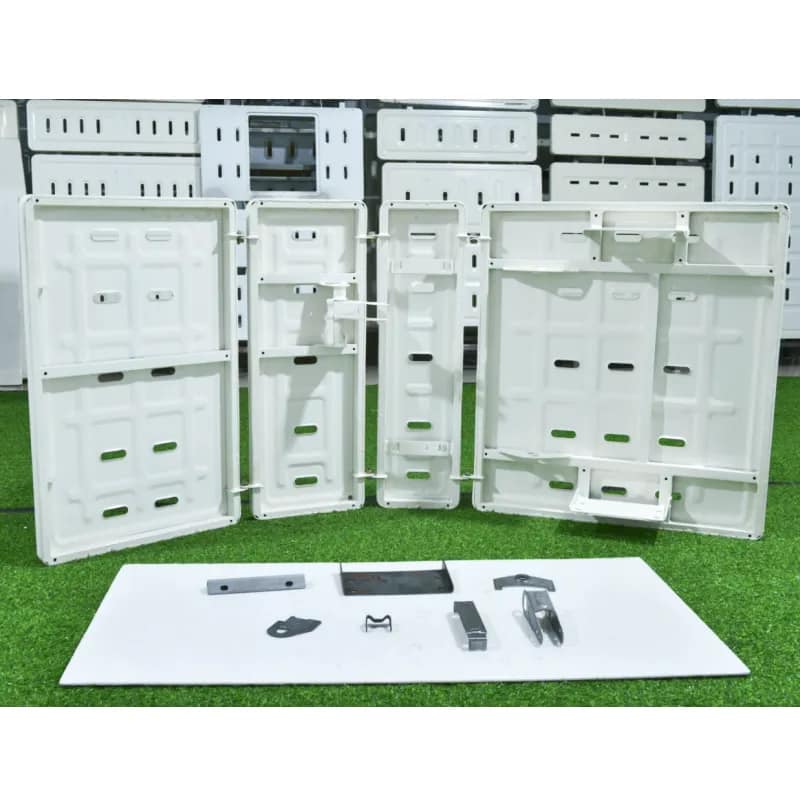
Bed panels are the largest exposed surface. Stamped willow steel panels with powder coating provide a smooth, cleanable surface that does not trap moisture. ABS plastic headboards and footboards withstand impacts during loading and unloading better than painted steel, which chips and then rusts. In high-humidity coastal deployments or tropical field hospitals, 304 stainless steel components for bed foot covers, IV pole sockets, and crank handles add a layer of protection that extends service life by years compared to standard carbon steel without plating.
Guardrails need special attention. The horizontal tube folding guardrail design allows quick access during emergencies and folds flat for storage. Aluminum alloy guardrails with die-cast connecting parts avoid the corrosion cycle that plagues all-steel rails in humid tents. The locking mechanism, typically a metal and nylon die-cast button with automatic lock, must engage positively even when operators are gloved or tired. A guardrail that can be left unlocked because the mechanism is stiff is a patient safety risk.
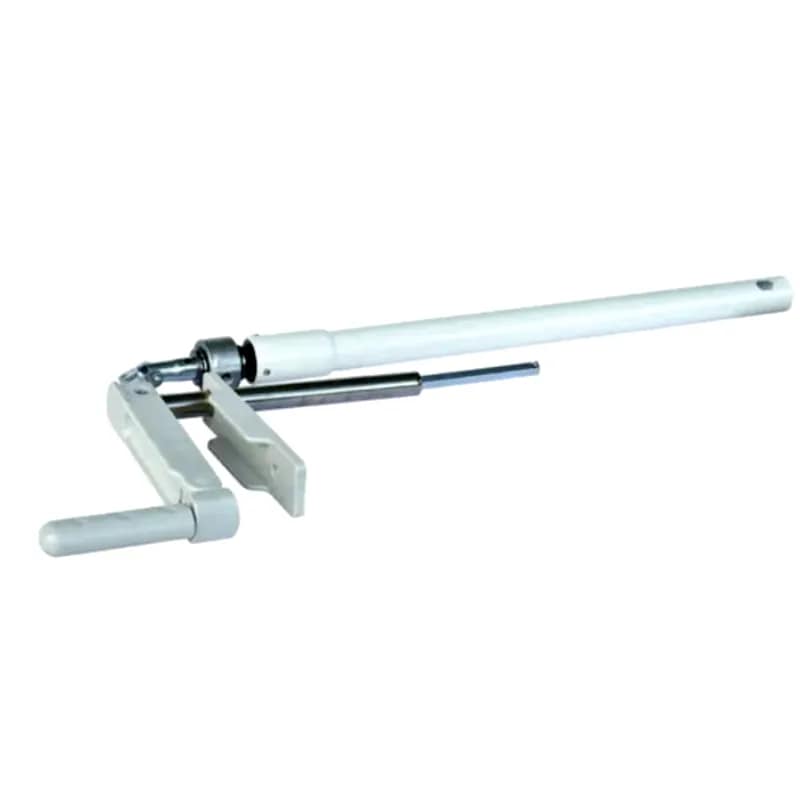
Crank mechanisms in manual beds are another point of failure that gets little attention until they fail. ABS cranks with in-place protection prevent the handle from disengaging mid-stroke. Iron universal joints with hexagonal steel connections are the industrial-grade standard. For MRI-compatible field units, non-magnetic stainless steel crank systems are available, though the volume of demand for this specification is low.
Material selection has a direct impact on import clearance too. <Essential Certifications for Medical Bed Parts Manufacturers> explains the documentation requirements for coated steel components and plastic parts entering regulated markets. Knowing which test reports your consignment needs before shipment avoids storage charges at the destination port.
Sourcing and Logistics: What to Look for in a Supplier
Ordering 200 beds for a field hospital is not like ordering sample quantities. The supplier’s capability to handle logistics, documentation, and after-sales support determines whether the project stays on schedule.
Container loading capacity is a practical first question. A standard 40-foot high cube container can hold approximately 50–60 electric hospital beds or 70–80 manual crank beds, depending on packaging format. Beds packed in wooden boxes with foam protection take more volume than flat-packed designs. Confirming the loading plan before finalizing the order allows accurate freight cost modeling and prevents last-minute volume shortfalls that require partial shipments.
Lead times for field hospital bed orders typically range from 15 to 45 working days, depending on quantity and customization. Off-the-shelf stock of common configurations can ship within two weeks for urgent deployments. MOQs for standard models from Yingyun Hardware start at 50 units per model, with packaging in export-grade cartons and foam. For turnkey hospital projects, larger volumes with mixed bed types, bedside cabinets, overbed tables, and IV stands can be consolidated into a single container order, which simplifies customs clearance.
Documentation and compliance is where inexperienced buyers lose time. A field hospital bed shipment requires a commercial invoice, packing list, bill of lading, and often a certificate of origin. If the destination country requires specific standards, the manufacturer should provide test reports for load capacity, material composition, and electrical safety for motorized beds. Our 1-year warranty covers mechanism and structure, and technical guidance is included for installation and troubleshooting.


Common Questions About Field Hospital Bed Procurement
Do I need electric or manual beds for a temporary field hospital?
It depends on your power infrastructure and the clinical intensity of the wards. For ICUs and high-dependency units, electric beds with battery backup provide the positioning control that clinical protocols require. For general wards, three-crank manual beds eliminate power dependency entirely and simplify maintenance. A mixed fleet with a ratio of roughly 1:3 electric-to-manual often balances clinical needs with logistical risk. The decision should be made by matching bed functions to the expected patient acuity, not by assuming electric is always the upgrade.
How do I verify the quality of a field hospital bed before placing a bulk order?
Request a physical sample of the exact model, not a similar bed from the catalog. Inspect the welds at all joints: they should be continuous and free of porosity. Check the folding mechanism by cycling the side rails ten times; any stiffness or uneven movement indicates poor tolerance control. Test the casters on a rough surface, not a showroom floor. Ask for the material certificates for the steel grade used in the frame and the ABS plastic in the headboard. A manufacturer that cannot provide a mill certificate for the steel is not one you should trust for a 200-unit order.
What is the typical delivery time for a container of field hospital beds?
Manual crank beds in standard white finish typically require 40–45 working days for production, plus shipping time. Electric beds are similar. Common caster models and ABS panels usually have shorter lead times because components can be prefabricated. If the order is urgent and the required configuration matches available stock, partial shipments can begin within 15–20 working days. Confirming the production schedule against your project timeline before issuing a purchase order prevents downstream delays.
How do I handle spare parts and after-sales support for beds deployed in remote locations?
Plan the spare parts order alongside the main bed order. The parts most likely to need replacement are casters, crank handles, and side rail locking buttons. We recommend 5% extra of each wear component per 100 beds deployed. The parts are small and inexpensive to include in the initial shipment, but expensive to air-freight later. Technical documentation and installation videos can be provided for field maintenance teams. For projects where on-site support is not viable, we offer remote video guidance during the setup phase.
Can I get custom dimensions or color coding for different wards in a field hospital?
Yes. Bed dimensions, bed panel width, guardrail height, and color are customizable. Field hospitals often use color-coded headboards to distinguish ICU, isolation, and general wards visually, which speeds up staff movement during emergencies. Powder coating colors can be matched to your specification. The MOQ for custom colors is typically 50 units per color. If your field hospital includes pediatric sections, children’s bed headboards and footboards in blue or pink ABS with cartoon patterns are available. Sharing your ward layout plan with the manufacturer early in the procurement process helps identify configuration requirements that would otherwise surface late.
Procuring hospital beds for emergency field hospitals involves spec decisions that standard purchasing checklists often miss. Casters that work on gravel, frames that fold without jamming after fifty cycles, and guardrails that lock reliably when gloved hands are moving fast are not premium features. They are operational necessities. If you are planning a deployment and want to confirm bed specifications against your operating environment, send your requirements to [email protected] or call +8613528198959. We can provide loading plans, technical datasheets, and sample inspection schedules to help you meet your timeline without last-minute surprises.
If you’re interested, check out these related articles:
Unlocking Comfort and Care Benefits of Adjustable Hospital Beds
Ultimate Guide to Cleaning and Maintaining Your Adjustable Hospital Bed
Choosing a Reliable Hospital Bed Parts Manufacturer: A Comprehensive Guide
How Much Does an Adjustable Hospital Bed Cost on Average
Electric vs Manual Adjustable Beds: A Comprehensive Comparison