
Procurement teams planning a medical bed bulk purchase often anchor the conversation on unit price, but the larger risk sits in specification gaps that only surface after installation. A facility order can absorb weeks of rework when frame dimensions, caster locking, or panel thickness do not match actual ward conditions. In our hospital furniture manufacturing work, bulk orders go wrong when buyers lock pricing before configuration. Before issuing a purchase order, buying teams should confirm bed type mix, frame and caster details, documentation, and payment structure.
What Must Be Locked Before a Medical Bed Bulk Purchase?
Before requesting quotes, procurement teams should fix four details: ward count, bed type mix, door and elevator clearance, and patient profiles. Many facilities list only the number of beds and leave the rest to suppliers. That creates pricing without configuration, and suppliers must either qualify the quote or protect themselves with wider margins.
In a bulk order I reviewed, a hospital specified manual beds for general wards and electric three function beds for recovery areas, but did not state doorway width until after production. The resulting change to foldable side rails and slightly narrower panels delayed the order by two weeks. Locking these variables early also makes lead time predictable. Our manual three crank bed, for example, measures 2170 by 970 by 480 mm in standard form, with height adjustment from 430 to 760 mm and load capacity of 250 kg. If the facility has narrow doors, the same frame may need a different side rail design or packaging arrangement. Those decisions are easier to handle before metal parts are cut.
Which Bed Functions and Specs Shape a Bulk Bed Purchase Price?
Function count drives both unit cost and maintenance exposure. A manual single crank bed handles only backrest elevation. A manual three crank bed adds leg board tilt and overall height adjustment. Electric beds replace hand cranks with motors and add powered positioning. For procurement, the question is not which bed is best, but which ward problems each function solves.

| Bed Type | Functions | Load Capacity | Best Use |
|---|---|---|---|
| Manual single crank | Backrest elevation | 250 kg | General wards with limited repositioning needs |
| Manual double crank | Back and knee elevation | 250 kg | Basic inpatient wards |
| Manual three crank | Back, knee, full bed height | 250 kg | Nursing homes and general hospitals |
| Electric two function | Powered backrest and bed height | 250 kg | Step up wards with frequent positioning |
| Electric three function | Powered back, knee, and height | 250 kg | Recovery and standard care wards |
| Electric five function | Five motor positioning, forward and backward tilt | 250 kg | ICU and high dependency units |
From our catalog, the electric five function bed uses five independent motors, supports one-button back, knee, full lift, and forward and backward tilt, keeps noise at or below 45 dB, and includes battery and manual backup for power failure. That backup is what ICU buyers should prioritize. The electric three function bed keeps noise at or below 50 dB, with height adjustment from 430 to 840 mm, and suits economy wards more directly. Choosing the right mix prevents paying for motorized functions that general wards will not use.
If your ward mix includes bariatric patients or ICU beds, do not finalize the equipment list without confirming motor backup and side rail locking. Send your bed count, ward types, and patient profile to [email protected], and we will check the configuration before the order is priced.
Which Frame, Panel, and Caster Choices Prevent Bulk Purchase Field Failures?
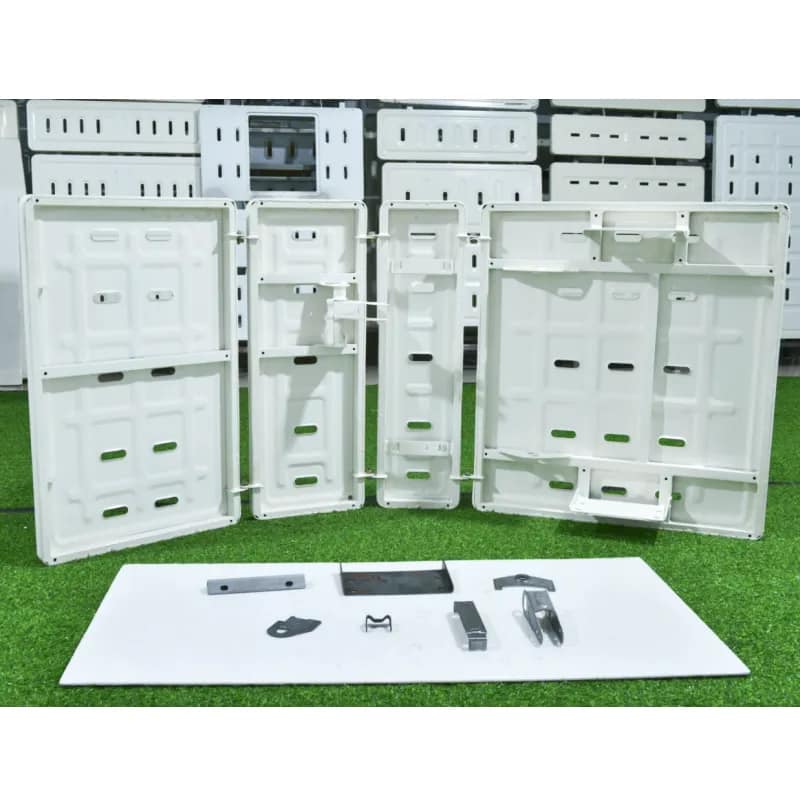
Frame and panel quality become visible only after repeated cleaning and loading. Stamped steel bed panels are common for active wards, and our product line includes 820 mm, 840 mm, and 900 mm four section stamped panels built from Willow steel at 0.8 to 0.9 mm thickness. The panel choice determines how much deflection appears under patient movement and how the bed responds to head and knee elevation. If a facility orders only by bed count, it can miss that different panel widths suit different ward layouts and mattress systems.
ABS plastic headboards and side rails bring snap on assembly and easier cleaning, but they require checking the locking mechanism. Our ABS and aluminum side rails are supplied in sets, commonly with a 50 piece MOQ, and the lock button design should be tested on sample units. In one bulk purchase we reviewed, the buyer chose a cheaper guardrail without confirming the automatic locking button; the facility later found that staff had to press the button twice on some positions, which slowed nightly rounds.
Panel and frame material decisions also affect how many replacement parts the facility must hold later. <Identifying Reliable Brands for [Adjustable Hospital Bed](https://hospitalbedaccessories.com/product-category/hospital-bed/)s> covers the reliability signals to check before committing to a bulk bed supplier.
Caster selection is the detail most facility teams miss. A bed can have a rated frame of 250 kg and still move poorly if the caster diameter, brake type, and wheel material do not match the floor. Our 5/8 inch central locking single face casters and 5/6 inch central locking double face casters use strong load bearing TPR construction, but hospitals with vinyl or epoxy floors may need a different tread. Confirm brake placement and locking style with the supplier before accepting a quote. Bulk pricing on casters means little if the bed does not stop precisely during transfers.

What Certifications and Documents Should a Bulk Bed Purchase Include?
Certificates matter most when destination markets apply different import rules. A bed that clears one border may be held at another if the control box, actuator, or side rail material lacks the right test report. Ask the supplier to list the exact certificates and test reports for the models in your order, not for a related product line. If the supplier cannot produce the certificate or test report for the exact model you are buying, move on.
Request the documentation before production, not after. Bulk orders often require a proforma invoice, packing list, and detailed specification sheet per model. For assembled hospital beds, our lead time is 40 to 45 working days, while many bed parts and accessories run 15 to 20 working days. Documentation review should run in parallel with that production window. Buyers should also confirm warranty scope. Our beds carry a one year warranty for mechanism and structure, but electronic component coverage should be stated separately in the quotation.
Ready to Confirm Bed Specifications Before Bulk Quotation?
A bulk order that signs on unit price without locked specifications usually pays later in replacement casters, rejected panels, or delayed installation. Yingyun Hardware can narrow your equipment list before quotation so the price you compare is the price for the correct beds. Send your facility bed count, ward mix, and target delivery date to [email protected] or call +8613528198959. We will confirm frame dimensions, caster type, and documentation against your site conditions before you commit.
What Facility Buyers Ask Before Signing a Bulk Bed Purchase?
How should we split the order between manual, electric, and ICU beds?
Start with patient acuity and staff workload, not unit price. General wards with low repositioning frequency can use manual crank beds. Wards with frequent position changes, high patient turnover, or limited nursing staff benefit from electric three function or five function beds. ICU units should receive beds with battery backup and five motor positioning. In our facility projects, a mixed order of manual, electric three function, and five function beds usually keeps the total equipment cost within budget while matching care levels.
Can a bulk order keep a single side rail and caster specification across all beds?
It depends on whether the beds move between wards or stay mostly fixed. If all beds stay in the same flooring type, one caster specification is manageable. If some units move through ramps, elevators, or outdoor corridors, casters with different brake and tread performance may be needed. Keeping one side rail type is easier, but the lock mechanism must still work with each bed frame. Confirm cross compatibility during the quotation stage, not after installation.
Is it safe to assume every hospital bed fits through a standard doorway?
A common assumption is that any hospital bed will clear a standard doorway, but that is not always true once side rails and casters are installed. A bed listed at 970 mm wide may still pass, but the turning radius and rail projection need review together. Our standard manual three crank bed measures 2170 by 970 by 480 mm, and we review side rail folded dimensions and caster height before confirming fit. Buyers should share doorway and elevator measurements when requesting a bulk quote.
What is the most common lead time risk in a large bed order?
In orders we have supported, the longest delays have come from customized bed panels, branded headboards, or nonstandard side rail lengths, not from the bed frame itself. This can be managed by freezing dimensions and color details early. Our assembled hospital beds have lead times of 40 to 45 working days, while many bed accessories run 15 to 20 working days. Share your bed count and preferred delivery window with [email protected], and we can confirm which item combinations meet the installation date.
If you’re interested, check out these related articles:
How Much Does an Adjustable Hospital Bed Cost on Average
Choosing a Reliable Hospital Bed Parts Manufacturer: A Comprehensive Guide
Leading Hospital Bed Parts Manufacturers: A Comprehensive Guide
Top Wholesale Hospital Bed Parts Manufacturers & Suppliers
Unlocking Comfort and Care Benefits of Adjustable Hospital Beds