
Selecting a hospital bed designed for Asian hospitals starts with the ward, not the catalog. In nearly twenty years of manufacturing hospital beds in Zhongshan, I have seen projects slow down because a bed was specified for a wide European corridor and then could not clear a 900 mm ward doorway. The more practical sequence is to lock door width, bed width, lift range, rail type, power conditions, and spare parts availability before comparing features. This article gives procurement and clinical teams a way to specify beds that fit Asian patient rooms, nursing workflows, and humid climates without overspending on functions the ward will not use.
Hospital Bed Design Must Match Asian Ward Conditions
Asian hospital projects diverge from European and North American specifications at the building level. Many older district hospitals and nursing facilities in South and Southeast Asia have 900 mm to 1000 mm door openings, narrow corridors, and shared patient bays. A standard bed frame with 970 mm to 1030 mm overall width can enter these rooms only when side rails fold fully and staff angle the bed through the door. If the project does not confirm that movement path before purchase, beds arrive and wait in the hallway.
Bed length is less often the problem. Standard frames around 2100 mm to 2170 mm fit most Asian general wards. The larger operational issue is turning radius and rail clearance. Compact wards with four or six beds per bay need a bed that locks firmly, moves without drifting, and does not force nurses to lift the frame at the doorway. Central-locking casters make this faster, but casters are only one part of the fit.
I have also seen projects select a bed by clinical function alone and overlook the effect of room layout on caregiver movement. In a renovated add-on ward, the available turning space changes quickly. A bed that works in one room can be unsafe in another if the rail extends too far or the casters cannot handle repeated scrubbing. Ward conditions should be the first specification, with bed function considered after the room constraints are set.
Bed Size, Height, and Rail Choices Affect Daily Ward Use
Bed width has three procurement consequences in Asian facilities. First, a wider bed may not pass through older doorways. Second, a wider bed consumes more floor space around the patient and can crowd an IV pole or vital signs monitor. Third, bed width affects patient transfer from a trolley, especially in smaller patient rooms where staff stand at the bedside rather than both sides.
The factory dimensions we commonly produce show the practical range. A manual three function bed with 970 mm frame width and 430 to 760 mm height adjustment works well for general wards where power backup is limited. An electric three function bed at 1030 mm wide with 430 to 840 mm height range works where staff expect electric positioning and taller caregivers need a higher working height. For ICU and high acuity wards, a five function electric bed around 960 mm wide with 460 to 720 mm height range and Trendelenburg positioning fits emergency procedures better, but it needs more service planning.
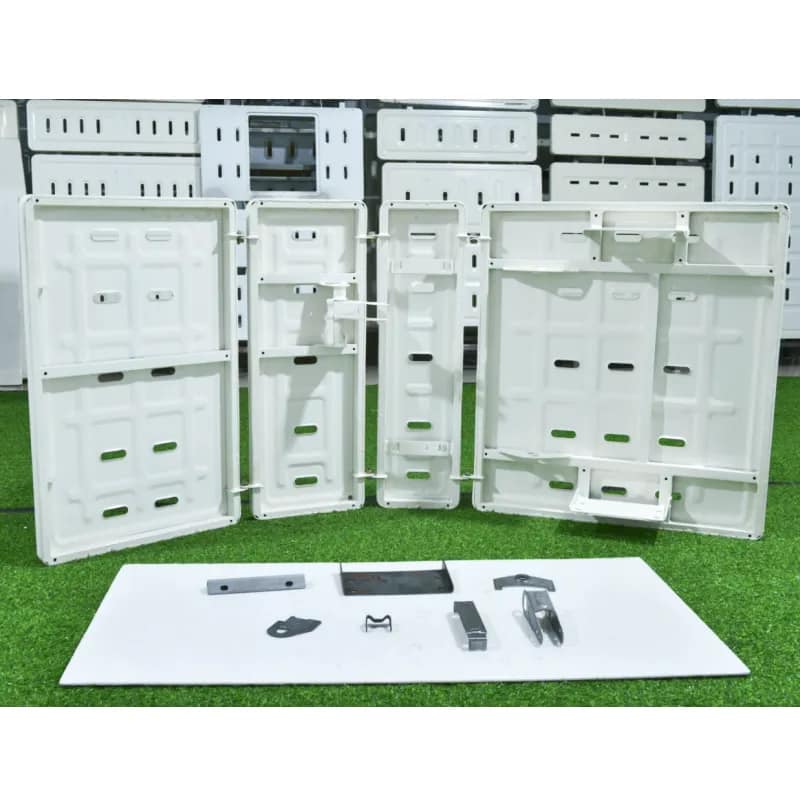
Side rail choice follows from the same room analysis. A folding guardrail with sufficient height prevents falls without blocking transfer. A heavy or difficult rail gets left down, and a permanently lowered rail is a fall risk. In smaller Asian wards, rails should fold fully below the mattress deck or align with the bed frame so door clearance is not worsened. The guardrail material also matters. ABS and aluminum alloy combinations clean quickly between patients, while steel components need a strong coating to resist regular wiping with disinfectants.
Side rail selection is not only about fall prevention; it also determines whether staff can transfer a patient safely in a narrow bay. <Essential Safety Features for Adjustable Medical Beds> covers rail, side clearance, and braking details that matter in compact Asian wards.

Manual, Three Function, and Five Function Beds Fit Different Asian Hospital Budgets
The choice between manual, three function, and five function beds is not simply cost. It is a match between power reliability, staffing levels, patient acuity, and service capability. A manual three function bed has no motor or control box to fail during a power outage. It is heavier for staff to reposition but predictable for a district hospital that lacks reliable after-sales service. Electric three function beds reduce nurse effort for back and leg positioning. Electric five function beds add full bed tilt and usually include battery backup for CPR and Trendelenburg use.
| Bed type | Frame width | Height range | Positioning | Best fit |
|---|---|---|---|---|
| Manual three function | 970 mm | 430-760 mm | Back 75°, knee 40° | General wards with limited budget or unstable power |
| Electric three function | 1030 mm | 430-840 mm | Back 75°, knee 40°, Trendelenburg 12° | Mixed wards with high patient turnover |
| Electric five function | 960 mm | 460-720 mm | Back 75°, knee 40°, Trendelenburg 12° | ICU and high acuity wards |
All three bed types in our production line carry a 250 kg load rating. The difference is not the steel deck; it is the actuator and control system cost, service burden, and the clinical positions the ward actually requires. A general ward that never uses Trendelenburg does not need a five function bed. A respiratory or ICU ward that cannot wait for manual cranking during an emergency should not rely on a manual bed.
If your hospital is replacing a mixed fleet or planning phased electrification, it is worth confirming bed width, rail type, and battery backup before freezing the order. Send your ward layout and target bed count to [email protected] and we will check which configurations fit the current rooms and the next renovation phase.
Humid Climate Protection and Spare Parts Planning Keep Beds in Service
Asian hospitals in coastal and tropical regions expose beds to high humidity, saline air, and frequent floor washing. The visible part is corrosion on bolts and casters. The more expensive problem is a seized crank mechanism or a motor bracket that rusts behind the panel. For these areas, we specify 304 stainless steel or coated steel for bolts, brackets, and exposed fittings. Brake casters are especially vulnerable because they sit near wet floors and cleaning chemicals. A TPR caster with a sealed central locking mechanism lasts longer than a cheaper single-face caster in the same ward.
Head and foot boards made from ABS engineering plastic resist water, disinfectant exposure, and impact better than painted wood or untreated steel in humid conditions. That is why we default to ABS boards for general and ICU beds in tropical projects. They also disassemble quickly for access behind the bed, which matters when maintenance staff need to reach a control cable or actuator.
In high humidity areas, caster and coating choices change long term maintenance cost. <Essential Certifications for Medical Bed Parts Manufacturers> explains which material certificates and surface treatment records to request before accepting a production bid.

Spare parts planning should be embedded in the initial order. For a 100 bed hospital, the purchase should include guardrails, cranks, casters, and bed panel connectors in the first shipment. If a bed is down for two weeks because a crank handle or caster must be replaced, the savings from a cheaper initial purchase disappears. We recommend a spare parts list tied to the bed model, not a generic accessory package, so the hospital stocks what actually fails.
Sourcing Hospital Beds for Asian Hospital Projects
Selecting a hospital bed designed for Asian hospitals is ultimately a fit problem, not a feature list problem. If the door width, lift range, climate coating, and spare parts plan are not confirmed together, the project will absorb the cost later in blocked corridors or idle beds. Send your ward drawings, door widths, and required bed quantity to [email protected] or call +8613528198959, and YingYun Hardware will confirm which bed configuration and finish fit your facility before you commit to production.
Common Questions About Hospital Beds for Asian Hospitals
What bed width works for a 900 mm doorway?
A 970 mm bed can pass through a 900 mm doorway only when the side rails fold completely and the door swings clear. The bed must be angled, and the movement path needs at least the bed length plus corridor width for radius. For older buildings with 900 mm doorways and short corridors, specify a 960 mm frame or a narrower 840 mm stamped bed panel configuration. The frame width alone is not enough; rail projection and caster height must be included in the drawing review.
Should Asian hospitals choose manual or electric beds?
It depends on power stability, staffing levels, and service access. If power cuts are frequent and after-sales response is slow, a manual three function bed avoids motor failure risk but increases caregiver effort. If the hospital has generator backup and enough staff, an electric three function bed reduces repositioning time and improves patient independence. For ICU and high acuity wards, electric five function beds are appropriate, but they require trained maintenance staff and a spare actuator plan.
How do we plan delivery lead time for a new Asian hospital project?
In recent Asian hospital projects we have handled, the critical path is usually not factory production but final approval of bed width, rail type, and special paint or coating requirements. Standard manual and electric beds in our line carry a 40 to 45 working day lead time after drawing confirmation. A hospital opening on a fixed date should place the bed order early, not after the building is complete, and route door clearances through the supplier as part of the order document.
Which material holds up best in humid coastal Asian cities?
A common assumption is that all steel beds are equal. In practice, the frame coating and the material of exposed parts matter more than the steel alone. A powder coated steel frame with 304 stainless steel brackets and TPR casters performs better in saline and wet conditions than a cheap painted frame with unsealed hardware. ABS head and foot boards also tolerate disinfectant cleaning better than many painted wood or composite surfaces. We specify the material combination after the facility location and cleaning practices are known. Share your facility location and bed quantity to [email protected], and we will confirm the right coating and spare parts package for the site.
If you’re interested, check out these related articles:
Identifying Reliable Brands for Adjustable Hospital Beds
Choosing a Reliable Hospital Bed Parts Manufacturer: A Comprehensive Guide
Unlocking Comfort and Care Benefits of Adjustable Hospital Beds
How to Choose the Right Adjustable Medical Bed for Your Clinic: A Comprehensive Guide
How Much Does an Adjustable Hospital Bed Cost on Average