
A hospital bed procurement checklist that stops at bed count and price leaves the most expensive failures on the delivery dock. Buyers often approve glossy specification sheets and only discover frame deflection, missing spare part coverage, or caster incompatibility after installation. Zhou Qiang, a medical hardware engineer at Yingyun Hardware, has spent nearly twenty years working across hospital bed and accessory manufacturing, and the pattern is consistent: facilities that treat procurement as a feature comparison pay later in lead time and rework. This checklist shifts the gate from brochure review to factory level verification, where the decisions are made in steel thickness, weld design, and component selection.
What Should a Hospital Bed Procurement Checklist Cover First?
Start with the room, not the bed. Door width, floor protection, and the longest transfer path decide whether a 970 mm wide bed can reach the ward without damaging walls or exceeding the facility’s turning clearance. For new hospital projects, ceiling height and medical gas outlet positions also matter because a bed with a high low range of 430 mm to 840 mm changes how nurses access wall mounted equipment. The same applies to long term care units where a low bed position of 430 mm reduces fall risk but may complicate cleaning underneath. A hospital bed procurement checklist should therefore begin with the ward level needs list: room dimensions, doorway clear width, patient weight range, staffing pattern, and expected bed function by unit. This is not a paper exercise; it is the first filter that removes beds that would otherwise pass a feature comparison but fail the building.
Bed function also sets the budget range far more than brand names do. <How Much Does an [Adjustable Hospital Bed](https://hospitalbedaccessories.com/product-category/hospital-bed/) Cost on Average> covers why motor configuration and frame construction create the widest cost differences, not the control panel.
Use the ward requirement matrix to fix the minimum specification before asking for prices.
| Ward type | Minimum bed function | Main specification to confirm |
|---|---|---|
| General ward | Manual 2 crank or electric 2 function | Bed width, side rail height, load capacity |
| ICU or high dependency | Electric 5 function | Trendelenburg, CPR release, battery backup |
| Long term care | Electric 3 function or low manual bed | Low bed height, guardrail gap, mattress compatibility |
| Bariatric unit | Reinforced manual or electric bed | Load capacity at 250 kg or higher |
| Pediatric ward | Child bed or adjustable bed with child rails | Guardrail spacing, headboard and footboard height |
How Should Hospital Bed Procurement Specify Frames, Panels, and Guardrails?
Frame and panel construction determines whether the bed survives 24 hour use or becomes a maintenance burden. In quotations, two hospital beds can both say “250 kg load capacity” while using very different material approaches. The frame should be checked by tube size and wall thickness, not by the painted finish alone. On the manual beds produced at Yingyun Hardware, the bed top is Liuzhou steel, the frame is iron, and the headboard and footboard are ABS/PP. Powder coated steel is the common frame finish, but the coating cannot compensate for thin tube wall or weak weld points. For stamped bed panels, ask whether the panel is 0.8 mm or 0.9 mm willow steel and whether the section edges are curled or welded. A curled edge panel resists bending better than a simple cut edge under repeated patient repositioning.
Guardrails need a separate check: rail spacing, locking mechanism, and whether the rail is aluminum alloy, ABS, or iron. A guardrail that rattles after six months is usually a tolerance issue in the fixed plate or the locking button.

ABS panels and headboards matter because they are handled by staff daily. ABS/PP headboards and footboards can be snap on and removed quickly, which makes emergency access and washing faster. When we build bed sets, the ABS components are checked for drop resistance and cleanability, not just color match. If a supplier offers wood grain or custom color, confirm that the color masterbatch does not change impact strength. For hospitals in humid or coastal areas, the bed panel support plates and connecting ears should be powder coated or stainless steel to slow corrosion.

Panel and guardrail failures usually trace back to part level inspection gaps rather than the final assembly line. <Identifying Reliable Brands for Adjustable Hospital Beds> covers how to check whether a brand’s testing claims are backed by named standards and actual part documentation.
Which Caster and Brake Configurations Affect Hospital Bed Procurement?
Casters decide whether a 250 kg bed moves smoothly on vinyl, tile, or carpet, and whether it can be locked securely during patient transfer. A common mistake is to accept “medical caster” as a complete specification. The buyer should specify wheel diameter, tread material, brake type, and load per caster. Yingyun Hardware’s central locking caster range includes TPR and PP combinations in 3 inch, 4 inch, and 5 inch sizes. TPR gives quiet, non marking movement with wear resistance; PP gives a harder rolling surface but may transmit more noise on rough floors. Central locking systems are preferable in ICU and emergency areas because a single pedal locks both rotation and swivel. If the hospital has long corridors or frequent bed transport, a 5 inch full wrapped caster reduces the force needed to push a loaded bed. For bariatric applications, do not rely on the bed’s total load rating alone; check the per caster rating and the central locking pedal’s stamped steel or aluminum construction. A failed caster under a 250 kg patient is a controlled fall waiting to happen.

If your project includes bariatric units or frequent bed movement across thresholds, it is worth confirming caster diameter and brake type before finalizing your bill of materials. Email [email protected] with the bed count and floor type, and we will confirm the correct central locking caster configuration.
What Does a Seven Point Pre Order Inspection Look Like?
A hospital bed procurement checklist earns its value at the pre order inspection. I have seen a 250 kg load rated bed fail not in the frame but in a thin welded support plate connection that was never listed on the quotation. The frame looked correct in the drawing; the part that failed was hidden under the head section. For that reason, we use a seven point check before production is released, and buyers should ask for the same evidence.
- Verify the bed frame tube size and wall thickness match the approved drawing, not just the product photo.
- Check stamped bed panel thickness and edge finishing, with the specification written as 0.8 mm or 0.9 mm.
- Confirm guardrail locking buttons hold the rail in the raised position under the side rail test load in your local standard.
- Inspect casters for tread material, wheel diameter, brake type, and the central locking pedal’s weld or casting quality.
- Review the actuator or crank system for stroke length, noise level, and manual backup operation.
- Validate the load capacity test result at 250 kg, with the bed in its highest and lowest positions.
- Confirm the model number, color code, and custom packing requirements against the purchase order before boxing.
These checks are not ceremonial. When a bed fails at item two or four, the correct action is to stop the order and correct the production specification before shipment, not to accept a discount and deal with the problem at the ward.
How Should You Structure a Hospital Bed Procurement Contract Before Payment?
A hospital bed procurement contract is not the place to say “standard quality.” It is the place to name the seven point inspection, the spare parts set, the lead time window, and the warranty on mechanism and structure. From the manufacturer’s side, the lead time difference between a single crank manual bed and an electric five function bed is not the motor; it is the stamping, welding, and powder coating sequence in the bed frame. For a mixed order that includes beds, head and foot boards, casters, and guardrails, you need a packing list that states each SKU, quantity, carton count, and container loading plan before the deposit. A missing part in the bill of lading becomes a delayed ward opening.
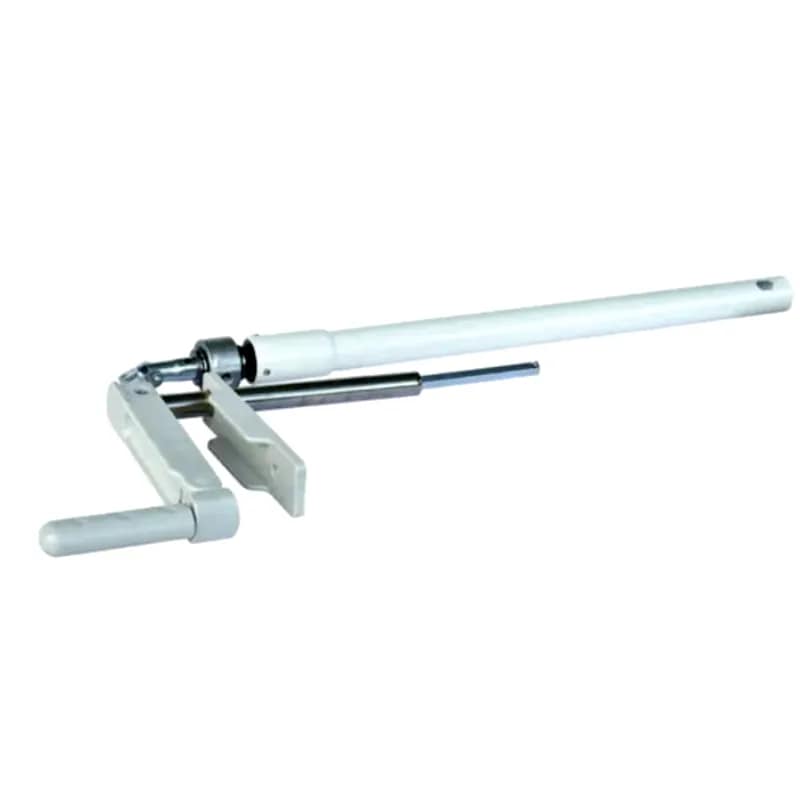
Frame and panel work occupies the largest share of the production calendar. <Understanding Lead Times for Hospital Bed Parts Manufacturing> covers how stamped bed panels, side rail parts, and casters move through different work centers, and why mixed SKU orders need a phased delivery plan rather than a single shipping date.
Most disputes happen after payment because the contract did not define what would be inspected at arrival. If the bed passes the supplier’s outgoing check but fails your hospital’s acceptance test, the remedy should already be written into the purchase agreement. A workable contract names the seven point pre order inspection, the spare parts set for the first year, the lead time window for each bed type, and the warranty period for mechanism and structure. Send your part numbers, quantities, and required delivery date to [email protected] or call +8613528198959, and we will return a quotation with the acceptance criteria linked to the bill of materials.
What Procurement Teams Ask Before Ordering Hospital Beds
How do we compare electric and manual hospital beds without overbuying?
Start with the function the ward actually needs, not the highest specification available. A general ward can run a manual two crank bed with back and knee adjustment and a 250 kg load capacity, while an ICU bed needs five electric functions, Trendelenburg, CPR release, and battery backup. Buying electric across every ward raises initial cost, increases motor maintenance, and complicates emergency operation if power fails. The practical choice is to match bed function to the care level, then keep one standard control layout in the hospital for nursing confidence.
Is a lower price always less expensive by the time the beds are installed?
A lower price is not the same as a lower landed cost. A bed that is 8 percent cheaper on the quotation may arrive with thinner stamped panels, unbranded casters, or no spare parts list, and those gaps show up as rework and downtime. We have seen buyers pay more later because the original order did not include the same caster model as the bed test sample. When comparing suppliers, ask for the bill of materials, not just the bed price, and confirm the bed configuration photographed in the quotation is the same one that will be produced.
Can a hospital bed be customized for a narrow doorway?
It depends on the door width and the bed’s widest fixed point. A bed with a 970 mm platform will not pass through an 850 mm clear opening without removing the side rails or tilting the frame, and that is not a workable daily transfer. For older buildings, specify a narrow frame width or removable head and foot boards rather than forcing a standard bed through the doorway. Ask the manufacturer for the assembled width, the packed width, and the width with guardrails up, then trial one sample against your tightest corridor before issuing the full purchase order.
What spare parts should we order with the first shipment?
In the first shipment, we recommend ordering the wearing parts that stop the bed from moving if they fail: spare casters, side rail locking buttons, crank handles or actuator brackets, and a small set of bed panel connecting ears and support plates. These items are inexpensive compared with a ward out of service. For electric beds, keep at least one spare hand controller and one actuator set per twenty beds if your maintenance team is comfortable with replacement. Share your bed model and annual patient volume, and we will confirm a spare parts list sized to your first year of operation at [email protected].
If you’re interested, check out these related articles:
Can Adjustable Hospital Beds Be Customized for Homecare Needs
Leading Hospital Bed Parts Manufacturers: A Comprehensive Guide
How to Choose the Right Adjustable Medical Bed for Your Clinic: A Comprehensive Guide