
Hospital Bed OEM is best understood as an engineering program that carries a buyer’s brand, not as a label service. A program built around the bill of materials, compliance file, and written process controls protects the brand over a ten year product cycle. A program built around logo placement usually creates warranty exposure that the buyer discovers after the first container lands. The decisions that follow determine whether a hospital bed OEM brand develops into a durable product line or becomes a costly sourcing problem.
A Hospital Bed OEM Program Starts With the Bill of Materials
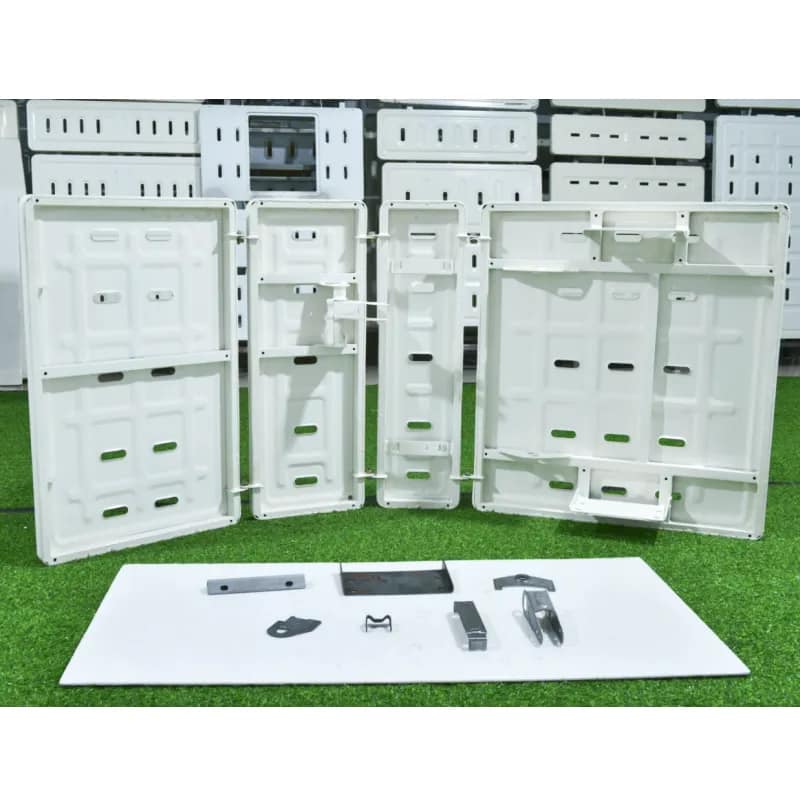
Brand buyers often request color and logo before reviewing the bill of materials. That order creates problems. The BOM is where cost, durability, service, and regulatory exposure are set. For hospital bed OEM, the BOM should fix the frame material, panel type, guardrail system, caster set, motor or crank configuration, and finish before any branding work begins. The frames we manufacture at Yingyun Hardware use Liuzhou steel bed tops and iron frames paired with ABS or steel panels. We keep component options in the BOM rather than in paint colors because field performance changes with the underlying parts.
When customization goes beyond color into frame geometry, panel width, and user needs, it changes the engineering scope. <Can [Adjustable Hospital Bed](https://hospitalbedaccessories.com/product-category/hospital-bed/)s Be Customized for Homecare Needs> covers the points that must be fixed before production drawings are approved.

Specification Locking Prevents Costly Field Failures
A common OEM failure is specification drift between the approved sample and mass production. The buyer signs a sample with a 250 kg load capacity, and a later cost reduction swaps a caster or changes panel thickness. The product looks similar but no longer performs the same. For hospital bed OEM, locked specifications are the only practical way to keep multiple production batches consistent. We record the model number, material grade, dimension tolerance, coating process, and testing method for each component before the first production run. The bed top, guardrail, caster, crank, and motor mount all get a written reference.
For example, a 5 inch TPR central locking caster and a 4 inch TPR twin caster may look close in a photo, but they affect clearance, braking feel, and turning radius differently. A brand buyer should never accept a substitute on these parts without a new sample cycle. The same applies to bed panel thickness. A 0.8 mm stamped panel performs differently from a 0.9 mm panel after thousands of elevation cycles.
Compliance Documentation Determines Which Markets You Can Enter
Brand development fails when the bed meets clinical expectations but lacks the paperwork for the destination market. Hospital bed OEM buyers should confirm which standards apply before selecting a configuration. CE marking under the Medical Devices Regulation, ISO 13485 quality management evidence, EN 60601 series electrical safety for motorized beds, and regional biocompatibility or material testing all affect a product’s legal entry. A manufacturer can produce a strong bed, but the brand owner is the one named on the label in most distribution agreements. That makes the technical file and declaration of conformity part of the brand asset, not an afterthought.
For the U.S. market, FDA registration and device listing shape how a private label bed can be promoted. For European buyers, CE technical documentation and an authorized representative may be required. For many African and Middle Eastern government tenders, a certificate of origin, test reports, and sometimes a pre-shipment inspection carry more practical weight than a marketing brochure. The safest move is to make documentation a line item in the OEM contract.
If your program involves motorized beds for a regulated market, confirm the exact safety standard before finalizing the BOM. Send your destination market and bed type to [email protected] and we will confirm which documentation package applies.
Payer coverage also shapes volume because patients and homecare distributors ask whether the bed will be reimbursed. <Are Adjustable Hospital Beds Covered by Insurance or Medicare> explains how coverage and medical necessity affect the purchase conversation.
Hospital Bed OEM Unit Economics Shift With Configuration Choices
Hospital bed OEM pricing is not a single number. The same bed frame changes cost when the caster set moves from standard to central locking, when the panel changes from painted steel to ABS, or when the motor package changes from two functions to five. A buyer who prices only the bed without locking the accessory list gets a quote that cannot be compared to another supplier. The unit cost should be evaluated beside the MOQ, packaging method, lead time, and warranty period. We currently quote crank systems and bed panels from 15 to 20 working days, while complete beds commonly run 40 to 45 working days because of assembly and testing.
| Factor | Lower-complexity option | Higher-complexity option | Typical effect |
|---|---|---|---|
| Function set | Manual crank | Electric 5 function | Higher motor, wiring, and testing cost |
| Bed panel | Stamped steel 0.8 mm | ABS or 4 section stamped steel | Tooling and surface process change |
| Caster set | Twin TPR | Central locking 304 stainless | Higher component and assembly cost |
| Documentation | Standard test reports | CE or FDA technical file | Longer approval and more records |
| MOQ | 50 units | 100 units or more | Price step changes and freight differences |
Unit pricing changes quickly once function, width, and accessory choices move away from a standard build. <How Much Does an Adjustable Hospital Bed Cost on Average> gives a useful baseline for adjustable bed cost before private label modifications are added.

Brand Protection Requires Written Process Controls
The brand owner’s risk concentrates in three places: incoming material quality, assembly consistency, and after-sales spare part availability. An OEM factory that cannot supply matching spare parts five years later leaves the brand owner to answer angry hospital customers alone. For that reason, spare part continuity belongs in the purchase agreement. We keep stamped bed panels, cranks, guardrails, casters, and bed hardware on file as individual SKUs, so a private label customer can reorder a replacement part instead of replacing an entire bed. This is a service and quality issue, not a sales point.
Quality control also has to be visible to the brand owner. We recommend buyers ask for an in-process inspection plan based on incoming material checks, dimensional checks after stamping or welding, load testing, and final function testing. If the factory can only offer a final photo before shipment, that is not a quality program. The more the brand owner understands the process, the fewer hidden substitutions occur.

A hospital bed OEM program succeeds when the buyer treats the bed as a product line, not a transaction. If you are developing a private label bed and need the BOM, documentation package, and sample plan aligned before production, send your bed type, target market, and quantity to [email protected] or call +8613528198959. We will quote from the bill of materials and confirm which standards apply to your program.
Buyers Ask These Questions Before Committing to a Hospital Bed OEM Program
Is a low MOQ always better for a hospital bed OEM brand?
No. A low MOQ is useful for first market tests, but it does not automatically lower total cost. Small runs often carry higher freight per unit, more packaging waste, and limited negotiating room on components. The value of a low MOQ depends on whether the factory has standardized parts already in production. If the bed uses existing bed panels, casters, and cranks, a lower MOQ can work without heavy tooling cost. If every part is custom, the same low MOQ becomes expensive because setup, sampling, and inspection still occur once per production lot.
Can I put my own brand on an existing bed design?
Many buyers assume OEM means only printing a logo on the headboard, but the stronger question is which specifications can change. An existing bed design can carry a buyer’s brand if the frame width, panel material, guardrail height, caster type, and motor function fit the target market. We usually start with a standard model and lock the BOM before changing color, side rail style, or packaging. That way the buyer gets brand differentiation without paying for a full custom bed development. The line between OEM and custom is usually the bill of materials, not the logo.
What documentation does a private label hospital bed usually require?
It depends on the destination market and bed type. A motorized bed for the European Union normally needs CE technical documentation, EN 60601 series electrical safety evidence, and an EU authorized representative. A manual bed sold into many Middle Eastern or African tenders may need test reports, a certificate of origin, and pre-shipment inspection records. For the United States, FDA device listing and quality system evidence matter. The buyer should make documentation a deliverable in the OEM agreement, because the brand owner remains the named responsible party in most distribution channels.
How do I stop the factory from switching to cheaper materials later?
In programs we have worked on, the best protection is not trust. It is a locked specification sheet with material grades, coating methods, component model numbers, and testing thresholds written into the purchase agreement. We also recommend keeping an approved sample and requiring a written change notice for any substitution. The buyer should add incoming inspection rights and a spare part continuity clause. These controls catch quality drift before containers arrive. If you want to review a locked BOM format before signing, send your bed type and market to [email protected].
If you’re interested, check out these related articles:
Identifying Reliable Brands for Adjustable Hospital Beds
How Much Does an Adjustable Hospital Bed Cost on Average
Electric vs Manual Adjustable Beds: A Comprehensive Comparison