
Hospital bed decisions in USA healthcare facilities usually go wrong before the purchase order is issued. A buyer confirms a three function electric bed, but the room door clearance, staff training, or emergency lowering procedure was not checked. At Yingyun Hardware, we ask facilities to fix patient acuity, doorway dimensions, and maintenance capability first. Hospital bed selection then becomes a specification and supplier verification task, not a guess. The real difference is how the bed behaves on day 90 when rail locks, brake operation, and spare components determine whether the asset stays in service.
Hospital Bed Compliance Requirements for USA Facilities
USA facilities should treat every bed model as a regulated device assignment. A hospital bed with side rails and adjustable positions falls under FDA device classification, and the supplier must be able to show the model’s regulatory path before shipment. We keep test reports tied to the exact model number and configuration. That matters because a component change, such as a different actuator or control box, can invalidate the original safety file.
Three documents carry the first review for us. The 510(k) summary or predicate reference shows whether the bed has a cleared marketing path. The test records for electrical safety and rail locking show whether the evaluation was repeated on the current design. The labeling and intended use statement confirms patient weight limits, environment, and contraindications. If the intended use does not match how the hospital plans to use the bed, that is a bigger problem than the price difference.
We also ask for ISO 13485 certification and, if the bed will run through a group purchasing contract, the specific documentation format the contract requires. A manufacturer can have a valid device file and still fail a GPO data submission because document naming or test standard versions do not match. Preparing that document set before the facility review shortens the approval loop.
Hospital Bed Functions That Match USA Care Workflows
USA hospitals tend to separate general ward beds, step-down beds, and ICU beds by task, but the functional overlap is wider than most buyers expect. A general ward bed usually needs back elevation, knee elevation, and height adjustment. A step-down or progressive care bed benefits from Trendelenburg and reverse Trendelenburg. An ICU bed may need one-button CPR release, cardiac chair positioning, and a control system that nurses can operate without hunting through menus.
Electric and manual configurations still have a practical dividing line. Manual beds are not obsolete for facilities with limited outlets, backup power concerns, or maintenance gaps. The crank mechanism is slower and staff-intensive, but it remains predictable during outages. Electric beds reduce nursing strain, which is why they are common in higher acuity departments.
| Bed Type | Primary Functions | Load Capacity | Common USA Ward Fit |
|---|---|---|---|
| Single crank manual | Back lift | 250 kg | Low acuity general ward |
| Double crank manual | Back and knee lift | 250 kg | General ward with limited power backup |
| Three function electric | Back, knee, height | 250 kg | Medical surgical and step-down |
| Five function electric | Back, knee, height, Trendelenburg, reverse Trendelenburg | 250 kg | ICU and high acuity step-down |
A five function electric bed is not automatically the right answer for every general ward. If a facility cannot maintain five motors and the associated control boards, a three function bed may serve the nursing workflow with fewer failure points. The decision should follow task frequency and the biomedical team’s service capacity, not the highest available feature count.
Comparing three motor and five motor beds by unit price alone hides cost differences in control boards and training. <Comparing Prices for Hospital Bed Parts Manufacturers Effectively> normalizes quotes by function count, warranty scope, and spare part coverage.
Hospital Bed Materials, Load Capacity, and Durability Checks
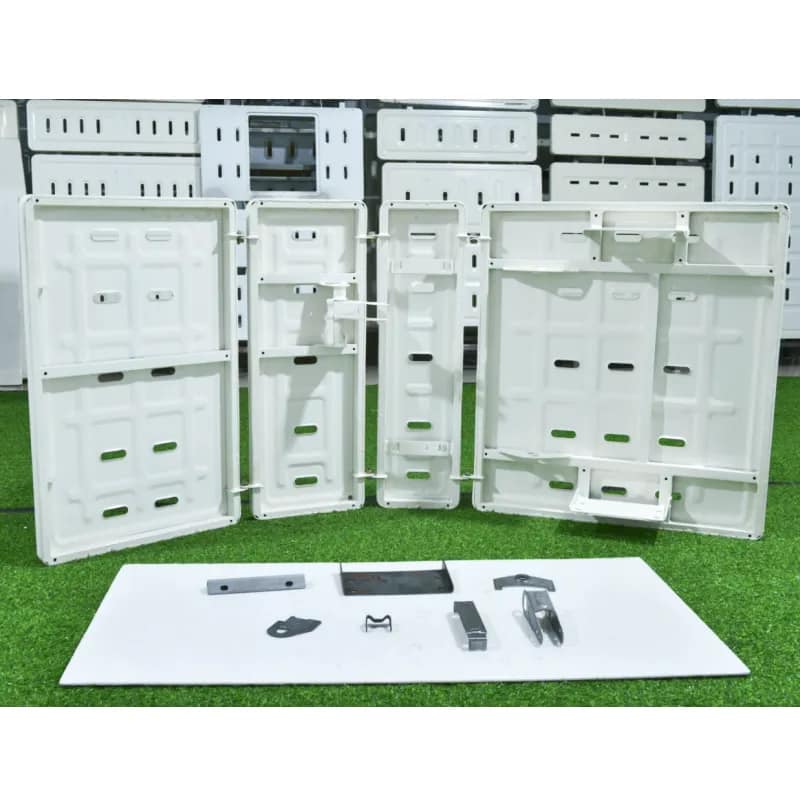
Material selection determines how long a bed stays quiet, cleanable, and structurally stable. We see two common panel approaches in hospital beds: ABS plastic panels and stamped steel panels. ABS panels are easier to clean and disassemble quickly, which makes staff access simpler during patient care or emergency procedures. Stamped steel panels provide more structural rigidity in high-use settings. The choice should follow room protocol and cleaning chemicals, not just appearance.
Load capacity is not the same as safe working load. Our manual and electric bed platforms are built around a 250 kg rated load, but the rating only holds when the frame, casters, side rails, and panel supports are all matched to the same specification. A bed fitted with the wrong caster set can still pass a visual inspection and fail under actual patient movement. We verify caster stem size, brake type, and panel connection points together rather than certifying the frame alone.
Side rails and guardrails get more wear than the bed surface. Rail locking must stay firm after repeated cycles because a loose rail creates a fall risk. We test rail lock engagement and release force rather than assuming the design remains stable after cleaning. For long term care facilities, we recommend confirming the rail gap and mattress compatibility before the order. A mismatched mattress can defeat an otherwise compliant rail system.
Material consistency is one of the strongest predictors of long-term service behavior. <Identifying Reliable Brands for [Adjustable Hospital Bed](https://hospitalbedaccessories.com/product-category/hospital-bed/)s> separates manufacturers that hold panel, rail, and frame material specifications constant from those that change materials between production runs without clear documentation.
If your facility’s bed program involves bariatric patients, continuous Trendelenburg use, or a split rail setup, confirm the tested load rating, rail gap, and actuator duty cycle before finalizing the bill of materials. Reach out at [email protected] with the bed count and patient profile.
Hospital Bed Supplier and Lead Time Planning for USA Buyers
Supplier verification for USA deliveries should include more than a factory audit. We ask whether the manufacturer has exported beds to facilities with similar electrical standards, door dimensions, and service expectations. The shipping documents matter, but the production file matters more. A supplier should be able to show the bill of materials for each bed series, the spare part coding, and the change control process. If a part number changes between sample and production, that creates a future service problem.
Lead time planning works backward from the installation date. Manual beds can move faster because fewer electrical components require assembly and testing. Electric beds add actuator, control box, and bed end connector testing that should not be compressed. For a USA facility, confirm whether the supplier’s lead time includes documentation review, possible UL or NRTL marking for electrical components, and container loading. We prefer to state separate lead times for sample approval, production, inspection, and sailing because it prevents unrealistic promises.
Lead times often change when a USA buyer requires a specific electrical standard, label format, or test documentation set. <Understanding Lead Times for Hospital Bed Parts Manufacturing> covers how material preparation, finishing, and assembly steps affect confirmed shipping dates, which matters when a facility is working against a renovation cutoff.

Request these before sampling: model-specific test documents, intended use statement, rail and mattress clearance drawings, caster and actuator part numbers, and the warranty response procedure. Skip this step and the sample approval can go smoothly while the shipped product eventually drifts from the file.
Sourcing Hospital Beds for USA Facilities Without Guesswork
USA healthcare facilities are not buying a bed alone, they are buying a service period that starts with first patient use. A bed that passes the sample review but lacks proper documentation, spare part coding, or confirmed door clearance becomes a cost in the first year. We have manufactured hospital beds and bed accessories since 2006, and the cleanest projects are the ones where the facility fixed the patient profile and the documentation requirements before ordering.
If your facility is expanding, replacing manual beds with electric, or equipping a new unit, send your patient mix, room dimensions, required functions, and target installation date to [email protected]. You can also call +8613528198959. Share your timeline and we will confirm the bed configuration, lead time, and documentation package that fits the project instead of leaving those decisions to the shipping date.
Common Questions About Hospital Bed Procurement
Does a hospital bed for a USA facility need model-specific FDA clearance?
Yes, most adjustable hospital beds used in US healthcare settings require a 510(k) premarket notification or a confirmed predicate pathway before commercial distribution. The hospital bed is not a device you can clear once for the factory. The regulatory file follows the model and its intended use. When a buyer changes from manual to electric or adds a different side rail configuration, the documentation may no longer match. We have fixed this before sample approval by pulling the test summary, intended use statement, and device description together as one package. If the supplier cannot show that package during evaluation, ask for it before committing to a shipping schedule.
What dimensions matter most for USA patient rooms?
It depends on the bed’s lowest height, the door clearance, and the corridor turn. Standard USA patient room doors are wider than many home care doorways, but a fully assembled electric bed still needs to fit through freight elevators, fire doors, and bathroom openings during transport. We start with the frame length, width, and lowest height rather than only the mattress platform. The lowest height matters for fall risk, transfer safety, and clearance under ceiling lifts. If the facility uses a bariatric or split rail configuration, the request changes further, so we measure the whole delivery path before confirming a model.
How do we know spare parts will be available after installation?
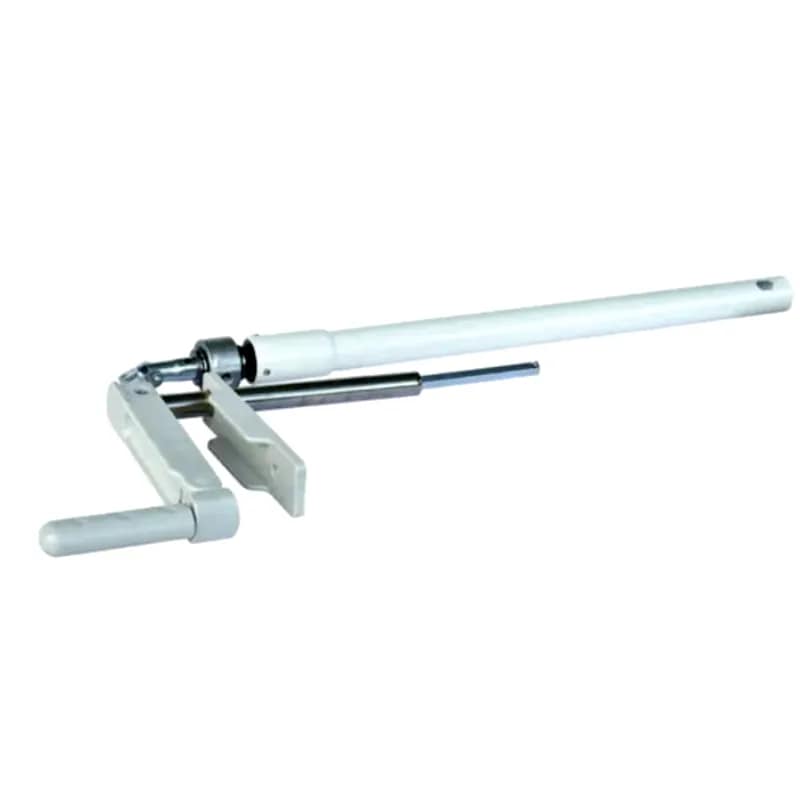
In programs we have supported, the practical test is whether the manufacturer sells stamped bed panels, casters, guardrails, cranks, and actuator brackets as separate line items instead of only offering whole beds. A bed that cannot be serviced item by item becomes a replacement problem. We check that the supplier maintains part numbers through change control, so year two and year five orders refer to the same component. We also keep bearings, casters, and rail locks as stock items rather than special orders. If your maintenance team wants a spares list before the first shipment, request it at the same time as the quotation.
Is a five function electric bed overkill for a general ward?
A common mistake is to assume more functions automatically improve care. Five function beds earn their cost in ICU, stroke, respiratory, and cardiac chair workflows where Trendelenburg and reverse Trendelenburg are part of therapy. A general ward that mostly needs back elevation, knee support, and height adjustment can run well on a three function electric bed, and a manual double crank bed still has a place when power reliability is weak. The right question is whether the nursing staff will use the extra functions every week. If not, the extra motors are additional service points without clinical return. Share your unit types and patient mix with [email protected], and we will confirm the configuration that avoids paying for unused functions.
If you’re interested, check out these related articles:
How Much Does an Adjustable Hospital Bed Cost on Average
Leading Hospital Bed Parts Manufacturers: A Comprehensive Guide