
Selecting a pediatric hospital bed supplier is not a simple matter of choosing a smaller version of an adult medical bed. Pediatric beds must respect different body proportions, higher entrapment sensitivity, more demanding side-rail geometry, and care workflows that often involve parents or guardians at the bedside. A qualified supplier should therefore be evaluated on safety engineering, age-band configuration, documentation, and OEM flexibility — not only price or delivery. At the base level, every powered bed should meet the general safety framework in IEC 60601-1 [1].
Why Pediatric Beds Are Not Simply Smaller Adult Beds
A pediatric bed program usually fails when procurement treats the bed as a scaled-down adult frame. The clinical risks are different. A child can fit into openings and gaps that would not present the same entrapment risk to an adult, and a younger patient may not understand or comply with bed-exit restrictions. That changes the importance of side-rail geometry, mattress fit, deck height, control lockout, and braking.
The supplier should be able to show how each age-band configuration is specified, not simply offer one “children’s bed” model. Key points to confirm include:
- Deck width and length matched to the intended mattress system
- Minimum deck height low enough for safe patient access where clinically appropriate
- Side-rail height and spacing designed for the target age group
- Safe working load suitable for both small children and larger adolescent patients where required
- Caster and braking behavior that does not create pinch points at low deck heights

A supplier with real pediatric OEM experience will ask about these points before quoting, because a bed that passes adult entrapment checks may still be unsuitable for a toddler or young child.
Safety Requirements That Should Drive Supplier Shortlisting
The core pediatric safety reference is IEC 60601-2-52, which sets particular requirements for medical beds, including mechanical hazards, side rails, mattress compatibility, and control functions [2]. U.S. buyers should also apply the FDA’s hospital bed safety guidance, which emphasizes entrapment zones, rail gaps, and the need for dimensional compatibility between rails, deck, and mattress [3]. Risk management under ISO 14971 should be visible in the supplier’s design file, especially for changes made to side-rail height or mattress thickness [4].
For a pediatric ward, the supplier should be able to provide documentation covering:
- Side-rail and mattress dimensional drawings
- Entrapment risk assessment for the intended age band
- Electrical safety and mechanical durability test reports
- Braking and caster locking verification
- Control lockout behavior for patient-facing hand pendants

Pediatric side-rail geometry and mattress fit are the two highest-risk areas in a child-specific bed program. <Essential Safety Features for Adjustable Medical Beds> covers the core hazard checks and control lockouts that should be part of any pediatric supplier review.
A responsible supplier will not present a pediatric bed as “safe” based on a single certificate. It will explain which standard, clause, or test setup applies to each risk area.
Functions and Controls to Specify for Pediatric Wards
Pediatric beds do not need every function available on a five-function ICU bed. The function set should follow the care workflow, patient age, and whether the bed will be used in general wards, observation units, or intensive care. Common pediatric specifications include backrest and knee articulation, height adjustment, Trendelenburg or reverse Trendelenburg where clinically required, CPR release, and battery backup for transfer or power interruption.
Controls are more sensitive in pediatric environments. A child may press a hand pendant out of curiosity, so lockout or clinician-controlled functions are often important. Usability engineering under IEC 62366-1 should address how nurses, parents, and patients interact with the bed without creating use errors [5].
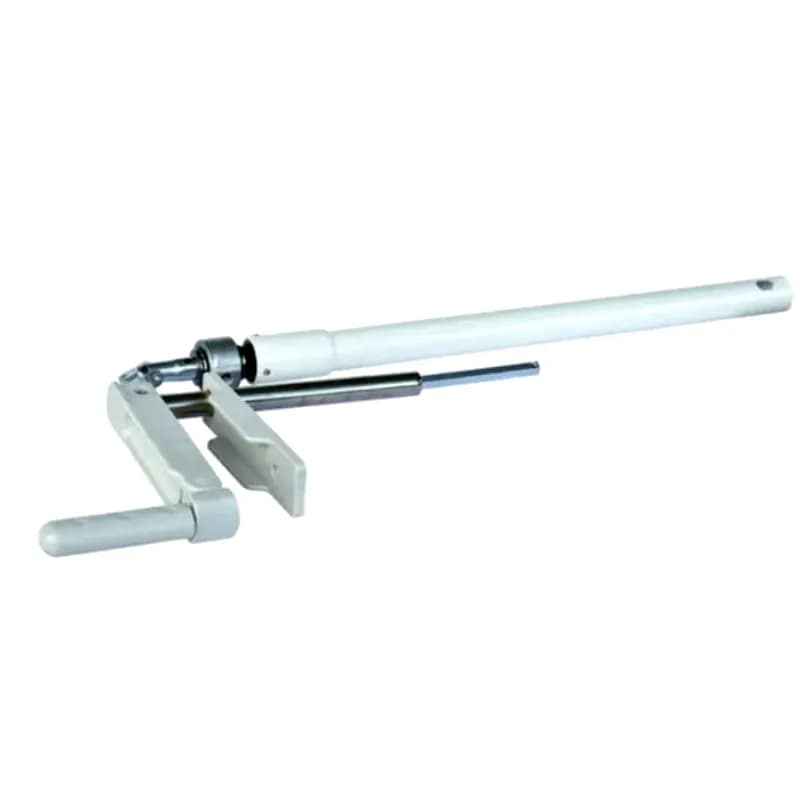

For manual pediatric beds, crank systems should have in-place protection and low operating force. For powered beds, motor noise, acceleration, and emergency lowering behavior should be confirmed in the supplier’s test documentation. Casters should lock securely without excessive pedal force, especially when the bed is set at a low pediatric deck height.
If the clinical team is moving from adult general-ward beds to age-specific configurations, function selection should follow care workflow rather than product availability. <How to Choose the Right Adjustable Medical Bed for Your Clinic> covers the decision sequence for bed features, accessories, and ward integration.
Supplier Evaluation and Certification Checklist
A pediatric hospital bed supplier should be evaluated on documented evidence, not on marketing language. The following table summarizes the main verification areas for pediatric procurement.
| Verification Area | Pediatric-Specific Concern | Documentation to Request |
|---|---|---|
| IEC 60601-2-52 compliance | Side-rail gaps, mattress fit, mechanical safety | Test report or declaration of conformity |
| ISO 13485 quality system | Consistent production and traceability | Valid certificate |
| Rail and mattress drawing set | Entrapment risk for small body dimensions | Controlled dimensional drawings |
| Electrical safety | Patient and caregiver exposure to powered parts | IEC 60601-1 test report |
| Material safety | Cleanability, non-toxic surfaces, corrosion resistance | Material data sheets and relevant regulatory declarations |
| Caster and brake testing | Stability during transfer and low-height use | Brake force and locking test results |
| Usability file | Prevention of child-initiated misuse | IEC 62366-1 usability documentation |
| Reference projects | Real pediatric or children’s hospital installations | Reference list or case summary |
A supplier’s certification portfolio only matters when it matches the market where the beds will be installed. <Essential Certifications for Medical Bed Parts Manufacturers> covers IEC, ISO, CE, and documentation requirements for medical bed components.
Mid-article supplier review: If you need a pediatric bed compliance check, send your target age groups, regulatory market, door clearances, and mattress inventory to [email protected] or call +8613528198959. Yingyun Hardware can review the required IEC 60601-2-52 test scope, side-rail configuration, and OEM documentation before quotation.
OEM and Customization Questions
Pediatric programs often require more customization than adult ward tenders. A children’s hospital may request specific colors, rounded ABS panels, themed guardrails, shorter side-rail spacing, or a bed length matched to an existing crib and mattress inventory. The supplier should manage these changes through a controlled design process, not as cosmetic afterthoughts.
From an OEM manufacturer’s perspective, the main customization items are:
- Overall deck length, width, and height range for the target age band
- ABS head and foot board color, shape, and logo position
- Side-rail bar spacing, height, and locking style
- Caster type, diameter, and central-locking preference
- Crank or electric actuator configuration
- Packaging and installation documentation for the destination market
Design changes should be reviewed under ISO 14971 so that a new rail style or mattress type does not introduce a new entrapment risk [4]. The supplier should freeze drawings before production and provide a sample or photo approval step when appearance is critical.
Request a Pediatric Bed Specification Review
If you are planning a pediatric ward, children’s hospital expansion, or an OEM pediatric bed program, send the following information for a focused technical review:
- Target age groups and patient weight range
- Regulatory market and required certifications
- Door widths, elevator dimensions, and ward layout
- Existing mattress sizes or preferred mattress system
- Required bed functions and side-rail configuration
- Target quantity and delivery window
Contact Yingyun Hardware at [email protected] or call +8613528198959. The engineering team will review the pediatric safety scope, proposed specifications, and documentation package before quotation.
Frequently Asked Questions
What is the difference between a pediatric hospital bed and a standard adult bed?
A pediatric bed is designed around smaller body dimensions, different side-rail spacing, lower deck height where appropriate, and controls that limit misuse by young patients. The safety risk profile is different, so mattress and side-rail compatibility are more critical than simply reducing frame width.
Which certifications should a pediatric hospital bed supplier have?
The supplier should be able to show IEC 60601-2-52 compliance for medical beds, IEC 60601-1 for electrical safety where powered, and a quality system certificate such as ISO 13485 or ISO 9001. Additional market-specific documentation may include CE marking, UKCA, or FDA-related evidence depending on the destination market.
Can pediatric beds be customized with child-friendly colors or themes?
Yes. Common OEM options include blue or pink ABS panels, rounded head and foot boards, themed guardrails, custom color matching, and facility logo printing. The supplier should confirm that the customization process still maintains cleanability, durability, and compliance with the required bed standards.
What side rail and mattress checks are most important?
The dimensional relationship between the side rails, deck, and mattress is the most important check. If the mattress is too thick, too thin, or compressed differently from the test setup, the entrapment risk can change. The supplier should provide a dimensional drawing set and entrapment risk documentation for the intended age band.
What is the typical lead time for OEM pediatric beds?
For Yingyun Hardware, standard bed accessories usually require about 15–20 working days, while whole manual or electric hospital beds may require about 40–45 working days depending on configuration. Final pediatric OEM lead time should be confirmed after drawings are frozen and production planning is complete.
Can the supplier provide beds for multiple pediatric age groups?
Yes. A manufacturer with OEM capability can often provide infant, child, and adolescent configurations, but each age band must be specified separately. Do not accept one universal pediatric bed specification when the ward serves significantly different patient sizes.
What documentation should be requested before ordering?
Request the IEC 60601-2-52 test report or declaration, ISO 13485 certificate, dimensional drawings for rails and mattress platform, material documentation, caster and brake test results, usability file where applicable, and a production sample or photo approval record before mass production.
References
[1] IEC 60601-1:2005+AMD1:2012+AMD2:2020. Medical electrical equipment — Part 1: General requirements for basic safety and essential performance. International Electrotechnical Commission. 2020.
[2] IEC 60601-2-52:2009+AMD1:2015. Medical electrical equipment — Part 2-52: Particular requirements for the basic safety and essential performance of medical beds. International Electrotechnical Commission. 2015.
[3] U.S. Food and Drug Administration. Hospital Beds. https://www.fda.gov/medical-devices/hospital-beds
[4] ISO 14971:2019. Medical devices — Application of risk management to medical devices. International Organization for Standardization. 2019.
[5] IEC 62366-1:2015. Medical devices — Part 1: Application of usability engineering to medical devices. International Electrotechnical Commission. 2015.
If you’re interested, check out these related articles:
Comparing Prices for Hospital Bed Parts Manufacturers Effectively
Leading Hospital Bed Parts Manufacturers: A Comprehensive Guide
What is an Adjustable Hospital Bed and How Does It Work: A Comprehensive Guide
Choosing a Reliable Hospital Bed Parts Manufacturer: A Comprehensive Guide