
Equipping an emergency department or a transport team looks straightforward until a trolley ends up doing a bed’s job and everything slows, risk included. The split between emergency beds and transport trolleys is practical, not cosmetic, with real implications for safety, workflow, and cost. I have seen facilities gain time and reliability simply by matching equipment to its role. This comparison lays out purposes, design differences, use cases, and safety considerations so procurement teams can choose decisively and keep patients protected.
Understanding the Primary Purpose of Emergency Beds
Emergency beds serve as critical care platforms within acute medical settings. They are designed for patients requiring immediate medical attention, continuous monitoring, and often, life-sustaining interventions. Their primary function extends beyond simple patient support, integrating features essential for complex medical procedures.
1. Defining Emergency Beds in Clinical Settings
Emergency beds are specialized medical devices used for initial patient assessment, stabilization, and treatment in emergency rooms, intensive care units, and recovery areas. They facilitate rapid medical response and support diverse patient conditions. These beds prioritize patient access for medical staff and equipment integration.
2. Key Design Elements for Critical Patient Care
The design of emergency beds incorporates several key elements to support critical patient care.
1. Robust adjustability: Features like height, backrest, and leg rest adjustments allow for optimal patient positioning. For example, some models offer a full bed lift and tilting capabilities.
2. Integrated accessory mounts: These mounts securely hold essential medical equipment such as IV poles, oxygen tanks, and monitoring devices.
3. Easy-to-clean surfaces: Materials are selected for their durability and ease of disinfection, vital for infection control.
4. High load capacity: Emergency beds accommodate a wide range of patient sizes and weights, ensuring safety and stability.
5. Patient retention systems: Side rails and restraints prevent accidental falls or patient displacement during critical care.
If you’re interested, check 《Essential Safety Features for Adjustable Medical Beds》.
3. Essential Features for Medical Interventions and Monitoring
Emergency beds are equipped with features that enable efficient medical interventions and continuous patient monitoring.
1. IV pole sockets: Strategically placed sockets support intravenous fluid administration. We offer various IV pole options, including 4 hooks IV Pole and 2 hooks IV Pole.
2. X-ray translucent platforms: These allow for imaging without moving the patient, minimizing disruption and potential injury.
3. CPR release mechanisms: Quick-release functions flatten the bed surface instantly for cardiopulmonary resuscitation.
4. Central braking systems: These systems ensure the bed remains stable during procedures and patient transfers.
5. Integrated scales: Some advanced models include scales for accurate weight monitoring, vital for medication dosages.
Exploring the Core Functionality of Transport Trolleys
Transport trolleys primarily facilitate the safe and efficient movement of patients between different areas within a healthcare facility. Their design emphasizes mobility, maneuverability, and patient security during transit, rather than prolonged care.
1. Defining Transport Trolleys for Patient Mobility
Transport trolleys, often referred to as stretchers or gurneys, are mobile units designed for moving non-ambulatory patients. They are essential for transferring patients from ambulances to emergency departments, between wards, or to diagnostic imaging centers. The focus is on quick, safe movement over varying distances.
2. Design Considerations for Efficient Patient Transfer
Efficient patient transfer relies on specific design characteristics of transport trolleys.
1. Lightweight construction: Materials are chosen to make the trolley easy to push and steer.
2. Narrow profiles: This allows passage through doorways and congested corridors.
3. Smooth-rolling casters: High-quality casters minimize friction and effort during transport. For example, we supply 5’6′ Central-locking double-face caster and 5’8′ Central-locking single-face caster, which ensure smooth mobility.
4. Foldable or collapsible designs: Some models, like the Rescue medical stretcher, offer compact storage when not in use.
5. Ergonomic handles: These provide comfortable grip and control for healthcare personnel.
3. Features Optimizing Speed and Safety During Transit
Transport trolleys incorporate features to optimize both speed and safety during patient movement.
1. Lockable wheels: These prevent unintended movement when loading or unloading patients.
2. Side rails: Integrated side rails secure the patient during transit, preventing falls. We also offer High-quality stretcher guardrail designed for enhanced safety.
3. Adjustable height: This feature facilitates easier patient transfer from beds or other surfaces.
4. Oxygen tank holders: Some trolleys include holders for portable oxygen supplies during transport.
5. IV pole attachments: These allow for continued intravenous therapy during transfers.

Detailed Comparison of Design and Structural Differences
The fundamental differences between emergency beds and transport trolleys lie in their design and structural integrity, reflecting their primary functions. Emergency beds are built for stability and long-term support, while trolleys prioritize agility and ease of movement.
1. Analyzing Frame Construction and Material Choices
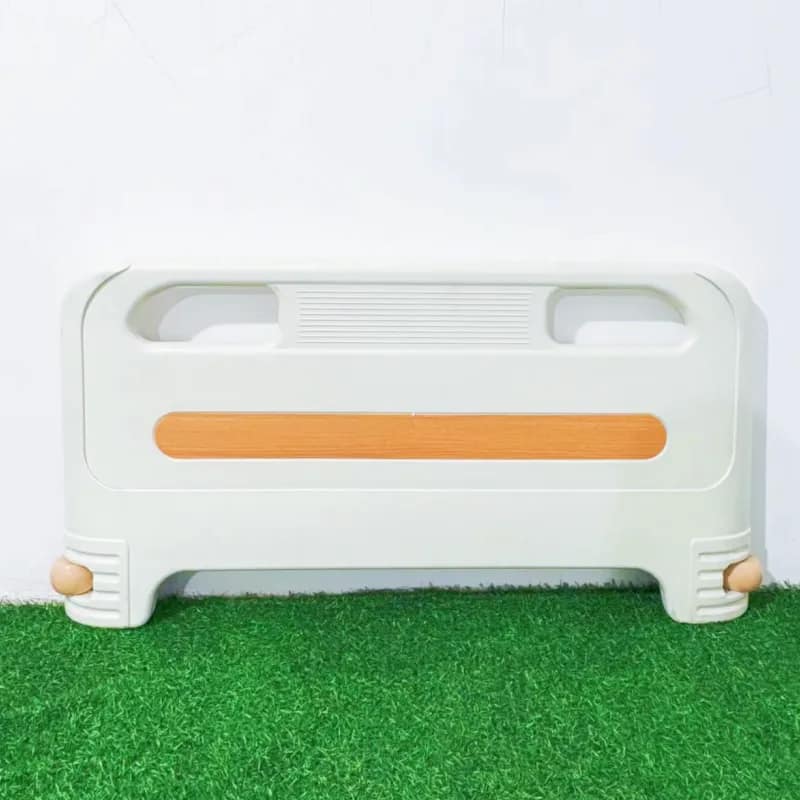
Emergency beds usually feature heavy-duty steel frames, providing exceptional stability and durability for prolonged patient stays and intensive medical procedures. For instance, our electric and manual hospital beds utilize robust steel frames, often with ABS/PP headboards and footboards, designed for a load capacity of 250 KG. This construction supports complex adjustments and accessory loads. In contrast, transport trolleys, such as the Emergency Transfer Stretcher, are often constructed from lighter materials like aluminum or lighter-gauge steel, balancing strength with maneuverability. Their frames are engineered for quick, frequent movement.
2. Evaluating Patient Support Surfaces and Comfort Features
Patient support surfaces and comfort features differ significantly between the two equipment types. Emergency beds offer thicker, multi-layered mattresses designed for pressure redistribution and patient comfort during extended periods. They often include adjustable sections for back, leg, and height, providing therapeutic positioning. For example, our Electric five function hospital bed and metal parts allows for precise adjustments. Transport trolleys, however, usually have thinner, firmer mattresses, prioritizing ease of cleaning and quick transfers over long-term comfort. While some trolleys offer basic backrest adjustments, comprehensive patient positioning is not their primary focus.
3. Comparing Mobility Mechanisms and Braking Systems
Mobility mechanisms and braking systems are tailored to each equipment’s purpose. Emergency beds often use larger, heavy-duty casters, sometimes with central locking systems, to ensure stability during procedures. Our 5 Inch 304 Stainless Steel_TPR Material Special Medical Bed Brake Casters provide strong load-bearing capacity and smooth movement. They are designed to be moved less frequently but securely. Transport trolleys, conversely, feature smaller, highly maneuverable casters, optimized for rapid movement and navigating tight spaces. Their braking systems are designed for quick engagement and release, crucial for dynamic hospital environments. We offer various casters, including 3’4’5 Double-face caster and 3’4’5′ Full-wrapped caster, which provide smooth and quiet operation.

Distinguishing Operational Applications and Use Cases
The operational applications of emergency beds and transport trolleys are distinct, reflecting their specialized designs and functionalities within the healthcare ecosystem. Proper deployment of each ensures optimal patient care and resource utilization.
1. Specific Scenarios for Emergency Bed Utilization
Emergency beds are indispensable in environments where patients require continuous medical attention and a stable platform for treatment.
1. Emergency departments: They serve as the primary station for initial assessment, resuscitation, and stabilization of critically ill or injured patients.
2. Intensive Care Units (ICU): Patients in ICU often remain on these beds for extended periods, receiving continuous monitoring and life support.
3. Operating room recovery areas: Post-operative patients recover on these beds, allowing easy access for medical staff and monitoring equipment.
4. In-patient wards: For patients with complex medical needs or those at high risk of deterioration, an emergency bed provides necessary support.
Our range of Electric Hospital Beds and Manual Hospital Beds are designed for such critical applications.
2. Optimal Applications for Patient Transport Trolleys
Patient transport trolleys are optimized for movement, ensuring quick and safe transit across various hospital zones.
1. Inter-departmental transfers: Moving patients from the emergency room to radiology, surgery, or an inpatient ward.
2. Ambulance transfers: Facilitating the seamless transfer of patients from ambulance stretchers to hospital care.
3. Outpatient procedures: Transporting patients to and from minor procedures where a full bed is not required for the duration.
4. Diagnostic imaging: Moving patients to MRI, CT scan, or X-ray departments.
The Emergency Transfer Stretcher is specifically designed for these rapid and secure transfers.
3. Impact on Workflow and Staff Efficiency in Healthcare Facilities
The appropriate selection and use of emergency beds and transport trolleys significantly impact hospital workflow and staff efficiency. Using an emergency bed for a short transfer, or a transport trolley for extended critical care, creates inefficiencies and potential safety risks. Emergency beds, with their integrated features, reduce the need to move patients for various procedures, streamlining care. Transport trolleys, with their superior maneuverability, accelerate patient movement between locations, optimizing bed turnover rates. Effective equipment management ensures that staff can perform their duties efficiently and safely.
Assessing Patient Safety and Comfort Considerations
Patient safety and comfort are paramount in healthcare, and the design of emergency beds and transport trolleys reflects these priorities differently. Each equipment type incorporates specific features to address these needs within its intended operational scope.
1. Enhancing Patient Security with Integrated Features
Emergency beds integrate numerous features to enhance patient security during critical care.
1. Full-length side rails: These prevent falls and contain agitated patients. We offer various guardrail options, including High quality aluminum alloy guardrail and Horizontal tube folding guardrail.
2. Secure braking systems: Central locking casters ensure the bed remains stationary during medical procedures.
3. Patient alarms: Some beds include alarms that activate if a patient attempts to exit the bed unassisted.
4. Weight capacity: Our beds are designed with a 250 KG load capacity, ensuring stability for diverse patient populations.
Transport trolleys also feature side rails and locking mechanisms, but their primary security function is to prevent patient dislodgement during movement.
2. Maximizing Patient Comfort During Extended Stays or Transfers
Emergency beds prioritize patient comfort for longer durations.
1. Pressure redistribution mattresses: These prevent pressure ulcers and enhance patient well-being.
2. Adjustable positioning: Multiple articulation points allow for various therapeutic positions, reducing discomfort.
3. Integrated support: Features like backrest and leg rest adjustments cater to individual patient needs.
For example, our Manual three function hospital bed and metal parts offers comprehensive adjustability. Transport trolleys, while providing basic padded surfaces, are not designed for extended comfort. Their role is to provide a safe, temporary platform for transit.
3. Adherence to Safety Standards and Regulatory Compliance
All medical equipment, including emergency beds and transport trolleys, must adhere to stringent safety standards and regulatory compliance. This ensures patient and operator safety, as well as equipment reliability. Manufacturers like Yingyun Hardware comply with international and national medical device regulations. This includes standards for materials, construction, load capacity, and electrical safety (for electric models). Regular maintenance and adherence to operational guidelines are also crucial for maintaining compliance and ensuring equipment longevity.

Partner with Us for Optimal Equipment Solutions
Selecting the correct medical equipment is vital for patient care and operational efficiency. We specialize in providing high-quality, durable emergency beds and transport trolleys tailored to diverse healthcare needs. Our expertise ensures you receive reliable solutions that meet stringent safety and performance standards. Contact us today to discuss your specific requirements and explore our product offerings.
Email: lily@yingyunmic.com
Phone: +8613528198959
FAQs
1. What are the main differences in patient capacity between emergency beds and transport trolleys?
Emergency beds generally offer a higher patient capacity and are designed to support a patient for extended periods, often accommodating up to 250 KG. Transport trolleys, while robust, are built for mobility and typically have a slightly lower average load capacity, focusing on efficient transfer rather than prolonged weight bearing.
2. Can transport trolleys be used for short-term patient observation in an emergency department?
While transport trolleys can temporarily hold patients, they are not ideal for observation due to limited comfort features and lack of integrated medical support. Emergency beds offer better patient positioning, access for interventions, and comfort, making them more suitable for even short-term observation in an emergency department.
3. What maintenance considerations are unique to emergency beds compared to transport trolleys?
Emergency beds, especially electric models, require more complex maintenance due to their adjustable mechanisms and electronic components. This includes regular checks of motors, electrical systems, and advanced braking systems. Transport trolleys require simpler maintenance, primarily focusing on caster integrity, frame stability, and cleaning.
4. How do the cost implications differ when purchasing emergency beds versus transport trolleys?
Emergency beds typically represent a higher investment due to their complex features, robust construction, and advanced functionalities for critical care. Transport trolleys are generally less expensive, reflecting their simpler design and primary function of patient mobility. The cost difference is justified by their distinct operational roles.
5. Are there specific training requirements for staff operating each type of equipment?
Yes, staff require specific training for both. Emergency beds, particularly those with advanced electronic controls and multiple functions, necessitate comprehensive training on proper operation, patient positioning, and safety features. Training for transport trolleys focuses on safe patient transfer techniques, maneuvering in various environments, and effective use of braking and security mechanisms.