
When a children’s hospital opens a new wing or an existing pediatric unit needs to upgrade its beds, the procurement team quickly discovers that standard adult beds don’t simply scale down. As a medical hardware engineer who has spent nearly twenty years manufacturing hospital beds and components, I’ve seen projects stumble because the unique requirements of young patients were underestimated. Custom pediatric hospital beds demand a different engineering approach, one that considers not just smaller dimensions but a complete rethinking of safety, materials, and long-term durability. This article explains the critical design factors that procurement teams need to evaluate when specifying custom pediatric hospital beds, from fall prevention to material selection, and how working directly with an experienced manufacturer can prevent costly mistakes.
Why Pediatric Patients Need Different Bed Designs
A hospital bed that works safely for an adult can present multiple hazards when used for a child. Pediatric patients vary in age from toddlers to adolescents, and their care environments must account for growth, behavioral differences, and the constant risk of climbing or falling. A bed that is too high invites injury; side rails with adult spacing can trap small limbs or heads. At Yingyun Hardware, we have seen first-hand how off-the-shelf adult bed frames fail pediatric entrapment probes even when the overall dimensions are reduced. This drives the need for purpose-built custom pediatric hospital beds where every component, from the headboard to the caster wheels, is re-evaluated for a younger occupant. Beyond safety, the ward environment itself benefits from beds that look less clinical and more inviting, which reduces patient anxiety and improves cooperation during care routines.
Essential Safety Features in Pediatric Hospital Beds
The single most important safety element on a pediatric bed is the guardrail system. Standard adult guardrails often have gaps exceeding 120mm, far too wide for a child’s body. For pediatric use, we manufacture side rails with closer vertical bar spacing and a locking mechanism that a child cannot release accidentally. Our children’s bedside rails (model YY-CG01) use a combination of die-cast aluminum, plastic, and steel to create a rigid barrier that also resists chewing or picking. The rails extend low enough that even a small child cannot roll underneath, and the absence of horizontal climbing steps reduces the temptation to climb out. Beyond rails, we eliminate sharp corners by using rounded ABS head and foot boards, and we fit all custom pediatric hospital beds with central-locking casters that keep the bed stationary once positioned. Five-inch TPR casters with brakes are standard because they provide quiet, smooth movement and prevent unintended rolling. An additional design check we perform is the pinch-point audit: any gap between moving parts where a finger could be caught is eliminated before production.

Customizing Dimensions, Materials, and Colors for Children’s Wards
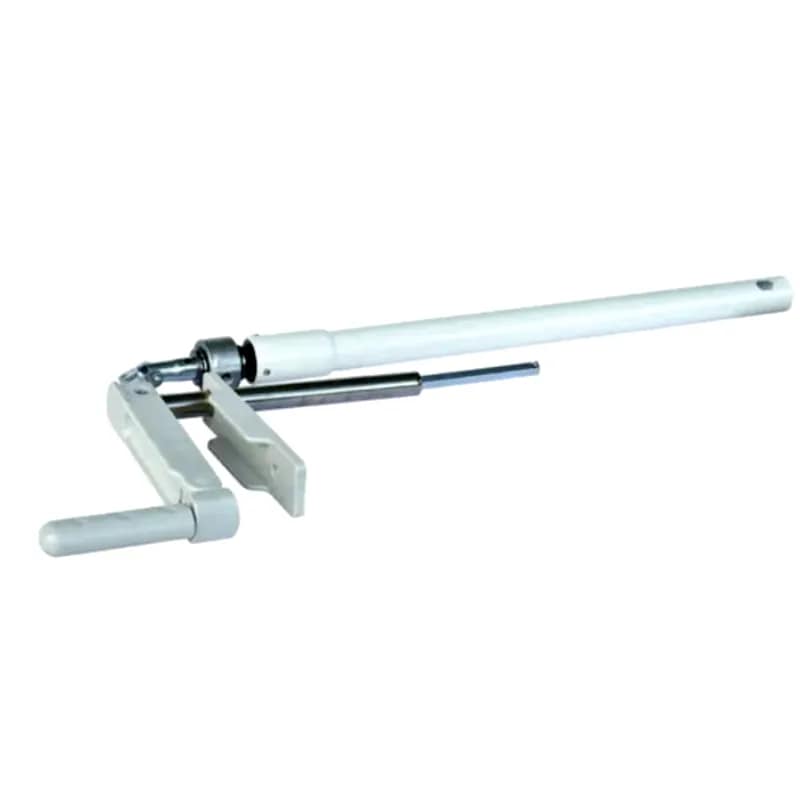
One size never fits all in pediatric care. We regularly produce custom pediatric hospital beds with widths from 820mm to 900mm and lengths adjusted for different age groups. The overall bed height can be lowered to as little as 430mm from the floor, allowing safe independent entry and exit for older children while still permitting caregiver access at a comfortable working level when raised. Material choice directly impacts both infection control and durability. For head and foot boards, ABS engineering plastic is preferred over painted steel because it resists impact, cleans easily, and does not chip to expose sharp edges. Our ABS children’s bed head and foot boards (model YY-CH01) are available in blue, pink, or custom colors that match a hospital’s decorative theme. The bed panels themselves can be stamped steel for strength or ABS-covered for a warmer touch. The table below summarizes common customization parameters:
| Parameter | Standard Option | Custom Option |
|---|---|---|
| Bed width | 900mm | 820mm, 840mm, or specified |
| Bed length | 1900mm | 1500-2100mm |
| Bed height range | 430-760mm | 350-800mm |
| Side rail type | 6-bar straight tube | Closer spacing, door-type |
| Head/foot board | ABS white | Custom color, wood grain |
| Caster type | 5″ TPR | Central-locking, stainless steel |

If your project involves beds for children with specific medical conditions, it is worth confirming the custom dimensions and rail configurations before finalizing your order. Reach out at [email protected].
Evaluating Manufacturers for Custom Pediatric Beds
Not every hospital bed manufacturer can handle the detailed engineering that a pediatric ward demands. When selecting a supplier, procurement teams should look beyond a catalog of standard products and ask pointed questions about customization capabilities. At Yingyun Hardware, we have been manufacturing custom hospital bed components since 2006, and our experience includes designing beds for children’s hospitals across different regulatory environments. Key questions we recommend: Does the manufacturer have documented pediatric safety testing procedures? Can they provide 3D models or CAD drawings before production begins? What is the minimum order quantity for custom sizes and colors? A responsible manufacturer will also discuss lead times realistically. Our typical lead time for customized pediatric beds is 40-45 working days, which includes design approval, sourcing of specified materials, and testing. Finally, verify that the manufacturer holds relevant certifications and can supply the technical documentation your facility’s procurement policy requires.

Installation, Maintenance, and Long-Term Durability
A custom pediatric hospital bed represents a long-term investment, and a well-engineered bed should require minimal maintenance while withstanding heavy daily use. When the beds arrive, they are typically shipped in wooden crates and require assembly on site. We provide detailed installation instructions and can offer remote guidance or on-site support depending on the order scale. Because children may jump, lean on rails, or use the bed as a play surface, we reinforce all welded joints and use high-strength Liuzhou steel for the bed top. Over time, the most frequently serviced components are the caster wheels and the crank mechanisms or actuators. We keep all spare parts in stock and can ship replacements within days. Regular cleaning with hospital-grade disinfectants does not degrade the ABS surfaces, and all metallic components are powder-coated for corrosion resistance. If you ever need to confirm a part compatibility or obtain a maintenance schedule, we are available by phone or email.
Sourcing Custom Pediatric Beds Without Compromise
Choosing the right bed for a children’s ward requires aligning safety engineering with operational needs. The wrong choice can lead to injuries, regulatory issues, and ongoing frustration for nurses. At Yingyun Hardware, we approach every pediatric project as a partnership. Our engineering team works directly with your facility to specify bed dimensions, guardrail designs, material finishes, and color matching until every detail meets your requirements. We handle the full manufacturing process under one roof, from metal stamping and plastic molding to assembly and quality control. Send your part number and quantity to [email protected] or call us at +8613528198959, and we will provide a detailed quotation and production timeline.
Common Concerns When Ordering Custom Pediatric Hospital Beds
What minimum order quantity applies for custom pediatric beds?
Our standard MOQ for custom pediatric hospital beds is 50 units. That allows us to tool production efficiently while keeping costs manageable. Smaller projects can sometimes be accommodated if we have compatible ongoing production runs.
Can the beds be produced in colors matching our hospital’s branding?
Yes, the ABS head and foot boards as well as side rail trim can be color-matched to your specifications. We commonly produce beds in blue, pink, white, or custom Pantone colors. Color matching does not extend lead times significantly if the pigment is readily available.
How do you ensure the guardrails meet pediatric safety standards?
We design and test guardrail spacing, height, and locking strength according to the dimensional criteria specified in international pediatric bed standards. Every batch undergoes a physical inspection for entrapment gaps and load-bearing capacity before shipping.
What happens if we need a part replaced after installation?
We maintain a comprehensive spare parts inventory. Most components can be dispatched within a week. If your program has a critical need, share the part number and we will confirm stock and the fastest shipping method to your location.
If you’re interested, check out these related articles:
What is an Adjustable Hospital Bed and How Does It Work: A Comprehensive Guide
Can Adjustable Hospital Beds Be Customized for Homecare Needs
Choosing a Reliable Hospital Bed Parts Manufacturer: A Comprehensive Guide