
Hospital bed accessories are not universal parts. A hospital bed with a mismatched side rail, under-specified caster, or poorly fitted bed panel can create mobility problems, safety gaps, and unexpected replacement costs. Custom hospital bed accessories exist to close those gaps: they are built or modified to match a specific bed frame, ward workflow, patient population, and regulatory environment. When sourced from an experienced supplier, the accessories should support the complete bed system, including compatibility with medical electrical safety requirements such as IEC 60601-1 [3] and performance expectations under IEC 60601-2-52 [1].
How to Define a Custom Hospital Bed Accessories Supplier
A qualified custom hospital bed accessories supplier should do more than stock standard components. The supplier should be able to review a bed frame or drawing, confirm dimensional compatibility, recommend material substitutions, and produce parts that fit an existing or planned hospital bed platform. That capability is especially important for procurement teams managing mixed fleets, legacy beds, or OEM development projects.
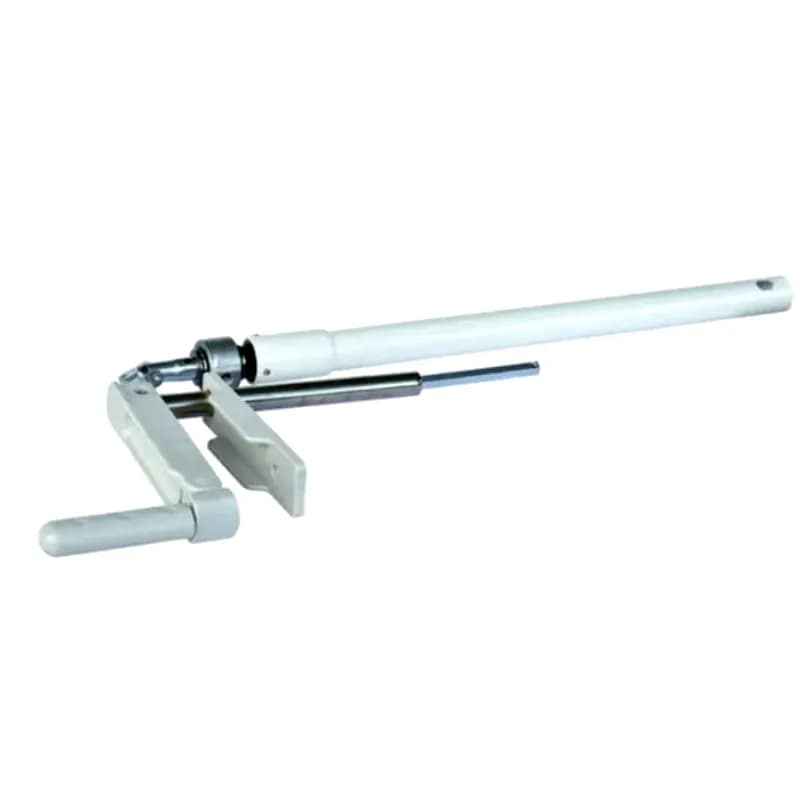
The supplier’s work should cover structural parts, safety components, mobility components, and bedside furniture. Common categories include stamped bed panels, guardrails, casters, cranks, IV poles, head and foot boards, bedside cabinets, and hardware connectors. For many of these parts, the real value is not the single component itself but the supplier’s ability to control dimensions, surface finish, load performance, and repeatability across production batches.
A dependable custom accessories program should also provide documentation. Material certificates, inspection records, tolerance sheets, packaging specifications, and lead time confirmations all reduce sourcing risk. Without these documents, a lower unit price can quickly become a higher total cost when parts arrive inconsistent or fail in service.
Core Accessory Categories and Key Specifications
The exact specification depends on the bed model and clinical environment, but the following categories are the most common starting points for a custom hospital bed accessories supplier.
| Accessory category | Common material and configuration | Typical customization range | Typical accessory lead time |
|---|---|---|---|
| Stamped bed panels | Willow steel, 0.8–0.9 mm thickness, 820/840/900 mm widths | Width, section count, hole pattern, welding or non-welding | 15–20 working days |
| Guardrails | ABS, aluminum alloy, iron; folding or curved tube styles | Rail count, size, color, locking style | 15–20 working days |
| Casters | TPR/PP, 3/4/5 inch; 304 stainless steel + TPR central-lock models | Size, brake type, bracket configuration | 15–20 working days |
| Cranks | ABS, iron, or stainless steel with in-place protection | Material, handle color, size, protection mechanism | 15–20 working days |
| IV poles | 201 or 304 stainless steel, 2 or 4 hooks | Tube diameter, hook count, finish | 15–20 working days |
| Head and foot boards | ABS engineering plastic or 304 stainless steel | Width, height, color, snap-on or fixed design | 15–20 working days |
| Bedside cabinets | ABS/PP with drawer and medical casters | Color, size, accessory configuration | 15–20 working days |
The lead time above refers to standard accessory-level orders. Complete manual or electric hospital beds typically have longer production lead times because multiple parts must be manufactured, inspected, and combined.
Bed panels and support hardware
Stamped bed panels are one of the most important customization points because they determine patient support, mattress fit, and compatibility with backrest and knee-break mechanisms. A supplier should be able to produce two-section and four-section panels, match the break positions, and keep material thickness consistent enough to avoid uneven flexing.

Guardrails and side-rail systems
Guardrails are safety-critical. The selected design must match the bed frame’s mounting points, fold position, and accessory spacing. A hospital bed accessories supplier should be able to adjust rail length, height, tube count, and finish while maintaining secure locking.

Casters and mobility components
Casters affect moving effort, floor protection, braking behavior, and infection control. Full-wrapped or double-face TPR casters are common for smooth movement and low noise, while central-locking casters support stable positioning during care tasks. Stainless steel caster brackets are often specified where frequent cleaning or moisture exposure is a concern.

Cranks, IV poles, and bedside furniture
Manual crank systems should include in-place protection and should not loosen under repeated adjustment. IV poles need stable height adjustment and appropriate hook capacity. Bedside cabinets and overbed tables complete the patient environment and should match the bed’s color and material language.

Material Selection and Manufacturing Quality
Material choice has a direct effect on hospital bed accessory life, cleanability, and repair cost. For example, willow steel bed panels with a consistent 0.8–0.9 mm thickness provide a practical balance between weight and structural support, but the supplier must control punching and bending so the sections align correctly. ABS is widely used for headboards, footboards, and crank handles because it is shatter-resistant, easy to clean, and suitable for snap-on designs. Stainless steel 304 is appropriate for IV poles and certain caster brackets where corrosion resistance matters.
Surface treatment is equally important. Powder coating on steel parts should be smooth, free of sharp edges, and compatible with disinfection routines. For parts that will be handled frequently, such as cranks and side rails, the finish should resist chipping and color shift.
Quality systems matter at this stage. A supplier operating under a documented quality management system such as ISO 13485 [2] should be able to provide traceability from incoming material through production and final inspection. That is especially relevant for custom parts, where a small dimensional deviation can prevent installation or reduce patient safety.
Material selection directly affects panel rigidity, weld performance, and long-term cleanability. <Essential Materials for Quality Medical Bed Parts Manufacturing> covers commonly specified steels, ABS grades, and surface treatments for hospital bed parts.
OEM Customization and Production Control
Custom hospital bed accessories are usually required when a hospital or distributor is building a standard bed package, replacing obsolete parts, or developing a branded product line. In these cases, the buyer should be able to specify dimensions, color, material, logo placement, hole positions, packaging, and finish. The supplier should respond with clear engineering feedback on what is feasible and what may increase cost or lead time.
Production control is what separates a true OEM supplier from a trading company. The supplier should confirm incoming material checks, in-process dimensional inspection, weld or forming review, surface finish approval, and final quantity verification. For repeated orders, the same fixture or drawing should be used so each batch remains interchangeable.
A practical example: a hospital group replacing a mix of manual and electric beds may decide to standardize on one stamped panel width and one guardrail family. That single decision can reduce spare-part inventory while keeping maintenance teams familiar with the product. The accessory supplier should then maintain the same dimensions and finish across multiple production runs.
If you are preparing a custom accessory list for a specific bed model or renovation project, send the component type, material, dimensions, quantity, and target standard to [email protected] or +8613528198959. With a clear drawing or bed model reference, the supplier can confirm whether the parts can be matched or redesigned.
Production control should be verified through documented incoming material checks, in-process inspection, and final dimensional review. <Ensuring Quality Control in Hospital Bed Parts: A Comprehensive Guide> covers the inspection points procurement teams should ask suppliers to demonstrate.
Quality Documentation, Lead Time, and After-Sales Support
Before placing a large custom order, request a clear documentation package. At minimum, the supplier should be able to provide:
- Product drawing with critical dimensions and tolerances
- Material specification or material certificate
- Surface treatment or finish confirmation
- Packaging method and export carton configuration
- Lead time confirmation and warranty terms
For electric adjustable beds or components used near electrical systems, the complete bed or powered system may need to comply with applicable medical electrical safety standards, so compatibility with the accessory should be considered within the full bed evaluation [1] [3]. For example, powered actuators and control systems should not be sourced without confirming that the assembled bed configuration has been evaluated by the bed manufacturer or a qualified technical partner.
Warranty terms should also be explicit. A typical accessory warranty may cover the mechanism and structure for one year, with exclusions for misuse or normal wear items. After-sales support should include replacement part availability, technical guidance, and clear communication channels. A supplier that does not maintain spare parts for the same product family becomes a sourcing bottleneck when one component fails.
Supplier evaluation is more reliable when it includes factory capability review, sample inspection, and contract clarity. <Choosing a Reliable Hospital Bed Parts Manufacturer: A Comprehensive Guide> covers the assessment steps that reduce sourcing risk.
Request a Custom Hospital Bed Accessory Quote
To receive an accurate quotation from ZhongShan YingYun Hardware Products Co., Ltd., include the following details:
- Accessory type and applicable hospital bed model
- Required material and surface treatment
- Dimensions or available drawing
- Quantity and target MOQ
- Delivery country and required documentation
Contact [email protected] or +8613528198959 with the accessory list. A clear inquiry helps the team confirm dimensional fit, material availability, lead time, and packaging before production begins.
Frequently Asked Questions
What is the typical MOQ for custom hospital bed accessories?
Many accessory-level orders begin at 50 pieces or 50 sets depending on the component. Hardware connectors and stamped metal parts may have different MOQs based on tooling and production setup, so the supplier should confirm the specific part number.
Which materials are used for hospital bed panels and guardrails?
Stamped bed panels commonly use willow steel at 0.8–0.9 mm thickness. Guardrails may combine ABS, aluminum alloy, and iron depending on the required strength, weight, and locking design. Stainless steel 304 is often used where corrosion resistance is required.
Can I order accessories in custom colors or sizes?
Yes. Many hospital bed accessories can be customized in size, color, rail count, panel width, bracket configuration, and surface finish. For large quantities, the supplier normally confirms feasibility and lead time after receiving drawings or bed model references.
What lead time should I expect for a custom accessory order?
Standard accessory orders typically ship within 15–20 working days after production confirmation. Complete manual or electric hospital beds may require longer lead times, and the final schedule should be confirmed before order approval.
What quality documents should I request from a hospital bed accessories supplier?
Request dimensional drawings, material specifications, inspection records, finish confirmation, packaging details, and warranty terms. For powered bed systems, also confirm whether the assembled configuration supports applicable medical electrical safety and performance requirements [1] [3].
References
[1] IEC 60601-2-52:2015, Medical electrical equipment — Part 2-52: Particular requirements for the basic safety and essential performance of medical beds. Geneva: International Electrotechnical Commission.
[2] ISO 13485:2016, Medical devices — Quality management systems — Requirements for regulatory purposes. Geneva: International Organization for Standardization.
[3] IEC 60601-1:2005 + AMD1:2012 + AMD2:2020, Medical electrical equipment — Part 1: General requirements for basic safety and essential performance. Geneva: International Electrotechnical Commission.
If you’re interested, check out these related articles:
Leading Hospital Bed Parts Manufacturers: A Comprehensive Guide
Identifying Reliable Brands for Adjustable Hospital Beds
Unlocking Comfort and Care Benefits of Adjustable Hospital Beds
How Much Does an Adjustable Hospital Bed Cost on Average
Essential Certifications for Medical Bed Parts Manufacturers