
When procurement teams search for a three function electric hospital bed exporter, the market offers dozens of options. But after nearly twenty years in medical hardware manufacturing, I can tell you that the spec sheet alone does not predict whether a bed will hold up under 24/7 clinical use. The differences between a reliable export partner and a price-driven supplier are found in material selection, manufacturing process controls, and the consistency of functional testing. A bed that looks identical on paper can develop motor noise, panel deformation, or caster failure within months if these details are neglected. This article draws on our production experience at Yingyun Hardware to explain what separates a durable three-function electric bed from a short-term solution, and how to identify an exporter that understands those differences.
Understanding the Three Functions and Their Clinical Impact
A three-function electric hospital bed adjusts the backrest, the leg rest, and the overall bed height through independent motorized mechanisms. The backrest tilts up to 75 degrees, allowing patients to sit upright for meals or respiratory therapy. The knee section raises by up to 40 degrees, which supports comfortable leg positioning and can assist with circulation. The height adjustment range, from 430 mm to 840 mm, lets caregivers lower the bed for safer patient transfer or raise it to match nearby equipment.

In real ward conditions, the smoothness and noise level of these movements matter. Our electric three-function model operates at under 50 dB, low enough to avoid disturbing other patients during nighttime adjustments. Every bed includes a manual backup system, so nursing staff can continue care even during a power failure. The table below lists the key performance parameters that procurement teams should verify against the intended clinical use rather than accepting brochure figures at face value.
| Parameter | Specification |
|---|---|
| Bed Dimensions (L × W × H) | 2170 × 1030 × 430 mm |
| Height Adjustment Range | 430–840 mm (±10 mm) |
| Backrest Tilting Angle | 0–75° (±5°) |
| Knee Board Tilting Angle | 0–40° (±5°) |
| Trendelenburg / Reverse | ≥12° |
| Load Capacity | 250 kg |
| Noise Level | ≤50 dB |
| Bed Top Material | Liuzhou steel |
| Frame Material | Iron |
| Head/Footboard Material | ABS engineering plastic |
| Side Rail Material | Aluminum alloy and iron |
| Manual Backup | Yes, for power failure |
Material Quality: Where Long-Term Reliability Starts
The material choices inside a hospital bed are what separate equipment that lasts five years from equipment that needs replacement parts within twelve months. The bed top on our three-function electric model uses Liuzhou steel, a name that carries specific mechanical property requirements in Chinese manufacturing. The frame is welded from heavy-gauge iron tube, and every joint is designed to carry repeated dynamic loads rather than just static weight.
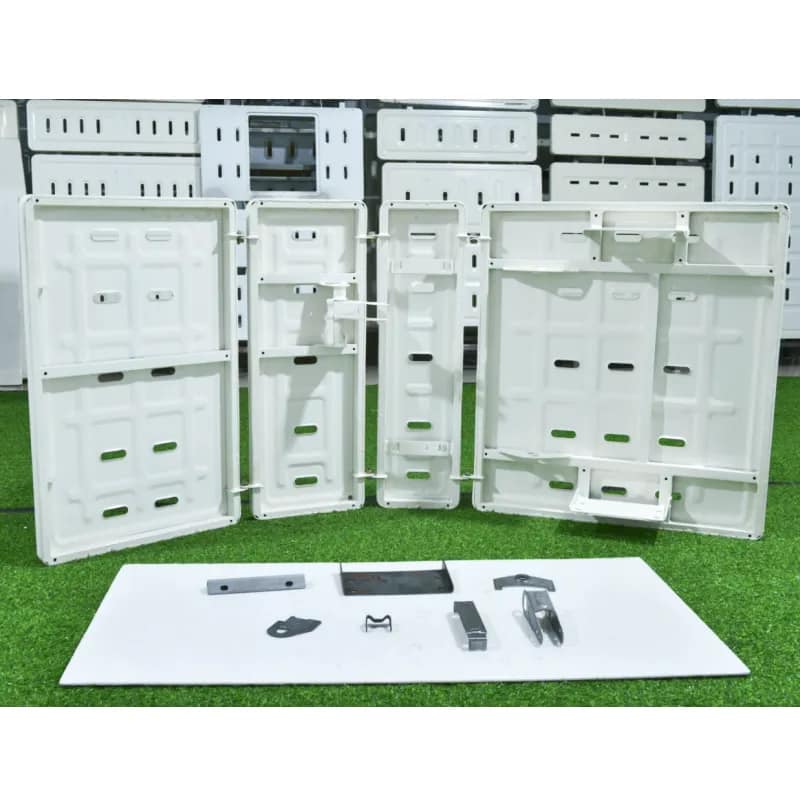
I have seen cheaper export beds that use thinner sheets or substitute lower-cost plastics in headboards and side rails. The ABS engineering plastic we use for headboards and footboards resists impact and does not crack under the repeated stress of bed adjustment. The side rails combine aluminum alloy and iron, giving them rigidity without excessive weight. When you open a container from an exporter who cuts material costs, the visual impression may be acceptable, but the first signs of trouble show up in squeaking pivot points and panel warping within the first year of use. Asking for a material specification sheet, and then verifying those grades through a third-party inspection, is one of the most effective steps a procurement team can take.
Manufacturing Standards That Matter for Export Markets
Exporting electric hospital beds means meeting both the technical standards of the destination country and the logistics realities of long-distance shipping. A reputable exporter should hold CE marking for European markets and be able to provide test reports covering electrical safety, mechanical endurance, and biocompatibility of patient-contact surfaces.
At our factory, each bed undergoes a full function test before packing. We verify the full range of backrest and knee board movement, confirm the height adjustment mechanism operates smoothly across the entire 430–840 mm range, and check that the Trendelenburg and reverse Trendelenburg positions reach at least 12 degrees without binding. The load test is performed at 250 kg, which validates not only the actuator capacity but also the frame welds and caster locking system. We keep testing records by production batch, so if a customer needs traceability documentation for their own regulatory filing, we can pull those records within a day.
For buyers new to medical device import, I recommend asking the exporter to send a sample test report from a recent production run rather than a generic certificate. The document should list actual measured values, not just pass/fail statements. That level of transparency is rare among trading companies that never set foot on the production floor.
How to Evaluate an Exporter’s Production Control
When you are committing to a container load of hospital beds, the exporter’s control over the manufacturing process is what protects your order consistency. An exporter that also operates its own metal stamping, welding, and assembly lines can control lead times and quality in ways that a pure trading company cannot.

In our facility, we bring steel coil and tube directly from mills, stamp bed panels on our own press lines, and weld frames using jigs that have been refined over nearly two decades of production. Every sub-assembly, from the motor mounting bracket to the central-locking caster system, gets checked before final assembly. That integration reduces the finger-pointing that happens when a bed failure traces back to a third-party component supplier. I suggest asking a potential exporter three questions in your first email: who manufactures the bed top panels, who assembles the motor and actuator combination, and whether they perform 100% function testing or only batch sampling. If the answers are vague, the supply chain behind the bed probably is, too.
Logistics, Packaging, and After-Sales Support
A hospital bed that works perfectly on the factory floor still has to survive ocean freight, customs clearance, and on-site installation. We use export-grade wooden crates with internal foam bracing for all electric bed shipments, and we have refined the loading plan over dozens of container orders to maximize the number of units per container without risking transit damage.
Typical lead time for a standard three-function electric bed order is 40 to 45 working days from deposit confirmation. The minimum order quantity for our standard white finish model is 50 pieces. Custom colors, logo printing, or specification changes are possible, but they may extend the lead time or adjust the MOQ depending on complexity. We provide a one-year warranty on the mechanism and structure, and we maintain a stock of common spare parts including motors, casters, and ABS components for quick dispatch. If a hospital needs replacement parts six months into operation, we can ship them within a few working days, because we manufacture those parts in-house rather than sourcing from a third party.
Securing a Long-Term Export Partnership
The true cost of a hospital bed is not the price per unit on the quotation. It is the cost of nursing time lost to a bed that does not adjust smoothly, the cost of replacing a caster that locks up after three months, and the administrative burden of chasing a supplier who disappears after delivery. When I speak with procurement teams, I recommend weighing the exporter’s manufacturing depth and testing discipline at least as heavily as the unit price.
At Yingyun Hardware, we have been producing hospital beds and accessories since 2006, and the engineers and production staff in our facility have worked with the same product categories for years. That accumulated experience shows up in details like the consistency of the powder coating on frame tubes and the quiet engagement of the central-locking brake pedal. For a quotation tailored to your ward specifications, email [email protected] or call +8613528198959. Include the bed quantity needed and any specific voltage or regulatory requirements, and we will return a detailed proposal with pricing, lead time, and a production test report template.
Common Questions About Exporting Electric Hospital Beds
What is the typical lead time for a bulk order of three-function electric hospital beds?
For the standard electric three-function model, the lead time is 40 to 45 working days after order confirmation and deposit receipt. This covers material procurement, metal fabrication, assembly, testing, and packing into export-grade wooden crates. Custom finishes or modifications can add 5 to 10 working days depending on the scope. If your project has a hard deadline for installation, mention it at the inquiry stage and we can discuss partial shipments or priority scheduling.
How can I be sure the beds will arrive without transit damage?
In shipments we have handled to Africa, the Middle East, and Southeast Asia, we pack each bed in its own wooden crate with internal foam supports that immobilize the frame and delicate components like the motor and casters. The container loading plan uses block bracing to prevent crate movement during sea transit. We also photo-document the packing of every container, which gives the importer a reference for the condition at dispatch and helps with any insurance claim process.
What is the minimum order quantity for OEM branding on the beds and accessories?
It depends on the scope of the customization. For logo printing on the ABS headboard and footboard or a custom color finish, the MOQ remains 50 units because those changes integrate into our standard production flow with minimal setup impact. For fully custom bed panel dimensions or motor voltage specifications that require engineering changes, the MOQ may be higher and will be discussed during the quotation phase. We recommend sending your technical file at the first inquiry so we can give a firm MOQ and cost impact.
Do you provide spare parts and post-installation support?
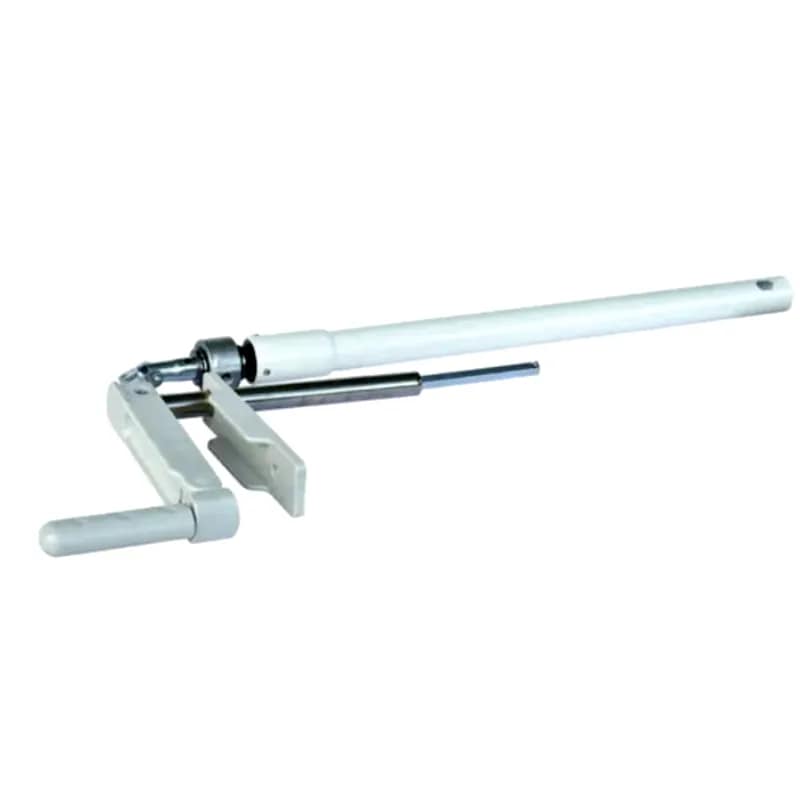
Yes, we manufacture the core components in-house, which means we can supply replacement motors, casters, side rails, ABS panels, and crank systems independently of a full bed order. We keep a safety stock of high-wear items and can dispatch parts by air courier within a few working days when urgency requires. The beds come with a one-year warranty on mechanisms and structure, and we provide assembly and maintenance documentation with every shipment. If your facility uses a specific electrical standard or plug type, share your requirements at [email protected] so we can confirm compatibility before production starts.
If you’re interested, check out these related articles:
Are Adjustable Hospital Beds Covered by Insurance or Medicare
Essential Materials for Quality Medical Bed Parts Manufacturing