
Procurement teams evaluating a custom hospital bed parts exporter usually start with the drawing, but the drawing alone does not predict whether the parts will work on the ward. I judge suppliers by documented process control and material traceability before I trust the lowest unit price. That approach may feel slower up front, but it removes the rework that appears later when a caster does not lock under a loaded bed or a stamped panel twists after powder coating. This article covers the specification details, manufacturing evidence, and failure points to check before you place a custom parts order.
What Should a Custom Bed Parts Export Package Cover?
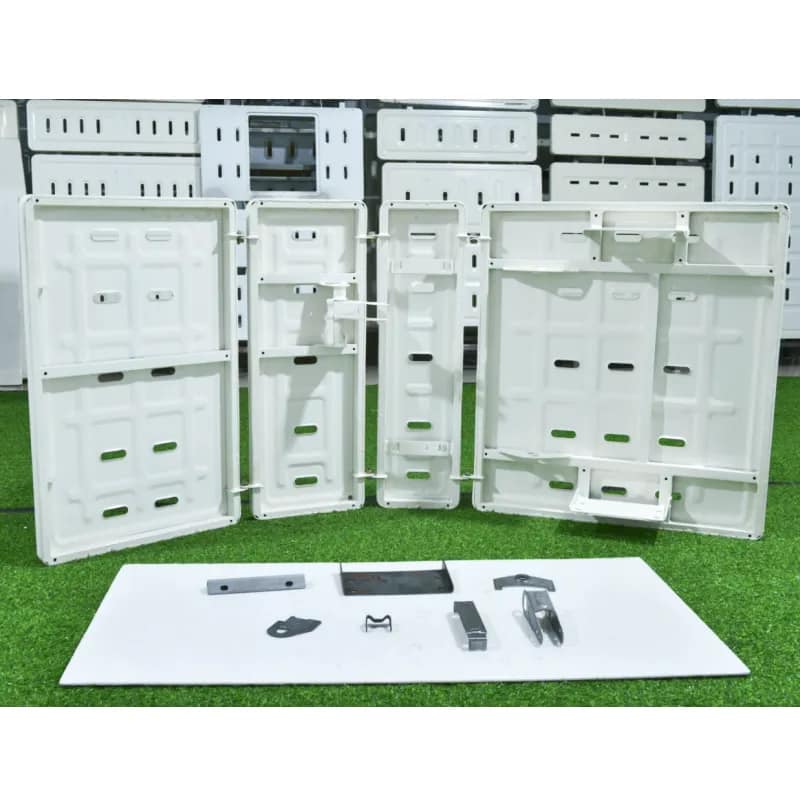
A custom bed parts export package should not stop at the part number. It covers dimensional drawings, material grade, surface treatment, packaging method, and quality documentation. For example, Yingyun’s stamped bed panels start at 0.8 to 0.9 mm willow steel in 820, 840, and 900 mm widths, and the buyer chooses welded or non-welded construction. That matters because a panel that is stamped correctly but left without a defined weld finish can pass dimensional inspection and still fail in the field once the coating cracks at the joint.
Guardrails and casters follow the same rule. A 304 stainless steel central-locking caster carries a material callout, but the buyer still needs to define brake type, wheel diameter, and whether the mounting plate matches the bed frame. If those points are not written into the specification, the exporter can only guess. For hospital bed projects, I ask the buyer to send the bed frame drawing and the part location before confirming the quote. That way the factory checks the interface rather than the catalog image.
Hospital bed parts sourcing spans more than a single part number. <Top Wholesale Hospital Bed Parts Manufacturers & Suppliers> covers the supplier categories and product lines that most hospital projects need to align before a bulk order.
How Do You Specify Custom Parts So Quotes Stay Comparable?
Comparing two quotes for custom bed parts without a controlled specification is mostly useless. One supplier may quote 0.8 mm willow steel with no weld finish, while another quotes 0.9 mm steel with full weld cleaning. The prices differ, and the supplier quality differs, but the buyer cannot see why.
To make quotes comparable, work through the specification in this order:
- Pull the interface dimensions first: mounting hole pattern, tube diameter, and spacing.
- Specify material and thickness with an acceptable tolerance, not just the grade.
- Define the surface finish and any post-processing, including weld grinding and powder coating color.
- State the packaging and documentation requirements before quoting.
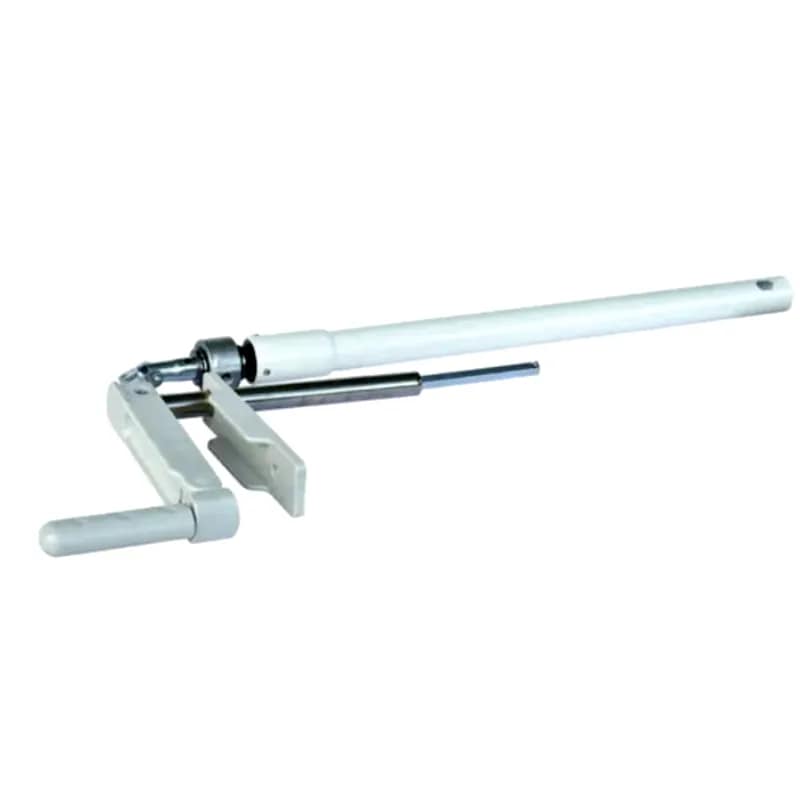
On a manual crank system, specifying “ABS crank with in-place protection” is not enough. The buyer should state whether the handle is ABS or iron, the shaft length, the fixation method, and the torque required to operate the bed. A crank that fits the threads but feels too stiff for a nurse to turn has failed the application even though it passes the drawing. This is the difference between a dimensional check and a functional check, and it matters more in wards with continuous use.
What Manufacturing Evidence Separates Reliable Custom Bed Parts Exporters?
The most reliable signal is not the finished photograph. It is the production route and the inspection record. For example, Yingyun motor fixing seats are laser cut and then stamped. That sequence affects flatness and hole alignment. If a factory only offers an assembly photo, there is no way to know whether the hole pattern was cut once and checked, or cut in several setups with accumulated error.
| Part Category | Customization Lever | Buyer Check | Evidence That Matters |
|---|---|---|---|
| Stamped bed panels | Width, section count, thickness, welding | Dimensions, coating | First-article inspection report, weld map |
| Central-locking casters | Wheel size, material, brake style, mounting | Brake force, rolling noise | Material certificate, load test sample |
| Manual crank systems | Handle material, shaft length, protection | Operating torque, thread fit | Dimensional report, assembly test |
| IV pole assemblies | Hook count, tube diameter, steel grade | Weld finish, tube straightness | Surface finish report, sample pull test |

If your program involves mixed bed frame generations or a custom mounting pattern, it is worth confirming the brake force and mounting hole spread before finalizing the bill of materials. Send the frame drawings to [email protected] and we will check the caster interface against the bed model.
Where Do Custom Bed Parts Sourcing Projects Usually Slip?
One delay pattern I have seen repeatedly starts with a drawing that states only the outer dimensions of a guardrail tube. The first samples pass dimensional checks, but the weld grinding is rough and the powder coating does not adhere evenly. The buyer then rejects the batch for surface finish. The rework adds two weeks, and the shipment misses the installation window. The cause was not the factory’s welding. It was the missing finish specification. When the finish is absent from the drawing, every supplier interprets it differently.

Packaging and documentation cause a second slip pattern. A pallet may protect the parts in transit but leave the powder-coated surfaces rubbing against one another inside the carton. Export-grade cartons with foam separators reduce that risk, but the buyer should confirm the exact packaging method before the order. The same applies to the quality file. Some buyers accept a commercial invoice and a packing list, then discover the hospital needs a first-article inspection report or a batch material certificate before installation.
Buyers often compare unit prices without equalizing packaging and inspection. <Comparing Prices for Hospital Bed Parts Manufacturers Effectively> covers how to compare quotes on the same technical baseline instead of treating the lowest price as the best offer.
Ready to Confirm Your Custom Bed Parts Requirements?
Sourcing custom bed parts from an exporter becomes easier once the interface details are fixed. Most delays do not come from manufacturing. They come from specifications that were never closed. If you are working through a mixed fleet or a new ward layout, the best next step is to send the drawings and let the factory confirm the details before quoting. Email [email protected] or call +8613528198959 with your part numbers, material callouts, and target quantity. Yingyun Hardware will review the drawings, confirm dimensional compatibility, and give you a clear lead time and packaging plan before you commit.
What Else Should Buyers Ask a Custom Bed Parts Exporter?
Do custom bed parts require a minimum order quantity?
Most custom parts do have a minimum order quantity, and for small hardware components it often sits around 50 pieces. For example, Yingyun’s casters, guardrails, cranks, and ABS head and foot boards carry a 50 piece MOQ in standard finishes, while certain stamped metal parts and motor fixing seats use a 100 piece MOQ because they move through a different cutting and stamping line. The MOQ shifts based on material, finish, and packaging, so ask for a quantity break before assuming a small pilot run is not possible. A pilot run can still be arranged, but it may cost more per unit.
How do you verify material and dimensional accuracy before shipment?
Verification depends on the part category. For stamped panels, first-article inspection should check width, section count, thickness, hole position, and weld location. For casters, the key checks are wheel diameter, brake force, and mounting hole spread. For cranks, the check is operating torque and thread fit on the bed frame. A reliable factory does not wait until the container is packed. It samples during production and sends the first-article report to the buyer for approval before the rest of the batch moves into coating and packaging. That approval step catches most dimensional issues while correction is still cheap.
What documentation should a custom bed parts exporter provide for hospital import?
A commercial invoice and packing list are not enough for hospital procurement. The buyer should request a material certificate for steel or stainless parts, a first-article inspection report for dimensional validation, and a test report where the part class requires it. Some Ministry of Health or hospital group tenders ask for the manufacturer’s ISO certificate, product warranty terms, and a certificate of origin. The exact set depends on the destination country. I ask buyers to give me the hospital’s documentation checklist at quotation stage so the export file is prepared in the same round as the production file.
How are warranty claims handled on custom parts?
In our program reviews, warranty claims move fastest when the part number and batch date are recorded at incoming inspection. Yingyun custom bed parts carry a one year warranty on mechanism and structure, and the claim is evaluated against the original drawing. If the part matches the drawing but fails in the field, the factory investigates the application condition. If the part does not match the drawing, the claim is usually rejected because the interface was not confirmed before production. Send your part numbers and quality file requirements to [email protected] and we will confirm what documentation applies before you order.
If you’re interested, check out these related articles:
What is an Adjustable Hospital Bed and How Does It Work: A Comprehensive Guide
Choosing a Reliable Hospital Bed Parts Manufacturer: A Comprehensive Guide
Ensuring Quality Control in Hospital Bed Parts: A Comprehensive Guide
Unlocking Comfort and Care Benefits of Adjustable Hospital Beds