
An emergency hospital bed bulk order succeeds when the bed configuration, spare parts, packaging, and delivery schedule are fixed before the purchase order is issued. Hospitals expanding emergency wards, ICU surge capacity, or temporary field units usually face delays when bed categories are mixed without a clear ward plan, when side rails and casters are treated as minor options, or when the order lacks a specific port and on-site date. The most useful specification therefore covers the bed function first, then the components that keep the bed safe and movable, and finally the packaging and delivery steps that turn a factory order into an installable ward.
Define the Emergency Bed Configuration First
Emergency demand is not one uniform bed. The right starting point is patient acuity and staff availability. ICU and acute surge units need powered positioning with Trendelenburg or reverse Trendelenburg access, manual backup, and side rails compatible with continuous monitoring. Emergency wards and recovery areas may use electric three-function beds or manual three-crank beds where power supply is uncertain. Emergency receiving and rapid transfer work better with a dedicated stretcher trolley rather than a fixed ward bed. Matching the bed type to the care task prevents the common bulk-order error of buying the cheapest general bed for every area and then retrofitting access, transfer, and nurse-call requirements later.
Manual and Electric Emergency Bed Configurations
For a bulk emergency purchase, compare beds by function and backup, not only by motor count. Electric five-function beds reduce staff repositioning time and support clinician access with backrest, knee, height, and tilt functions. Manual three-crank beds provide a power-independent option for field units, rural emergency rooms, or backup capacity. The transfer stretcher covers movement between ambulance, triage, imaging, and ward.
| Configuration | Best emergency role | Key supplied specifications | Load capacity | Standard lead time |
|---|---|---|---|---|
| Electric 5 function hospital bed | ICU and surge bays with Trendelenburg and CPR access | Backrest 75°±5°, knee 40°±5°, reverse/trendelenburg 12° or more, height 460-720 mm, noise 45 dB or less, battery and manual backup | 250 kg | 40 to 45 working days |
| Electric 3 function hospital bed | Emergency ward and recovery beds with lower staffing | Backrest 75°±5°, knee 40°±5°, height 430-840 mm, noise 50 dB or less, manual operation in power failure | 250 kg | 40 to 45 working days |
| Manual 3 crank hospital bed | Power-independent contingency and temporary wards | Backrest 75°±5°, knee 40°±5°, height 430-760 mm, ABS head and footboards, aluminum alloy and iron side rails | 250 kg | 40 to 45 working days |
| Emergency transfer stretcher | Emergency room receiving and rapid patient movement | Height 540-840 mm, guardrail height 30 cm and length 107 cm, steel frame, two-piece blow-molded bed surface | 250 kg | 15 to 20 working days |
These figures come from the supplier’s product data for standard configurations. Custom dimensions, colors, low-bed versions, or mixed accessory sets may require a separate requote. Before confirming quantities, request a signed technical datasheet that lists the exact backrest angle, height range, load rating, and control backup.
Bulk Order Specifications to Confirm Before Purchase
The bed frame and panel create the largest source of variation. In the supplied product library, stamped hospital bed panels are available in 820 mm, 840 mm, and 900 mm widths, in four-section and single-crank layouts, with willow steel sheet thickness of 0.8 mm or 0.9 mm and a choice of welded or non-welded sections. For emergency orders, choose the panel width and section count first because those affect mattress fit, crank routing, and replacement part compatibility.

A four-section panel is often easier to match to emergency mattress sets and replacement orders. Emergency installers should also confirm headboard and footboard material, typically ABS or stainless steel, because it changes cleaning, impact resistance, and spare-part shelf stock.

Where an existing ward already uses a 900 mm width, keeping the same width and panel profile reduces the number of spare parts required in stores. Do not leave panel thickness and welding as open points, because these details affect long-term surface stability and the availability of matching replacement sections.
Safety, Side Rails, and Mobility Hardware
Side rails are not a cosmetic option in emergency bulk orders. The supplied guardrail range includes ABS European-style rails, horizontal tube folding rails, drop-down door rails, and bend-tube rails, normally supplied in sets of two or four pieces. For emergency beds, specify whether the rail must fold below the deck for patient transfer, whether it needs an automatic locking button, and whether it must be rated for adult restraint and fall prevention.

The horizontal tube folding guardrail in the supplied product data folds from 1370 mm by 270 mm by 513 mm to 1560 mm by 270 mm by 350 mm. That gives the ordering team a concrete check for bedside clearance and folded storage.
Casters determine whether the bed can be repositioned quickly when a ward is under pressure. The supplied caster options include TPR double-face casters, central-locking single-face and double-face casters, and full-wrapped casters in 3, 4, and 5 inch sizes. For emergency wards, central locking helps a single staff member stabilize the bed before transfer, while full-wrapped TPR casters are useful for quiet movement in patient areas.

Specify caster diameter, brake type, and mounting plate compatibility in the RFQ. A low-cost caster mismatch can create uneven bed height, difficult steering, and floor damage when many beds are moved in a short period.
Packaging, Container Loading, and Delivery Lead Times
Emergency orders fail when the production schedule is confirmed but packaging and transit are not. In the supplied data, standard hospital beds and electric beds use wooden box packaging, while most guardrails, casters, and stamped parts use foam plus export-grade cartons. A bulk order should state whether each ward set will ship as assembled bed frames plus loose accessories, or flat-packed frames with separate panels, because that changes the container plan and on-site assembly workload.
Lead time is also configuration-specific. The supplied lead times are 40 to 45 working days for manual and electric hospital beds, and 15 to 20 working days for the emergency transfer stretcher and many components. An emergency project should therefore reserve long-lead bed frames immediately and add accessories with shorter lead times in the same production window, not treat the shortest lead time as if it applied to the whole order.
Emergency bulk orders depend on the same lead-time logic as replacement parts when one missing component can hold the full shipment. <Understanding Lead Times for Hospital Bed Parts Manufacturing> covers the manufacturing lead-time factors for hospital bed parts.
Quality Control and Backup Parts for Emergency Supply
An emergency bulk order should include a spare-parts reserve, not just the completed beds. High-wear items in the supplied range include ABS and iron crank systems with in-place protection, stainless steel cranks, central-locking pedals, transmission arms, bed panel connecting parts, and caster assemblies. If the site cannot accept a separate spare-parts carton, ask for a consolidated packing list that maps each spare part to the bed models in the same container.
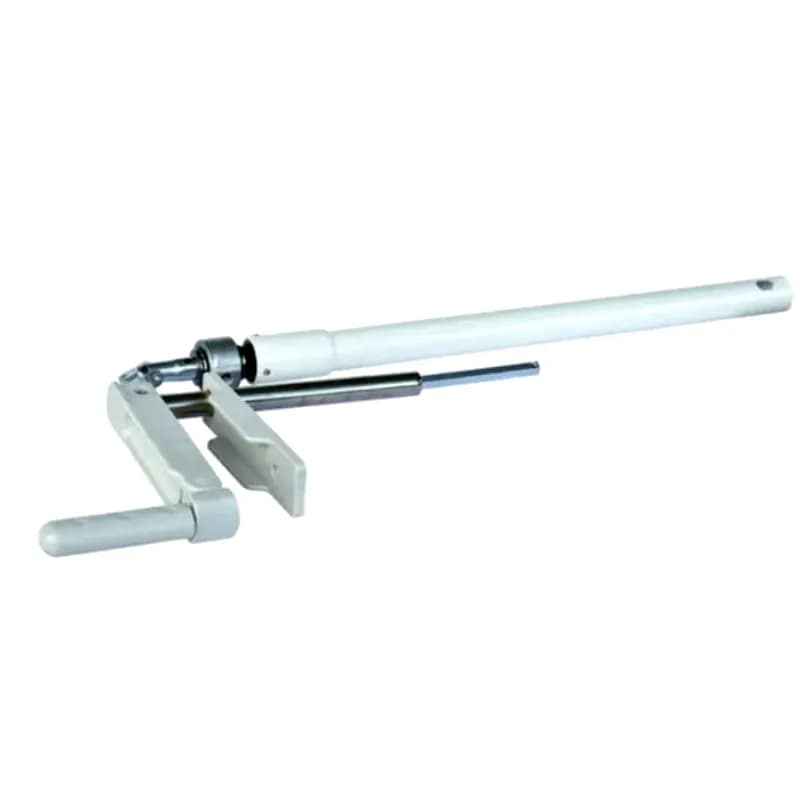
Without a spare-parts list, a broken crank or caster lock can leave an otherwise functional emergency bed out of service. For factory verification, request pre-shipment inspection points that match the order: weld continuity on stamped panels, crank backlash and in-place protection, guardrail lock engagement, caster brake force, and load-capacity documentation. Yingyun Hardware, the supplier providing the referenced product data, has been deeply engaged in hospital bed and bed accessories since 2006. This does not replace the buyer’s own incoming inspection; it means the RFQ can ask for the specific measurement records and sample approval steps that matter for emergency installation teams.
Bulk purchases create inspection gaps when the buyer compares only the bed model and not the spare parts and production records. <Ensuring Quality Control in Hospital Bed Parts: A Comprehensive Guide> covers quality-control planning for hospital bed parts.
Balancing Cost, MOQ, and Customization
Bulk order pricing depends on configuration lock, not just quantity. The supplied MOQ is 50 pieces for most hospital beds and 20 pieces for the emergency transfer stretcher. Many components also use a 50 piece or 50 set minimum. A mixed specification that changes rail type, panel width, or caster size across wards can reduce the pricing advantage of a long production run. Keep one standard emergency bed, one transfer stretcher, and one side-rail and caster set as the base, then separate custom items such as color, logo, special dimensions, or low-height versions into a clearly identified add-on list.
The most useful RFQ checklist includes:
- Bed configuration and quantity by ward
- Backrest, knee, height, or tilt range
- Load capacity and control backup type
- Bed width and mattress size
- Side rail type and locking preference
- Caster type, diameter, and brake style
- Spare parts and replacement schedule
- Packaging and destination port
- Inspection records and warranty terms
Emergency orders also need a factory that can hold the chosen specification across every bed in the lot. <Choosing a Reliable Hospital Bed Parts Manufacturer: A Comprehensive Guide> covers supplier selection for hospital bed parts.
Plan Your Emergency Hospital Bed Bulk Order
Send your ward-by-ward bed checklist, delivery port, and expected on-site date to Yingyun Hardware at [email protected] or call +8613528198959. Confirm the bed configuration, side rail and caster style, spare parts reserve, and packaging before payment so the production and shipping windows can be scheduled without delay.
Emergency Hospital Bed Bulk Order FAQ
What is the minimum order quantity for emergency hospital beds?
The supplied standard hospital bed MOQ is 50 pieces. The emergency transfer stretcher has an MOQ of 20 pieces. Most components such as casters, guardrails, and bed panels use a 50 piece or 50 set minimum. Custom colors or dimensions may require separate quantity confirmation. For a mixed emergency order, confirm the MOQ per item rather than applying one number to the entire container.
How long should we plan for delivery?
Standard manual and electric hospital beds in the supplied data run 40 to 45 working days. The emergency transfer stretcher and many accessories run 15 to 20 working days. The overall project schedule should add packaging check, loading, transit, and local inspection. Long-lead bed frames should be locked first; shorter-lead accessories can ride within the same production window if approved early.
Are electric or manual beds better for emergency surge capacity?
Electric beds reduce caregiver repositioning effort and support rapid Trendelenburg access, but they depend on control systems and power. Manual three-crank beds remain operable when power fails and reduce electronic failure points. Many emergency units use electric beds for high-acuity ICU bays and keep manual beds or a transfer stretcher for patient movement and backup.
What should be fixed in the purchase contract?
Fix bed configuration, dimensions, load capacity, backrest and knee ranges, side rail type, caster type and brake style, packaging, lead time, and warranty. Add a spare-parts list and inspection criteria. These points protect the order when components are mixed across ward types and make the pre-shipment check measurable.
Can spare parts ship in the same bulk order?
Yes. The order can include cranks with in-place protection, caster assemblies, guardrail components, panel connecting parts, and IV pole parts. Ask for a packing list that maps spares to the exact bed models. This keeps emergency replacement parts available without waiting for a second shipment.
If you’re interested, check out these related articles:
What is an Adjustable Hospital Bed and How Does It Work: A Comprehensive Guide
Ultimate Guide to Cleaning and Maintaining Your Adjustable Hospital Bed
Can Adjustable Hospital Beds Be Customized for Homecare Needs