
A hospital bed is not passive furniture. Casters, brakes, side rails, cranks, stamped bed panels, and electric actuators all work under patient load, disinfectant exposure, and constant movement. Without scheduled maintenance, a small defect can become a fall risk, a failed height adjustment, or unplanned ward downtime. Under IEC 60601-1, medical electrical equipment must remain safe throughout its service life [1], and ISO 14971 treats maintenance as a risk-control activity rather than an optional housekeeping task [2].
For replacement-part identification, browse the hospital bed casters, manual crank systems and bed guardrails. Confirm the bed model, component drawing and mounting interfaces with the manufacturer; a similar product photograph does not establish compatibility. Carry out maintenance only within the applicable manufacturer instructions and assigned technical responsibilities.
The maintenance manual should therefore be read as part of the bed’s safety system: it defines what to inspect, how often, what to clean, and when to remove a bed from service.
Why a Maintenance Manual Is a Safety System
A practical hospital bed maintenance program protects three things at once. The first is patient safety: a loose guardrail latch, a failed brake, or a cracked caster can directly cause a fall. The second is staff efficiency: a bed that cannot be lowered or transported smoothly slows nursing workflows and increases manual handling risk. The third is asset life: replacing worn parts early usually costs less than replacing a damaged actuator, gearbox, or complete bed.
A maintenance manual works best when it is bed-specific. Manual crank beds, electric three-function beds, five-function ICU beds, and long-term care beds have different wear points and inspection needs. Even within one facility, the same checklist should be adapted to bed type, ward intensity, and manufacturer documentation.
Daily and Weekly Inspection Checklist
Daily checks should be quick, visual, and functional. Weekly checks add movement, load, and locking verification. The table below covers the highest-risk items.
| Check | Daily | Weekly | Fail/action condition |
|---|---|---|---|
| Casters | Visually inspect for debris, hair, or cracking | Roll the bed in all directions; test central-locking brake | Wobble, rough rolling, or brake does not fully lock |
| Side rails | Confirm rails raise and lower smoothly | Apply firm pressure with rails in raised position | Latch slips, gap appears, or rail does not lock |
| Hand control | Confirm buttons respond | Test all functions with bed unloaded | Delayed response, stuck button, or error code |
| Power cord | Look for cuts or pinch points | Inspect plug, strain relief, and grounding pin | Damaged insulation or loose connection |
| Frame and panels | Look for visible cracks or loose hardware | Check stamped bed panel welds and mounting points | Cracks, movement, or missing fasteners |
| Height adjustment | Confirm bed moves up/down | Run full height range | Unusual noise, uneven movement, or failure to hold height |
| Mattress and support | Check for visible contamination | Remove mattress and inspect support panels | Soiled support surface or damaged deck section |
| Battery backup | Confirm present | Check charge status and low-battery alarm | No backup or alarm does not function |

Document every failed check with bed number, fault, and date. A written record is the only reliable way to distinguish a one-time finding from a recurring component issue.
Cleaning and Disinfection Without Damaging Components
Hospital bed cleaning should remove visible contamination and reduce microbial load without corroding metal parts, swelling casters, or damaging electrical controls. Use only disinfectants approved by the facility and compatible with the bed’s materials: ABS panels, powder-coated steel, stainless steel, TPR casters, and electronic membrane controls.
Follow the surface order from clean to dirty, and separate cleaning cloths for frame, patient contact surfaces, and wheels. Do not flood around motor housings, hand-control ports, or power connections. After cleaning, dry metal components and casters to prevent corrosion and bearing contamination. Disinfectant dwell time should be based on the manufacturer’s instructions and CDC guidance for healthcare surfaces [5].
Cleaning procedures should always respect material compatibility and electrical isolation. <Ultimate Guide to Cleaning and Maintaining Your Adjustable Hospital Bed> covers surface-by-surface cleaning steps and disinfectant compatibility for adjustable beds.

For side rails, pay particular attention to latch recesses and folding joints where disinfectant and soil can accumulate. Wipe rails in both raised and lowered positions, then exercise the locking mechanism several times to verify smooth operation.
Quarterly Mechanical and Electrical Checks
Quarterly maintenance should go beyond visible condition and include direct manipulation of the load path and electrical system.
Casters and Brakes
Remove debris from wheel treads and caster swivel joints. Check for cracks, flat spots, and excessive bearing play. With the bed loaded to its rated capacity, engage the central-locking brake and attempt to move the bed. If the bed creeps or a wheel locks unevenly, service or replace the affected caster before returning the bed to use.

Crank Systems and Mechanical Adjustments
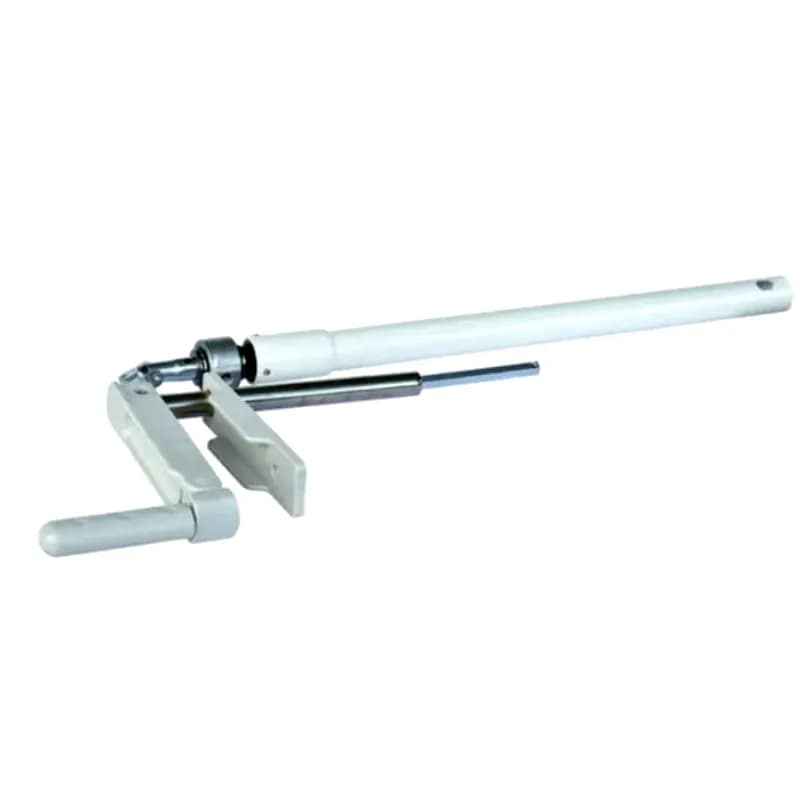
Manual beds rely on crank handles, worm gears, universal joints, and leadscrews. Inspect the crank for bending or stripped engagement surfaces. Operate each adjustment through its full range and listen for grinding, skipping, or binding. Clean and lubricate only the points specified by the bed manufacturer; over-lubricating a gearbox can attract dust and accelerate wear.
Electric Actuators, Cables, and Controls
Inspect actuator mounting brackets, clevis pins, and wiring for loose connections or pinching. Run all electric functions with the bed unloaded and again with a representative load. Record noise, movement speed, and any fault codes. A functional bed should complete its full travel without hesitation, abnormal vibration, or repeated limit-switch trip.
For beds with a battery backup, simulate a power failure and confirm that the bed can be lowered to a safe transport position. This is particularly important in emergency and ICU settings where immediate access is critical.
Common Hospital Bed Problems and Step-by-Step Repair
Most maintenance calls can be reduced to a short list of mechanical or electrical causes. Always disconnect the bed from mains power, and engage all brakes before opening covers or removing parts.
| Problem | Likely cause | First repair step |
|---|---|---|
| Bed does not raise or lower | Actuator fault, hand-control failure, or disconnected cable | Check cable connections and hand-control response |
| Height adjustment problem | Low battery, binding leadscrew, or overloaded bed | Verify battery state and inspect lifting mechanism |
| Crank difficult to turn | Dirty leadscrew, damaged worm gear, or misaligned crank | Clean and inspect crank-to-gearbox engagement |
| Wheels not rolling smoothly | Debris in tread, bearing wear, or bent bracket | Remove debris and check caster rotation under load |
| Side rails will not lock | Worn latch spring, bent rail, or damaged lock pin | Inspect latch and locking pin for deformation |
| Controller not responding | Discharged battery, locked function, or damaged cable | Recharge or check battery and cable continuity |
| Bed moves with abnormal noise | Worn actuator, loose mounting, or low lubrication | Locate noise source; tighten mounts or replace actuator |
For electric beds, do not replace an actuator or controller until the model number, serial number, and fault condition have been verified. Replacing parts by trial can mask the original cause and create new risks.
When repeats occur, the problem is usually in a specific component rather than the bed frame. <Ensuring Quality Control in Hospital Bed Parts: A Comprehensive Guide> covers inspection points for stamped panels, guardrails, casters, and crank systems.
Before ordering a replacement actuator, gearbox, or control unit, send the bed model, serial number, and a short video of the fault to the bed supplier. For YingYun Hardware beds and accessories, email [email protected] or call +8613528198959; the technical team can identify the part number and direct the repair procedure rather than replacing a functional subassembly.
Spare Parts Replacement, Documentation, and Training
A sound spare parts strategy keeps high-use beds available without storing unnecessary inventory. High-wear items such as casters, brake pedals, side-rail latches, crank handles, and hand controls may be stocked locally. Larger assemblies such as actuators, stamped bed panels, and head/foot boards should be ordered against specific bed models.
Replacement parts should match the original specification for load rating, material, and dimensions. A caster with the correct wheel diameter but a lower load capacity can fail under a bariatric patient. A bed panel that is dimensionally close but not identical can change deck alignment and actuator range.
Maintenance documentation should include bed inventory, inspection dates, fault findings, repair actions, replaced parts, and staff sign-off. The purpose is both operational control and regulatory readiness. WHO guidance recommends linking maintenance records to equipment management and user-training programs [4]. FDA equipment reporting requirements may also apply when a bed-related failure contributes to patient injury or serious deterioration [3].
Training completes the manual. Nurses and porters should know how to lock and unlock brakes, raise side rails correctly, use battery backup, and report defects. Facility technicians should be trained to perform the quarterly checks and to recognize when a repair exceeds local capacity. A firmware or control-system failure, for example, should normally be returned to the manufacturer or an authorized service provider rather than opened in the ward.
Maintenance scope also depends on whether the bed is manual or electric. <Electric vs Manual Adjustable Beds: A Comprehensive Comparison> covers function differences and care requirements by bed type.
Hospital Bed Parts and Maintenance Support
YingYun Hardware has manufactured hospital beds and bed accessories since 2006. When a replacement part is needed, matching it to the original specification is more important than buying the lowest-cost equivalent. Stamped bed panels, casters, guardrails, crank systems, side rails, IV poles, and bedside cabinets can be supplied as complete beds, accessory kits, or spare parts.
For maintenance teams managing mixed fleets, a clear parts inquiry should include bed type, model number if available, quantity, and the fault condition. Contact YingYun Hardware at [email protected] or call +8613528198959 for part identification, OEM documentation, or bulk spare parts support.
FAQ
How often should a hospital bed be inspected?
Daily visual and functional checks are recommended for high-use beds. A more detailed inspection should be performed weekly, and full mechanical and electrical checks at least quarterly. Beds used in ICU, emergency, or bariatric settings may require shorter intervals.
What is the most common cause of an electric hospital bed not responding?
The most common causes are a discharged battery, a loose or damaged control cable, a locked hand-control function, or an actuator that has reached a limit or fault state. Check the power source and cable connections before replacing components.
Can hospital bed casters be replaced without replacing the whole bed?
Yes. Hospital bed casters are replaceable wear components. The replacement caster should match the original wheel size, mounting stem, brake type, and load rating. After replacement, test the brake and bed movement under load.
What documentation should a maintenance team keep?
Keep a bed inventory, inspection checklist, repair log, spare parts record, and staff training log. Each entry should include the bed number, date, fault description, action taken, parts replaced, and the person who completed the work.
When should a hospital bed be removed from service?
Remove a bed from service when it has a failed brake, damaged side rail, cracked frame or panel, exposed electrical conductor, uncontrolled height change, or any fault that cannot be immediately corrected. Tag the bed clearly and prevent use until repair is complete.
References
- IEC 60601-1, Medical electrical equipment — Part 1: General requirements for basic safety and essential performance. https://webstore.iec.ch/publication/6744
- ISO 14971:2019, Medical devices — Application of risk management to medical devices. https://www.iso.org/standard/72704.html
- U.S. Food and Drug Administration, Medical Device Reporting (MDR): How to Report Medical Device Problems. https://www.fda.gov/medical-devices/postmarket-requirements-devices/medical-device-reporting-mdr-how-report-medical-device-problems
- World Health Organization, Medical equipment maintenance programme overview. https://www.who.int/publications/i/item/9789241501538
- CDC, Guideline for Disinfection and Sterilization in Healthcare Facilities. https://www.cdc.gov/infectioncontrol/guidelines/disinfection/index.html
If you’re interested, check out these related articles:
Identifying Reliable Brands for Adjustable Hospital Beds
Comparing Prices for Hospital Bed Parts Manufacturers Effectively
Are Adjustable Hospital Beds Covered by Insurance or Medicare