
After nearly twenty years on the manufacturing side of hospital beds and bed accessories, I am often asked: which hospital bed brand is reliable? The better question is: which manufacturer can prove reliability in a way your clinical environment can verify. Brand names matter less than the documented quality system, component traceability, tested structures, and after-sales support behind the bed.
Start With the Standards, Not the Brand Name
Reliability for a hospital bed is not a slogan; it is measurable against IEC 60601-2-52, the medical bed particular standard for basic safety and essential performance [1], and the general safety standard IEC 60601-1 [2]. A meaningful quality system should align with ISO 13485 [3], and risk management should follow ISO 14971 [4]. For market access, the European Medical Device Regulation is the legal framework for CE-marked beds [5], while the U.S. FDA device listing is required for many categories of hospital beds [6].
A reliable manufacturer should be able to produce a technical file, a recognized quality management certificate, and test reports for the parts that fail most often in wards: side rail latching, mattress retention, castor braking, load distribution, and electrical insulation. If a supplier cannot explain how those items were tested, the brand label tells you very little.
Verify the Manufacturer’s Quality and Compliance Evidence
Instead of trusting marketing language, ask for documentation that proves the manufacturing system is controlled. The most useful records include:
- Scope and validity of the ISO 13485 or equivalent quality certificate
- Incoming material inspection and batch traceability records
- Corrective and preventive action records for field issues
- Device master records or device history records for the bed family
- Factory audit reports or third-party inspection summaries
A manufacturer producing metal parts and complete beds should also have in-process checks for weld quality, powder-coating adhesion, stamping tolerances, and component fit. In my experience, this is where many reliability problems begin — not in the final design, but in inconsistent parts that pass a visual inspection and fail later under patient load and movement.
Comparing the underlying compliance record is more useful than chasing a brand name. Identifying Reliable Brands for Adjustable Hospital Beds covers the cross-check questions procurement teams ask before shortlisting a supplier.
Check the Bed’s Core Structure and Materials
The longest-lived hospital beds share a common set of structural choices. The frame should use adequate steel tube sections with clean, fully penetrated welds and a corrosion-resistant finish. Headboards, footboards, and panels should resist impact, cleaning agents, and repeated removal for emergency care access.

Stamped bed panels are often specified because they distribute weight evenly and support backrest and knee elevation without excessive flex. In our manufacturing work, panel thickness and edge finishing are reviewed because thin or sharp edges become failure points and cleaning hazards. Side rails should lock positively, fold when needed, and maintain their position after thousands of use cycles. Guardrails made from aluminum alloy, steel, or ABS should not wobble after installation.

Casters and brakes are another major indicator of bed quality. A bed that moves slowly and quietly with full load is easier for nurses to reposition safely, while a weak or unstable caster creates a daily operational problem. Central-locking casters should engage cleanly and hold the bed without creep.

Evaluate Functional Systems and Real-World Duty Cycle
The most reliable bed is not necessarily the one with the most motors. It is the bed whose functions match the ward workload and whose duty cycle is supported by the manufacturer’s stated service limits. Manual crank beds are simpler and lower in part count, but the crank system must be strong enough for repetitive adjustment by different staff. Electric beds add motor, controller, battery backup, and limit switch considerations, so the manufacturer should state the rated load, duty cycle, and protection logic.
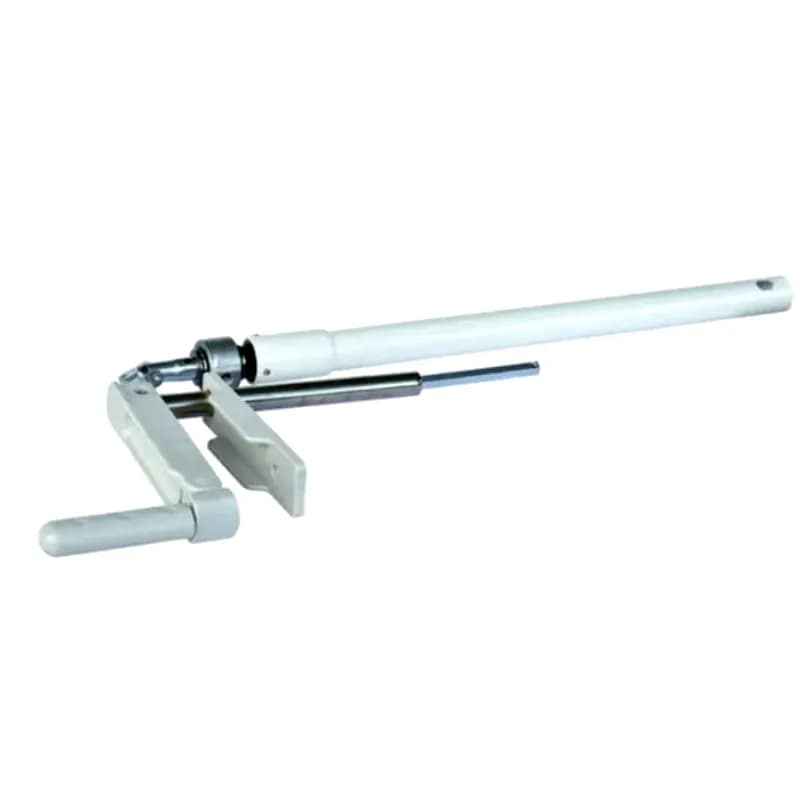
For electric beds, look for manufacturer-stated noise levels, manual backup operation, and protected control wiring. IEC 60601-2-52 sets essential performance and safety expectations for medical beds, including movement functions and entrapment-related hazards [1]. You should not have to guess whether an electric bed can safely handle the heaviest patient in your intended ward; this should be a defined specification, not a verbal assurance.
Before you finalize the bed type for each ward, write down the real clinical workflow: patient weight range, transfer method, staff height, doorway clearance, and whether Trendelenburg or cardiac chair positioning is required. Send those points to [email protected] for a technical screening. This helps you avoid paying for functions you will not use or missing functions the ward will need immediately.
Safety is not just a side-rail feature; it is the design boundary of the whole bed. Essential Safety Features for Adjustable Medical Beds covers the key safety functions that should appear in a ward-level technical review.
Compare Total Cost of Ownership, Not Only Unit Price
A low purchase price can hide high operating cost. The more useful calculation includes:
- Freight, delivery, and installation
- Warranty period and what the warranty actually covers
- Spare parts availability and lead time
- Training burden for nurses and biomedical staff
- Cleaning, disinfection, and corrosion resistance
- Expected service life in your specific ward environment
A bed that cannot be repaired quickly becomes a bed out of service. In a busy hospital, two out-of-service beds are far more expensive than the savings from a lower unit price. Ask the supplier for the spare parts list, the replacement interval for wear items, and the typical response time for technical support.
Validate After-Sales Support and Spare Parts Depth
Reliability is also a supply chain question. The bed may be well designed, but if you cannot obtain a replacement caster, side rail, crank, or motor after two years, the equipment decision becomes a liability. The strongest suppliers keep component records and can support after-sales replacement for casters, guardrails, bed panels, head and foot boards, IV poles, cranks, and structural metal parts.

When ordering for a new hospital or nursing home, consider whether the supplier can also support the surrounding furniture package: bedside cabinets, overbed tables, transfer chairs, and matching guardrails. A more consistent furniture package usually reduces variation in maintenance, cleaning protocols, and staff training.
Use a Shortlisting Scorecard for Procurement
A scorecard makes the evaluation less emotional and easier to compare across suppliers. Use the following as a starting point:
| Evaluation area | What to look for | Red flags |
|---|---|---|
| Certifications | ISO 13485 scope, test reports, regional compliance | Unclear certificate scope or missing test data |
| Frame and panels | Adequate steel sections, clean welds, proper panel edges | Thin, sharp, or inconsistent parts |
| Guardrails and casters | Positive locking, stable movement, reliable braking | Loose fit, rough rolling, hard-to-engage brakes |
| Function system | Stated load, duty cycle, controller protection, backup | No duty cycle or backup limit defined |
| Spare parts | Documented parts list and replacement support | “No need for spare parts” answers |
| Warranty | Clear coverage and service response process | Unclear or verbal warranty terms |
| Total cost | Delivery, training, parts, service, expected life | Focus only on unit price |
| Factory transparency | Audit reports, inspection records, customer references | No audit or reference available |
Once you have a shortlist, price comparison should be run against the same specification, not a brand name. Choosing a Reliable Hospital Bed Parts Manufacturer: A Comprehensive Guide covers the verification steps that reduce sourcing risk.
Talk to a Hospital Bed Engineer Before You Commit
A reliable purchase is confirmed by documentation, factory transparency, tested components, and support. If you are comparing hospital bed suppliers, ask for a pre-shipment sample check, a detailed specification sheet, and a clear warranty and spare parts list.
You can reach me at [email protected] or +8613528198959. Yingyun Hardware has been manufacturing hospital beds and bed accessories since 2006 and can support OEM evaluation, spare parts planning, and hospital furniture specification review.
Frequently Asked Questions
How do I verify a hospital bed manufacturer’s reliability?
Ask for ISO 13485 or equivalent quality management documentation, IEC 60601 series test reports, batch traceability records, and evidence of field-service corrective action. A reliable manufacturer should be able to explain its quality system without vague reassurances.
What is the most important certification for a hospital bed?
No single certificate is sufficient on its own. For medical bed safety and essential performance, IEC 60601-2-52 is a key standard. For quality management, ISO 13485 is widely expected. Regional market access may also require CE marking under the EU MDR or FDA device listing in the United States.
Are electric hospital beds more reliable than manual beds?
Not automatically. Manual beds have fewer powered components and simpler service needs, but the crank system, cables, and joints still need good manufacturing quality. Electric beds offer better workflow and positioning but require protected controllers, motors, battery backup, and clear duty-cycle information.
What load capacity should a standard hospital bed have?
The required capacity should be based on your patient population and local clinical risk assessment, not a single universal number. Many modern adult hospital beds are specified for 250 kg or higher, but you should confirm the safe working load with the manufacturer and match it to your heaviest intended patient and accessory load.
Does a higher price mean a more reliable hospital bed?
Not necessarily. Price should be evaluated against certification, structural quality, component traceability, warranty, spare parts availability, and expected service life. A lower-priced bed without local support or spare parts can cost more over time than a better-supported bed.
How can I test hospital bed casters and side rails before buying?
Request a sample or arrange a factory video inspection. Load the bed to its stated safe working load, push it over a hospital floor surface, engage the castor brakes, and test side rail locking and release. The bed should not creep on braked casters, and rail movement should be firm and repeatable.
References
- IEC 60601-2-52:2009+AMD1:2015, Medical electrical equipment — Part 2-52: Particular requirements for the basic safety and essential performance of medical beds. International Electrotechnical Commission.
- IEC 60601-1:2005+AMD1:2012+AMD2:2020, Medical electrical equipment — Part 1: General requirements for basic safety and essential performance. International Electrotechnical Commission.
- ISO 13485:2016, Medical devices — Quality management systems — Requirements for regulatory purposes. International Organization for Standardization.
- ISO 14971:2019, Medical devices — Application of risk management to medical devices. International Organization for Standardization.
- Regulation (EU) 2017/745 of the European Parliament and of the Council on medical devices (MDR).
- U.S. Food and Drug Administration, Medical Device Product Classification Database, Hospital Bed.
If you’re interested, check out these related articles:
Choosing a Reliable Hospital Bed Parts Manufacturer: A Comprehensive Guide
Essential Materials for Quality Medical Bed Parts Manufacturing
Leading Hospital Bed Parts Manufacturers: A Comprehensive Guide