
Most procurement teams approach a custom hospital bed supplier by comparing unit price and delivery. I have spent nearly twenty years on the manufacturing side, and the failures I see later almost always trace back to a specification that was left soft before the order. A supplier that makes the bed frame, panels, rails, and casters under one roof is easier to hold accountable than a trading company that coordinates outside workshops. This article gives buyers the checks I would run if I were placing the order myself.
What Should a Custom Hospital Bed Supplier Verify Before Quoting?
The first check is whether the supplier insists on locking the bed specification before pricing. If a quote arrives without a detailed drawing or written requirement sheet, the supplier is probably pricing a catalog bed, not your bed. That leaves room for mismatched panel widths, side rail heights, caster types, and packing specifications.
We ask customers to send at least four items before pricing: bed type and function, panel width and section count, side rail style, and caster size with brake requirement. Color, logo placement, packaging, and accessories come next. A realistic quote should also state the load capacity, mattress platform size, and adjustment range because those values affect the frame, actuator, and panel selection.
| Parameter | Manual bed example | Electric bed example |
|---|---|---|
| Load capacity | 250 kg | 250 kg |
| Backrest angle | 75° ±5° | 75° ±5° |
| Knee board angle | 40° ±5° | 40° ±5° |
| Height adjustment | 430-760 mm | 430-840 mm ±10 mm |
| Lead time | 40-45 working days | 40-45 working days |
This table looks basic, but it is the difference between comparing two complete beds and comparing two different products. When buyers skip it, the lower quote usually wins for the wrong reason.
Does the Supplier Actually Make the Bed, or Only Assemble It?
A custom hospital bed supplier can be a manufacturer, a partial assembler, or a trading company. The difference shows up after the order is placed. A manufacturer that owns its own stamping, welding, and powder coating operations can correct a fit problem in its own workshop. A trading company has to send the problem back to an outside factory and wait for an answer.
Factory ownership matters because a manufacturer that runs its own stamping and welding operations can control fit, surface finish, and spares availability. <Comparing Prices for Hospital Bed Parts Manufacturers Effectively> covers how to compare quotes only after the bed specification and part-level scope are fixed, so the price difference is real rather than a gap in what is included.
I look for three manufacturing signals when buyers ask me how to evaluate a supplier. First, can the supplier show tooling for the specific bed panel and side rail design? Second, does the factory keep part-level quality records for stamped panels, weldments, and casters? Third, can the supplier provide replacement parts from its own production rather than searching the market later? Those signals matter more than a polished product photo.
Which Bed Panel and Hardware Details Matter Most?
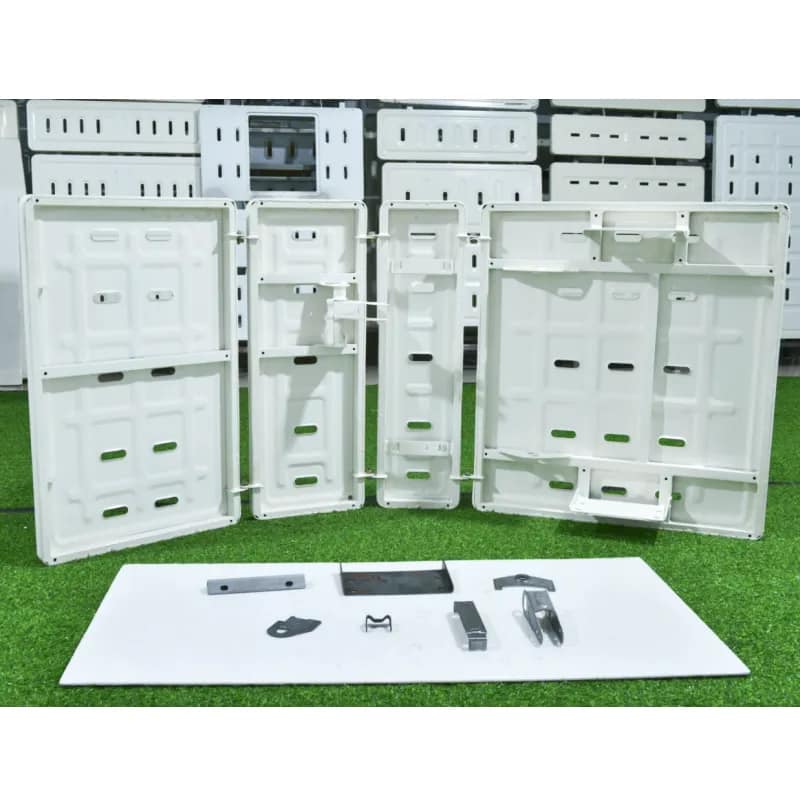
Bed panels carry patient load and adjustment force, so I focus on steel thickness, section structure, and edge finishing. We stamp most standard panels from willow steel at 0.8 mm or 0.9 mm, in 820 mm, 840 mm, and 900 mm widths. A four section panel gives smoother backrest and knee profiling than a two section panel, but it also requires more pivot hardware and more accurate alignment.
Head and foot boards look simple, but the material and mold condition determine whether corners crack in normal ward use. We use snap-on ABS boards so clinical staff can remove them quickly for resuscitation access or cleaning. That practical detail matters more than color matching, although OEM color matching is available for projects that need it.
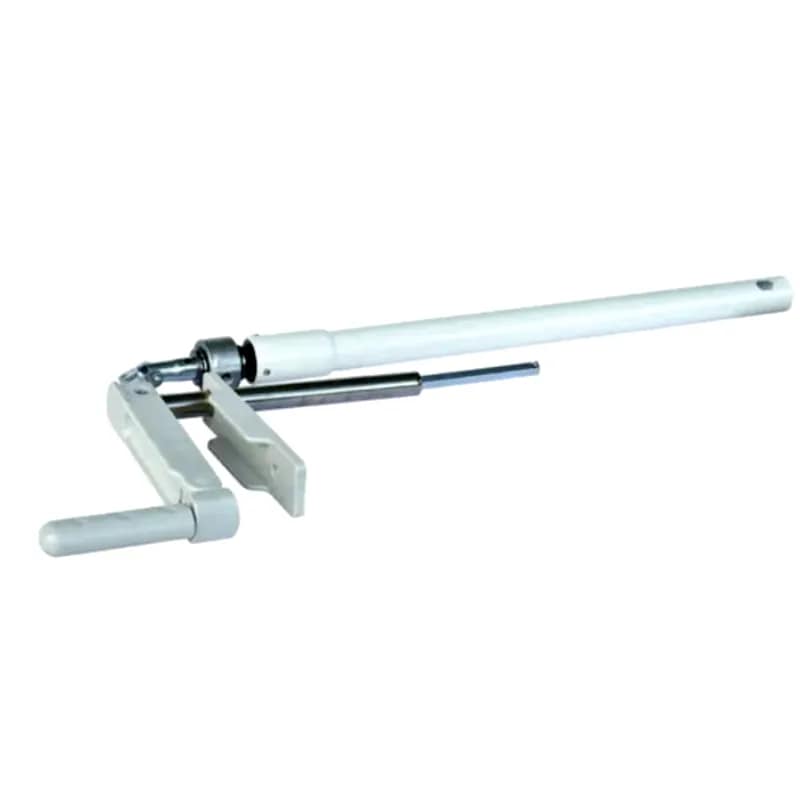
Hardware causes most long-term warranty issues. Crank handles, transmission arms, bed foot covers, and central locking pedals should be specified by material and finish, not treated as generic bed accessories. A 304 stainless steel caster bracket behaves differently near disinfectant and floor cleaning equipment than painted iron.

If your project mixes manual and electric beds across general wards and ICU areas, confirm the side rail type and nurse control handset before freezing the bill of materials. Send your ward layout and bed drawing to [email protected] and we will check which side rail and actuator combination fits the clinical work pattern.
How Should You Lock Tooling and Delivery Terms?
Delivery depends on which items in the order have the longest production path. A complete manual or electric bed typically runs longer than a carton of casters or a set of ABS boards because the bed frame needs welding, surface treatment, assembly, and wooden box packing. We quote builds at 40-45 working days, while many accessories run 15-20 working days.
For a mixed container of beds, side rails, and bedside cabinets, the longest item usually controls the shipment date. <Understanding Lead Times for Hospital Bed Parts Manufacturing> covers how part-level production time, surface treatment, and packaging affect the final delivery schedule.
Packing should be written into the order, not assumed. Full hospital beds ship in wooden boxes because they carry gas springs, motors, and protruding frame sections. Small components ship in foam-lined export cartons. A supplier that cannot explain the packing method for each product line is likely to discover the problem at loading.

How Should You Start the Custom Hospital Bed Supplier Verification?
Start with the bed specification, not with a price list. Send a drawing or the minimum requirements for bed type, panel width, side rail style, caster size, quantity, and destination port. We will return a quotation based on that actual configuration, not a catalog placeholder.
For deadline-sensitive projects, tell us the required ex works date in the first message so lead time is confirmed before sampling. Reach Yingyun Hardware at [email protected] or +8613528198959 and ask for a technical quotation with packing details and a part-level specification sheet.
Which Custom Hospital Bed Supplier Questions Should Buyers Ask Before Ordering?
How do I know whether a supplier can handle my required dimensions?
A capable supplier will ask for the full drawing or dimensional tolerance first, not push a standard bed. Custom work is not just changing the overall length. It changes panel section widths, side rail mounting points, mattress platform size, and sometimes the caster layout. The safe approach is to send the drawing early and ask the supplier to mark any dimensions that conflict with the existing tooling. That answer tells you more about real capability than a general yes without technical questions.
Why do two suppliers quote very different prices for the same bed?
The common assumption is that the lower quote is automatically stronger. In most cases the price gap comes from steel thickness, motor brand, side rail finish, caster material, or packing method. One supplier may price a 0.8 mm panel and a basic TPR caster. Another may price a 0.9 mm panel, central locking casters, and a reinforced side rail. Price should only be compared after the quote lists the exact configuration. If one quote does not list those details, that is the missing part of the comparison.
Which is safer for a first order, one mixed container or separate accessories?
It depends on project urgency and storage capacity. If the hospital is opening soon and the beds are the critical path, one mixed container keeps the shipment together but the longest bed lead time controls everything. If accessories are needed for existing bed repairs, order those separately because casters, cranks, and side rails often run on shorter production cycles and can ship earlier. Buyers with enough warehouse space benefit from separating fast-moving spares from full bed builds.
What should I send to get a realistic delivery date?
The more useful question is not how fast the supplier can ship, but which items control the production schedule. Send the item list with quantities, bed types, panel widths, and destination port. A realistic delivery date will account for the longest production item, not the fastest one. Share your requirements at [email protected] or +8613528198959 and we will confirm the longest lead item, packing plan, and the earliest ex works date for your order.
If you’re interested, check out these related articles:
Understanding Lead Times for Hospital Bed Parts Manufacturing
How to Choose the Right Adjustable Medical Bed for Your Clinic: A Comprehensive Guide
Unlocking Comfort and Care Benefits of Adjustable Hospital Beds