
Choosing a hospital bed supplier without first defining how the beds will be used creates expensive risks in patient safety, delivery timing, and after sales service. In nearly twenty years of hospital furniture manufacturing, I have seen procurement teams select a supplier on price alone, then struggle with component mismatch and late support. The better approach is simpler: lock your ward requirements, verify factory capability and documentation, then pilot a small order before committing. This article explains that sequence from a manufacturer’s side, including the checks that reduce sourcing risk.
What Must You Define Before Shortlisting Hospital Bed Suppliers?
Too many buyer inquiries start with a price request for a generic hospital bed. The supplier that answers quickly often wins, but the buyer later discovers the bed cannot pass through the ward door, cannot take the patient weight, or lacks the right locking casters for the floor. Before comparing hospital bed suppliers, write down the bed class, function count, load capacity, bed dimensions, and door openings. For example, our electric three function bed is L2170 x W1030 x H430 mm, adjusts from 430 mm to 840 mm, and is rated for 250 kg. A manual single crank bed may be narrower in some configurations, but it will not offer the same Trendelenburg positioning.
One specification table we use in factory evaluations is below.
| Item | What to specify | Why it changes sourcing |
|---|---|---|
| Bed class | Manual, electric, ICU, pediatric, bariatric | Motor count, rail design, and load class differ |
| Load capacity | 125 kg, 250 kg, or higher | Frame wall thickness and actuator selection |
| Door and room access | Clear opening width, hallway turns, lift width | Overall width and headboard removal |
| Power supply | Voltage and frequency, backup needs | Electric bed motor and battery configuration |
| Clinical functions | Back rest, knee break, height, Trendelenburg | Function count and actuator or crank system |
Most hospital bed suppliers can quote all of these once the buyer defines them. The problem is the buyer often waits for the supplier to ask. In our company, we ask about doorway width and patient weight before quoting because those two details change the bed frame and caster recommendation more than any other factor.

Which Factory Capabilities Separate Reliable Hospital Bed Suppliers?
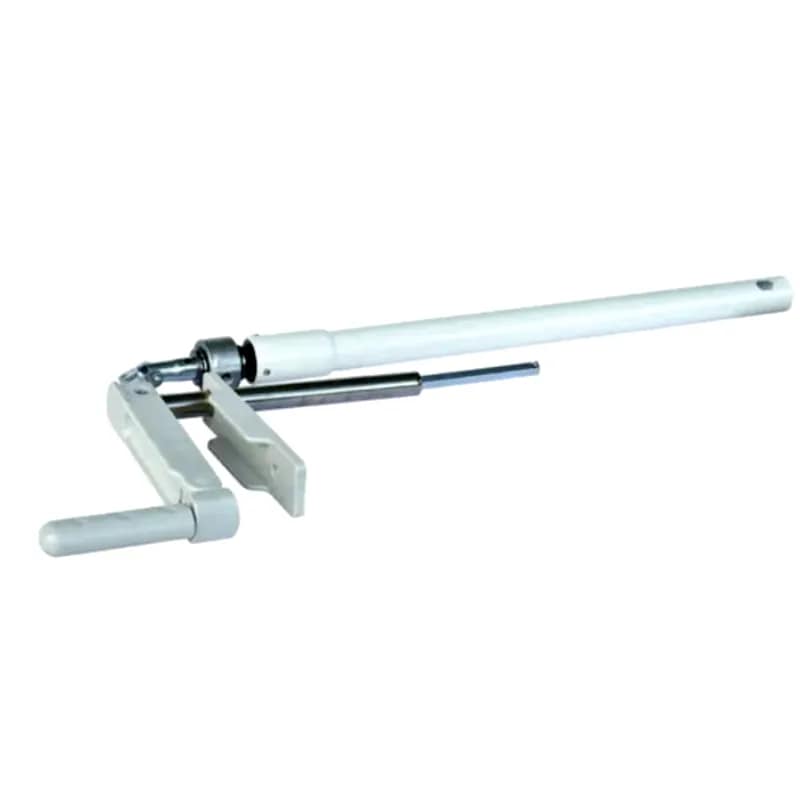
A supplier that only trades products cannot explain why a bed panel uses 0.8 mm willow steel instead of 0.9 mm, or why a guardrail joint is die cast aluminum rather than plastic. Those details determine whether a bed stays quiet and square after five years of side rail cycling. In our factory, the hospital bed supplier conversation starts with the production process: steel stamping, laser cutting, welding, powder coating, assembly, and final inspection. We produce stamped bed panels in 820 mm, 840 mm, and 900 mm widths, plus guardrails, cranks, casters, and IV stands. That range matters because a hospital bed rarely fails as a whole bed; it fails at a castor brake, a side rail lock, a crank seat, or a bed panel ear.

When a hospital bed supplier cannot explain the materials behind its own bed frame, reliability is a guess. <Identifying Reliable Brands for [Adjustable Hospital Bed](https://hospitalbedaccessories.com/product-category/hospital-bed/)s> covers what separates brand-level repeatability from one-off production, including how to weigh material choices and load testing before you commit.
Ask the supplier which parts it makes in house and which parts it buys. A factory that stamps its own bed panels and welds its own guardrail brackets can adjust dimensions more easily, and it carries the tooling needed for replacement parts later. If the answer is “we can source it for you,” treat that as a trading signal rather than factory capability.
What Documentation Should a Hospital Bed Supplier Share?
Before you visit a factory, request the documentation that should exist for the exact model you are buying. A hospital bed supplier should share assembly drawings, material specifications, load test results, component certificates, and warranty terms. Do not accept a brochure with generic product photos. The bed you order should have a model specific data sheet listing dimensions, mattress platform, side rail height, caster type, motor brand or crank type, and finish. In our experience, buyers who compare documentation side by side eliminate the suppliers most likely to fail during inspection.
Comparing price quotes only works when the documentation covers the same bed configuration and load class. <Comparing Prices for Hospital Bed Parts Manufacturers Effectively> covers how to normalize delivery terms, materials, and testing costs so a lower unit price does not hide weaker support.
One point often missed is spare parts documentation. Ask whether the supplier maintains drawings and stock for side rail locks, casters, crank handles, and bed panel supports. A hospital bed that cannot be repaired quickly becomes a clinical problem, not just a procurement problem. If the supplier cannot show a spare parts list with lead times, keep that risk in the total cost.
How Do You Pilot a Hospital Bed Supplier Before a Bulk Order?
A pilot order is the cheapest way to test what the documentation cannot tell you: weld finish, caster roll resistance, side rail latching, motor noise, and packaging for export. The sample should include the actual configuration you plan to use, not a showroom bed. If your project includes a 250 kg bariatric bed on 5 inch casters, test that exact combination. For a general ward project, a practical pilot might include one electric three function bed, one manual single crank bed, two sets of side rails, and a set of spare casters.
If your facility mixes general wards, ICU, pediatric, or bariatric use, one bed type will not answer all questions. Send your ward layout, required functions, and door dimensions to [email protected] and we will confirm which bed configurations and casters fit before you multiply the order.
Piloting a supplier is also the right time to confirm the cost structure for the full bed configuration. <How Much Does an Adjustable Hospital Bed Cost on Average> covers where adjustable bed pricing moves between manual and electric functions, and why the base unit price is only part of the landed cost.
When the pilot unit arrives, inspect it before clinical staff use it. Check the side rails for free movement and secure locking. Run the electric functions through full travel with weight on the platform. Roll the bed over a doorway threshold and listen for caster noise. If the supplier cannot correct a pilot issue quickly, that is the same response you will get on a container order.
What Should You Confirm Before Finalizing a Hospital Bed Supplier?
A hospital bed procurement decision becomes costly when the bed configuration, documentation, and support terms have not been checked together. Yingyun Hardware has manufactured hospital beds and bed accessories since 2006, including stamped bed panels, guardrails, casters, cranks, IV stands, bedside cabinets, and electric and manual bed systems. Send your required functions, load class, doorway dimensions, and delivery schedule to [email protected] or call +8613528198959, and we will confirm the matching model, documentation, and lead time before you commit.
What Questions Do Buyers Ask About Hospital Bed Suppliers?
What matters more, supplier size or production capability?
Production capability matters more than supplier size. A factory with in house stamping, welding, and assembly can control tolerances and replacement parts more directly than a large trading company that only coordinates subcontractors. Look for evidence that the hospital bed supplier owns the key processes for the bed frame and side rail system, not just a broad catalog. The supplier should also be able to explain material choices for the bed panels and locking mechanisms. A large supplier without that technical depth is still a sourcing risk.
Should I visit the factory before checking documentation?
A common mistake is to visit the factory before checking the documentation. The better order is to request drawings, test data, and warranty terms first, then use the factory visit to confirm what the documents describe. During the visit, watch the supplier’s own production line rather than a showroom. Ask which bed parts are made in house, how the supplier inspects welds and casters, and how it handles replacement parts. A clean factory floor without a technical explanation is less useful than a slightly cluttered floor where the engineer can show how a bed panel is stamped.
Is price or after sales support more important?
It depends on the ward type. In a general ward with stable power and standard patient profiles, a manual bed can be the better value if the crank system and side rails are well made. In an ICU, emergency, or high acuity setting, electric function reliability and after sales response deserve more weight than a low unit price. In our factory discussions, we often recommend buyers separate the bed frame quality from the actuator or motor package, because a strong frame can outlast a weak motor, and a cheap frame can make a good motor feel unstable.
What lead time should I expect from a hospital bed supplier?
In projects we have supported, the shortest lead time is not always the safest basis for selection if the configuration still needs changes. Some hospital bed suppliers run continuous stock for standard electric and manual models, while others begin production only after the order is confirmed. Ask whether the bed you are buying is in current production or built to order, and confirm packaging and shipping time separately. If your facility has a fixed opening date, send the required delivery schedule and quantity to [email protected] or call +8613528198959, and we will confirm stock availability and achievable lead time.
If you’re interested, check out these related articles:
Ultimate Guide to Cleaning and Maintaining Your Adjustable Hospital Bed
Choosing a Reliable Hospital Bed Parts Manufacturer: A Comprehensive Guide