
When a new shipment of hospital beds arrives, clinical staff rarely have the luxury of a learning curve. Without proper instruction, even advanced electric beds can become underutilized, misadjusted, or a safety risk. The availability of a structured hospital bed training program from your manufacturer is a factor that procurement teams often overlook until after installation. Having spent nearly twenty years in medical bed manufacturing, I know that a supplier’s willingness to provide hands-on training directly impacts the long-term value of your purchase. This guide explains how to evaluate and secure the training programs that help your team operate every bed safely from day one.
Why Training on Hospital Beds Is a Non‑Negotiable Requirement
A hospital bed today is far more than a flat surface on wheels. Electric models with five functions can weigh over 80 kg, support up to 250 kg, and offer Trendelenburg tilt, cardiac chair positions, and integrated nurse‑call systems. When staff are unfamiliar with these capabilities, two things happen: the bed’s clinical potential goes unused, and avoidable safety incidents emerge. I have seen wards where the reverse Trendelenburg feature sat untouched for months simply because nobody had been shown the control panel. That directly affects patient outcomes and staff confidence.
Missing training also raises maintenance burdens. Facilities that skip proper instruction tend to call the supplier more often for simple adjustments that could have been handled internally, from unlocking central‑locking casters to resetting a control‑box error code. Our after‑sales records show that a single one‑hour walkthrough reduces the volume of basic operation queries by roughly half in the first three months. For any facility investing in new beds, a structured training session is not an extra cost but an operational necessity.
Types of Hospital Bed Training Programs Manufacturers Offer
Not every manufacturer delivers training the same way. The table below outlines the most common formats and what to expect.
| Training Format | What It Covers | When It Is Available |
|---|---|---|
| On‑site practical training | Bed assembly, function demonstration, cleaning protocols, emergency operation (CPR release, manual crank backup) | Typically with large orders or turnkey projects |
| Remote video walkthrough | Live video session or pre‑recorded demonstration of control functions and troubleshooting | Standard with many suppliers, especially for export clients |
| Printed and digital manuals | Illustrated step‑by‑step guides per bed model | Almost always included as basic documentation |
| Train‑the‑trainer sessions | Intensive instruction for biomedical engineers or lead nurses who then train other staff | Custom projects, often requested by teaching hospitals |
| After‑sales support hotline | Direct access to technical staff for urgent questions post‑installation | Varies by supplier and service agreement |
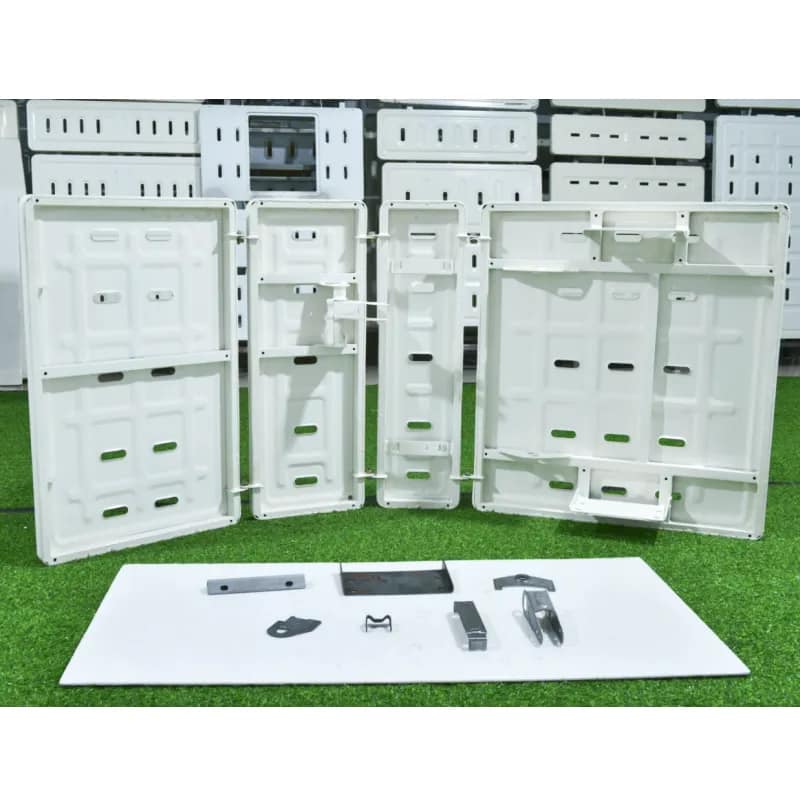
The availability of these formats depends on the manufacturer’s resources and the size of your order. A small clinic ordering five manual beds may only receive the printed manual and a short video link, whereas a 200‑bed hospital renovation typically comes with an on‑site training proposal. Clarify this early; do not assume that all formats are automatically part of the deal.
If your facility relies on complex ICU beds with integrated weight scales and multi‑position programming, confirm that the manufacturer provides operational training that goes beyond the basic user manual. Reach out to your supplier and specify the bed models you are purchasing to check whether advanced training is included.
Questions to Ask a Supplier About Training Availability
The best time to secure training is during the quotation stage, not after delivery. Go into the conversation with a clear checklist.
Is training included in the quoted price, or is it an additional line item? Some suppliers bundle a fixed number of training hours with the contract; others charge separately per session.
How many staff members can participate? A single session for two people may be insufficient for a large nursing team. Ask whether the trainer can repeat the session across multiple shifts.
In what language is the training delivered? For international buyers, this is critical. We regularly produce training materials in English, French, and Arabic, but you need to confirm this before the trainer arrives.
Does the manufacturer provide a maintenance guide? A maintenance guide explains preventive checks for casters, guardrails, and crank mechanisms. Without it, small issues can escalate into component failures that disrupt ward operations.
Is there follow‑up support after the initial session? Beds evolve. A supplier that offers periodic refresher videos or updated manuals helps you stay current without repeating the full training cost.

How Yingyun Hardware Supports Your Team with Hands‑On and Remote Training
As a manufacturer that produces everything from manual single‑crank beds to electric five‑function ICU beds, we treat training as a standard part of the customer relationship, not an optional service. Every shipment from Yingyun Hardware includes illustrated user manuals and video guides that walk through daily operation, emergency procedures, and routine maintenance for the specific models in your order. For electric beds, we also supply the wiring diagram and control‑box error‑code reference, which helps your in‑house biomedical team handle minor issues without waiting for remote assistance.
For larger projects—new hospital openings, complete ward refurbishments, or container‑size orders—we can arrange an engineer‑led on‑site training session. The trainer covers bed assembly verification, function testing, safety feature checks such as guardrail locking and central‑brake engagement, and cleaning protocols that protect ABS panels and powder‑coated frames. We have delivered these sessions in countries across Africa, the Middle East, and Southeast Asia, and we adapt the content to local conditions, for example, discussing how humidity affects castor performance or how to prevent corrosion on stamped bed panels in coastal facilities.

Securing a Reliable Hospital Bed Training Program for Your Facility
Too often, staff are left to puzzle over a bed’s functions under time pressure, leading to avoidable frustration and safety gaps. The right training program turns a new bed into an immediate clinical asset instead of a source of operational friction. When you discuss your next project with us, ask about the training options that come with your order. Share your facility’s specific workflows and we will recommend the right format—whether remote video walkthroughs, on‑site sessions, or train‑the‑trainer support. Contact us at [email protected] or call +8613528198959 to start planning a training program that fits your timeline.
Common Questions About Hospital Bed Training Availability
Is training always included when buying hospital beds from a manufacturer?
Not automatically. Basic user manuals are standard, but on‑site or live‑remote training usually requires a mutual agreement during the quotation phase. We recommend asking explicitly because many procurement teams assume training is part of the package and only discover the gap after installation. In our experience, a brief session during the delivery week prevents months of operational trial and error.
Can hospital bed training be provided remotely if an on‑site visit is not practical?
Yes. Remote training via video conferencing or pre‑recorded demonstrations is a productive alternative, especially for international buyers. We have conducted remote walkthroughs for clients in Tanzania and Saudi Arabia where travel was not feasible, and the results were positive when the facility designated a coordinator to manage the session and record the call for later review. A stable internet connection is the only technical requirement.
What if the bed model changes after a few years—do we get new training materials?
It depends on the supplier’s policy. Many manufacturers release updated operation guides or short refresher videos when a model is revised. If you are a repeat buyer, it is reasonable to ask for follow‑up training as part of the ongoing relationship. In most cases, we provide updated documentation free of charge to existing clients. If your facility is expanding and adding new bed types, share your updated equipment list so we can confirm which training materials apply and whether an additional session would help.
If you’re interested, check out these related articles:
Choosing a Reliable Hospital Bed Parts Manufacturer: A Comprehensive Guide
Are Adjustable Hospital Beds Covered by Insurance or Medicare