
Choosing the best hospital bed for a nursing home is not simply a matter of comparing electric versus manual functions. In a residential care setting where beds operate 24 hours a day, accommodate residents with varying mobility levels, and endure constant cleaning, the structural durability of the frame, the reliability of the caster wheels, and the integrity of the side rails become the real measures of value. A bed that requires frequent repairs or compromises resident safety can drain facility budgets and undermine care quality. Drawing on nearly twenty years of manufacturing experience, this article examines the engineering factors that separate a bed that lasts from one that creates ongoing problems.
Nursing Home Beds Must Withstand Continuous Daily Use
Hospital beds in nursing homes face demands that differ sharply from acute-care wards. Where a general ward bed may be empty for hours between admissions, a nursing home bed is occupied almost continuously by residents who may be in it for years. The bed must support transfers from wheelchairs, withstand the lateral forces of repositioning a resident, and remain stable if a resident leans on a side rail repeatedly. Weight capacity needs to accommodate a range from lightweight geriatric residents to bariatric individuals, and a typical load rating of 250 kg provides a safe margin.
Cleaning protocols add further stress. Staff wipe down surfaces multiple times per shift, often with disinfectant solutions that can corrode cheap finishes or degrade unprotected plastic parts. If the coating on a steel frame fails, rust becomes a contamination risk and a structural weakness. For this reason, we specify powder‑coated steel tubes for all our bed frames and use ABS engineering plastic for headboards and footboards because ABS resists impact and is easy to disinfect without hazing.
The day‑to‑day rhythm of a nursing home also means that beds are moved frequently, rolled from room to hallway for cleaning or group activities. Caster wheels are not occasional accessories—they are the primary interface between the bed and the floor. We will discuss caster selection later, but the key point is that every component must be evaluated for its ability to perform hundreds of small movements without loosening or developing play.
Electric and Manual Beds: Choosing the Right Mechanism for Your Facility
The decision between electric and manual beds is often presented as a choice about comfort. In a nursing home, the calculation is more about maintenance, staff workflow, and long‑term cost of ownership.
| Feature | Manual Hospital Bed | Electric Hospital Bed |
|---|---|---|
| Adjustment method | Hand cranks (single, dual, triple) | Wired remote control |
| Positioning functions | Back, knee, or height depending on model | Back, knee, height, Trendelenburg |
| Power requirement | None | Mains power, with battery backup |
| Motor and circuit | None | Multiple linear actuators, control box |
| Typical noise | Silent | ≤50 dB for economy models |
| Failure mode | Crank handle jams, gear wear | Motor burnout, controller failure, wiring harness damage |
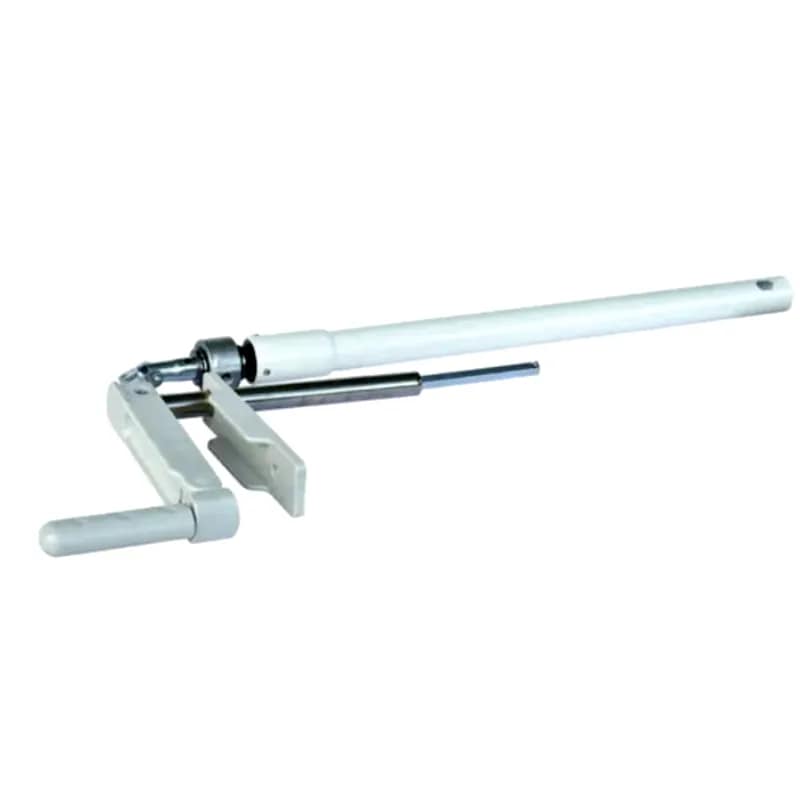
A three‑crank manual bed, such as our YY manual 3‑crank model, gives nursing staff backrest, legrest, and height adjustment without any electrical dependency. The crank handles are simple iron or ABS‑topped mechanisms with a built‑in slip‑clutch that prevents over‑rotation. During a power outage, a manual bed continues to operate identically; the physical effort required is moderate. In our experience, the most common source of failure in manual beds is the crank gear set when the bed is adjusted under heavy load, but with proper oversized steel gears in the transmission arm, this risk is minimal.
An electric three‑function bed, like our YY electric 3‑function model, speeds up positioning and reduces caregiver strain. One button raises the backrest to a sitting position for meals or breathing support. The motors are rated for 250 kg loads, with a noise level below 50 dB. Battery backup allows continued operation for several cycles during a power failure, and there is a manual override crank hidden behind the footboard. The long‑term concern with electric beds in nursing homes is motor protection: if the bed is moved roughly or the controller cable snags, a broken actuator can immobilise the bed in an extended position. We therefore recommend choosing electric beds with steel‑housed actuators and a control box that is recessed rather than mounted externally, because those physical safeguards directly reduce service calls.
The mid‑article truth is that there is no universal “best” type. A facility with limited maintenance staff and budget‑sensitive operations may get more reliable service from heavy‑duty manual beds, while a higher‑acuity dementia care unit may justify electric beds for frequent repositioning. Whichever path you take, insist on seeing the components themselves: the crank gear, the actuator housing, the control box mounting. Those details predict downtime far better than a spec sheet.
If your nursing home is weighing electric versus manual bed deployment and you need help comparing total ownership costs for different bed quantities, send your room count and patient profile to [email protected] for a breakdown.
Bed Frame Engineering: Materials and Construction That Last
A bed’s frame is its skeleton, and in a nursing home, that skeleton must remain rigid for a decade or more. We manufacture bed frames from cold‑rolled steel tubes, typically 25×50×1.5 mm for the main rails, with welded corners rather than bolted brackets. Bolt‑together frames can loosen under the vibration of caster rolling, producing squeaks and eventually misalignment. Welded joints distribute stress evenly and stay silent.
The bed platform—the surface that holds the mattress—takes the direct weight of the resident and any attendant. We use stamped willow steel panels, 0.8–0.9 mm thick, formed with a 32 mm lip for strength. A four‑section stamped panel set, such as our YY‑4BP set in 840 mm or 900 mm widths, articulates at the back and knee joints with precisely aligned hinges. Compared to simple mesh decks, stamped panels offer a more uniform load distribution and are easier to clean. The curled‑edge design also reduces the risk of the mattress snagging, which can cause tearing and pressure‑sore problems.
Headboard and footboard construction matters more than appearance. We use ABS plastic injection‑molded into a solid shell, not a thin vacuum‑formed skin. The anti‑collision corners on our YY‑HB03 boards are capable of absorbing impact if a caregiver accidentally bumps the bed against a wall, preventing cracks that can harbor bacteria. The boards snap into the bed frame without tools, so cleaning staff can remove them in under 30 seconds for thorough disinfection.

The metal components that connect the bed panels—the swing arms, transmission parts, and support plates—are often where a bed’s lifespan is determined. We punch these parts from steel sheet, then weld and powder‑coat them. In our QC process, we apply a cyclic load to the bed’s backrest and knee section to simulate 10,000 adjustments, checking for deformation in the connecting ears and swing arms. This level of testing is not visible on a showroom floor, but it is the difference between a bed that remains tight after two years and one that sags.
Caster Quality: The Foundation of Safe and Easy Mobility
If a bed cannot be rolled smoothly and locked securely, every resident transfer becomes a safety incident. Nursing home beds are repositioned multiple times a day, so caster performance has an outsized impact on both staff fatigue and resident security.
The most robust caster arrangement for a nursing home is a central‑locking system. A single pedal at the head or foot of the bed simultaneously locks or unlocks all four wheels. We produce dual‑side and single‑side locking casters in 5‑inch and 6‑inch diameters, with cores made of TPR bonded to polypropylene hubs. The TPR tread provides grip on linoleum and vinyl floors without leaving marks, and the sealed bearings prevent hair and dust accumulation that can cause caster stagger.
Standard bed casters, such as our YY‑C51 stainless steel medical casters, have a load rating of 50 kg per caster, giving a four‑caster bed a generous safety margin under a 250 kg total load. However, if a facility has residents exceeding 200 kg, we recommend upgrading to 6‑inch full‑wrapped casters, which spread the floor pressure and make the bed easier to push on carpeted or uneven surfaces.
One failure mode we encounter in older beds is the caster stem loosening in the bed leg socket. To prevent this, our bed legs are designed with a precisely bored receiver sleeve and a locking pin that secures the caster stem. Without that locking pin, the constant jarring of door thresholds and elevator gaps will work the caster free within months, causing wobble and ultimately a caster that detaches. A simple pin adds practically zero cost but prevents a critical safety hazard.

Caster braking consistency also requires that all four casters share exactly the same wheel diameter within a tolerance of 0.5 mm. If one wheel is fractionally smaller, the locking mechanism will not engage evenly, and the bed may still roll. We check this at factory assembly with a flat‑surface test, verifying that after locking, the bed does not shift under a 100 kg lateral push.
Side Rails and Accessories That Actually Improve Resident Safety
Side rails are not simply metal bars; they are fall‑prevention devices that must function after thousands of cycles of raising and lowering. In a nursing home, a side rail that jams in the up position forces staff to leave it up permanently, which can become an entrapment risk. A rail that rattles loose at night will wake the resident and trigger unnecessary call lights.
Our horizontal tube folding guardrail, model YY‑HT06, uses a metal‑on‑metal locking dog that engages positively with a nylon bushing to reduce noise. The unfolded height of 513 mm is sufficient to prevent a resident from rolling over the rail, while the space between the horizontal bars is narrow enough to prevent a limb from becoming wedged. For facilities with residents prone to agitation, we also offer door‑style guardrails that swing open like a gate, reducing the temptation to climb over.

Accessories that add real nursing utility include a four‑hook IV stand that telescopes from 1.3 to 2.1 meters; a bedside cabinet in ABS with a drawer and open shelf to keep personal items off the floor; and an overbed table with pneumatic height adjustment. These items should be considered as part of the bed purchase because they must integrate with the bed frame’s accessory sockets. If the bed’s IV pole socket is a thin stamped bracket instead of a reinforced tube, the pole will wobble and spill IV bags—a failure that generates nursing complaints and potential medication interruptions.
Selecting a Supplier Who Prioritizes Long‑Term Service and Support
For a nursing home facility manager, the bed supplier must be a long‑term partner, not a one‑time vendor. A bed fleet is an investment that may span 7–10 years, during which you will need replacement casters, panels, crank handles, or electronics. A supplier who cannot provide parts quickly and at reasonable cost turns a minor repair into a major capital replacement.
Yingyun Hardware has manufactured hospital bed components and complete beds since 2006, with a factory that includes metal stamping, welding, powder coating, and assembly lines under one roof. Because we control the supply chain from steel sheet to finished bed, we can maintain an inventory of spare parts for every model we produce: swing arms, support plates, motor fixing seats, central‑locking pedals, and transmission parts are stocked and available for same‑day dispatch. Our OEM services allow you to order beds in custom colors, with your logo printed on the headboard, and with dimensions adjusted to match the door widths and ceiling heights of your existing building.
The procurement process benefits from factory‑direct communication. When you send your bed requirements—number of manual or electric units, mattress type, weight capacity, and any local regulatory standards—we confirm the specifications, provide a proforma invoice, and schedule a production slot. Typical lead time for a 50‑bed order is 40–45 working days for beds and 15–20 days for spare parts. We offer a one‑year warranty on mechanisms and structures, and we support technical installation guidance by video call if your on‑site team needs assistance.
A nursing home bed purchase is a capital investment that should deliver safe, uninterrupted service for years. If you are planning a new facility or upgrading an existing one, share your bed requirements and we will provide a customized solution matched to your patient profile and budget. Contact us at [email protected] or call +8613528198959 to discuss your project.
Questions Nursing Home Operators Ask About Hospital Bed Selection
How do we know whether the bed frame will hold up over several years of continuous use?
Look beyond the label and ask the supplier for the frame tube dimensions and wall thickness. A main rail that is 25×50×1.5 mm cold‑rolled steel is a common benchmark for durability. Ask to see the weld points at the corners; continuous welded seams distribute stress more evenly than tack welds. In our factory, we cycle‑test back and knee sections to 10,000 operations and inspect for any distortion. If a supplier cannot show you load‑cycle test data or weld‑penetration reports, you are buying on faith.
Is it better to buy manual beds and then add electric motors later, or commit to electric beds from the start?
A bed’s frame must be designed for the actuators it will carry. Retrofitting motors onto a manual bed frame often results in improper load paths that can bend the frame. If you think your facility may transition to electric beds over time, buy a frame that is factory‑prepared for actuator mounting, with reinforced motor fixing seats already welded in place. The incremental cost at purchase is small compared to replacing a distorted frame.
What if our residents have varying weight ranges—can one bed model cover everyone?
Most standard nursing home beds have a safe working load of 250 kg, which covers the vast majority of residents. For residents above 200 kg on a regular basis, we recommend a bariatric‑rated bed with heavier‑duty casters and a wider platform. We can supply frames with widened panels and upgraded transmission arms to ensure smooth adjustment under higher weight. Providing your resident weight distribution when you request a quote helps us specify the correct components.
How long should we expect to wait for replacement parts after purchase?
With a manufacturer who stocks parts, common items like casters, crank handles, and guardrails can ship within 5‑7 working days. For less common assemblies such as a specific electric actuator, lead time may be 15–20 days. Before placing a bed order, ask the supplier to commit to spare parts inventory and a written after‑sales support timeline. If the supplier cannot name at least 20 spare part SKUs they hold in stock, future repairs may be delayed. Share your facility’s maintenance needs and we will confirm the parts catalogue and stock availability upfront.
If you’re interested, check out these related articles:
Leading Hospital Bed Parts Manufacturers: A Comprehensive Guide
Ultimate Guide to Cleaning and Maintaining Your Adjustable Hospital Bed
Choosing a Reliable Hospital Bed Parts Manufacturer: A Comprehensive Guide