
Upgrading nursing home beds to electric models is one of the most effective decisions a facility can make for resident safety and staff well-being. As a medical hardware engineer who has spent nearly two decades designing and testing hospital beds, I’ve seen how the right bed directly reduces fall-related injuries and caregiver strain. While many guides talk about general benefits, this article walks through the hardware-level choices that determine whether an electric bed will hold up under continuous nursing home use. We cover motor durability, caster performance, side rail integrity, and what to look for in a manufacturing partner to maximize your investment.
Benefits of Electric Beds for Nursing Homes
The shift from manual cranks to push-button adjustment does more than add convenience. When a caregiver can position a resident with a remote control instead of bending to turn a crank, the risk of back injury drops substantially. For the resident, smooth, controlled elevation reduces the shock and discomfort of sudden movement that manual beds can cause. Electric beds also make it easier to achieve the head-of-bed elevation needed for respiratory support or feeding, and many models now include a full‑height raise/lower function so the bed can be set at a safe transfer height.
In nursing homes where staff members reposition residents dozens of times per shift, these differences add up quickly. In our factory endurance testing, beds that go through 10,000+ full‑cycle lifts without motor degradation show far fewer service calls in high‑occupancy settings. That reliability is not a luxury — it is a direct contributor to both resident safety and a manageable workload for care teams.
Electric Bed Functions for Nursing Home Care
Choosing the right function set means matching bed capabilities to the clinical needs of your resident population. The table below summarizes the most common electric bed configurations and what they deliver.
| Function Set | Backrest | Knee Support | Height Adjustment | Trendelenburg | Best Suited For |
|---|---|---|---|---|---|
| 2‑function | Yes | No | Yes | No | Residents needing basic position changes and transfer height control |
| 3‑function | Yes | Yes | Yes | No | Residents at risk of sliding down, or needing knee elevation for comfort |
| 5‑function | Yes | Yes | Yes | Yes (both directions) | ICU step‑down units or residents with specialized postural requirements |
For the average nursing home, a 3‑function electric bed balances functionality, cost, and long‑term reliability. Adding more motors increases the potential failure points, so it is worth confirming that each additional actuator in a 5‑function bed is rated for the same duty cycle as the base motors. Our facility routinely performs 20,000‑cycle validation runs on actuators before approving them for continuous‑care environments.
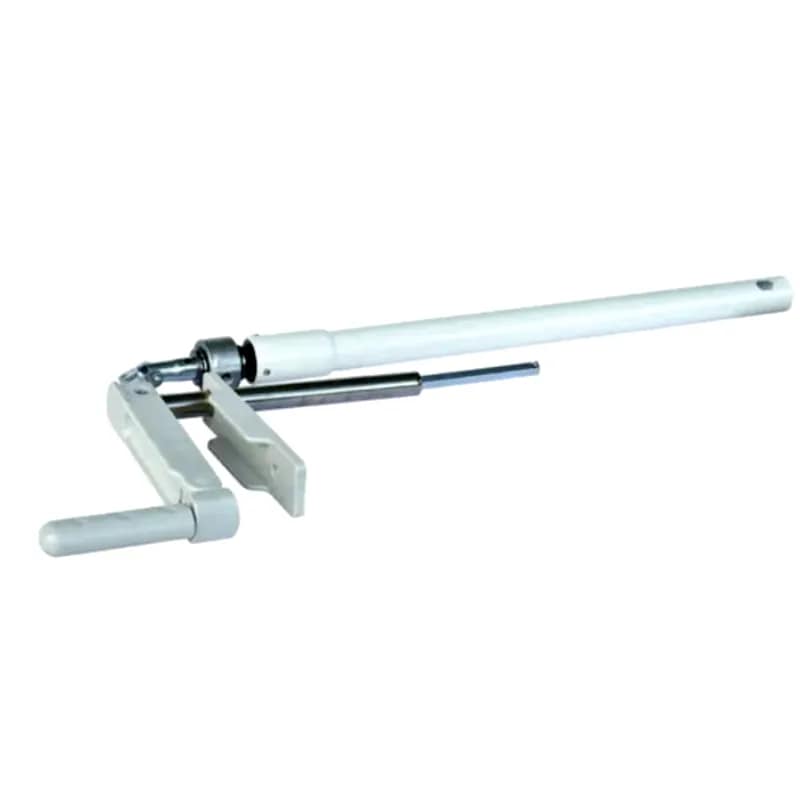
A practical feature often overlooked is a manual override or battery backup. In the event of a power outage, staff must be able to lower the bed to a safe evacuation height. I recommend specifying that the bed supports at least 10 full cycles on backup power and that the manual crank mechanism (if included) can be operated by one person.
Hardware That Matters for Long-Term Durability
When an electric bed is expected to run 24/7 for five years or more, the components that take the most abuse are not the electronics — they are the casters, side rails, and bed panel frames.
Castors bear the full weight of the bed and occupant every time it is moved, and nursing home floors see constant cleaning with aggressive disinfectants. We specify TPR (thermoplastic rubber) castors with sealed precision bearings and stainless steel hardware to resist corrosion from cleaning agents. Central‑locking brakes that can be engaged with one foot are also important; staff members rarely have a free hand. In our own central‑locking caster designs, we run a 10,000‑cycle brake engagement test to confirm that the locking mechanism remains positive even after heavy wear.

Side rails are the first line of defense against falls, yet this is where many beds cut corners. A rail that wobbles after a few months or has a plastic locking button that strips creates a serious safety risk. Look for fold‑down guardrails with metal‑on‑metal lock engagement and a smooth, radiused top edge that does not trap bed linens. For nursing homes, I prefer the European‑style guardrail with a horizontal folding design; it provides continuous coverage along the mattress edge and can be lowered completely flat for transfers.

The bed platform itself must resist moisture, impact, and the frequent installation of accessories. Stamped steel panels with a powder‑coated finish and folded edges offer better long‑term flatness than thin plastic‑deck boards, and they accept clamp‑on IV poles and drainage hooks without warping. The bed frame thickness — 1.5 mm or heavier for the main longitudinal rails — directly influences how well the bed handles the twisting forces created during transport and height adjustment.
If your nursing home has narrow corridors or rooms with limited turning radius, verify the width of the bed deck and the swing clearance needed for the side rails. Standard hospital bed widths of 840 mm or 900 mm fit through most doorways, but when side rails are added and raised, the overall width can approach 1,000 mm. Measuring door openings and hallway turns before ordering prevents costly surprises.

Planning Your Nursing Home Bed Upgrade
A full fleet replacement is rarely practical all at once. I typically advise facilities to phase the upgrade, starting with residents who are at highest risk of falls or who require frequent repositioning. This spreads the capital cost and gives staff time to become comfortable with the new beds.
Start by mapping which rooms have adequate electrical outlets. Each electric bed needs a dedicated, grounded outlet that can be reached without an extension cord (a trip hazard). Also assess whether the facility’s emergency power circuits can support a few beds on backup — not every bed needs to be on generator power, but enough to manage immobile residents during an outage.
When calculating budget, go beyond the per‑bed price. Include the cost of compatible mattresses, any needed adapter plates to fit existing furniture, and one to two days of staff training. A bed that is intuitively operated reduces the chance of incorrect positioning that can cause skin shear or discomfort.
During this planning phase, collecting real‑world feedback from nursing staff is invaluable. Ask which manual beds are the most difficult to operate and which rooms have the tightest clearance. Those observations will guide which units to replace first and help you prioritize features like low‑height settings or an integrated scale.
Selecting a Reliable Electric Bed Manufacturer
The manufacturer behind the bed is as important as the bed itself. For nursing homes, I recommend focusing on three areas during manufacturer evaluation: quality certification, testing transparency, and after‑sales support.
A manufacturer with ISO 13485 certification demonstrates that its quality management system is built for medical devices. CE marking or FDA registration, depending on your region, confirms compliance with safety and performance standards. Ask to see test reports for the specific functions you care about — if a manufacturer is reluctant to share motor endurance data or caster load‑test results, that’s a red flag.
At Yingyun Hardware, we maintain a product library that includes detailed specs for every bed model: load capacity (typically 250 kg), noise levels (≤45–50 dB), adjustment angles, and materials used for each component. When a facility approaches us for a nursing home order, we provide the exact test parameters our beds have passed, not just a summary. That transparency removes the guesswork from what is a long‑term investment in resident care.
Another practical consideration is after‑sales support and spare parts availability. An electric bed is a piece of equipment that will need maintenance — a replacement motor, new casters, or a side rail part. Confirm that the manufacturer stocks wear parts and can ship them within a reasonable window (we aim for 15–20 working days on common items). A bed that can’t be repaired quickly becomes a safety risk.
If your project involves a custom configuration — such as a specific color, bed dimensions for older buildings, or integrated nurse call — partner with a manufacturer that has in‑house metal stamping, welding, and assembly lines. This shortens lead times and keeps quality control under one roof.
Common Questions About Upgrading to Electric Nursing Home Beds
How much do electric nursing home beds cost?
Cost depends on the function set, materials, and region, but as a rough benchmark a durable 3‑function electric bed for nursing home use typically falls in the mid‑range of the market. The goal should be value over a 5‑7 year service life, not just the lowest unit price. I tell facilities to compare total cost of ownership — including replacement parts and downtime — rather than focusing solely on the initial order.
What safety certifications should an electric nursing home bed have?
Look for compliance with IEC 60601‑1 (electrical safety), ISO 13485 (quality management for medical devices), and regional medical device regulations such as CE or FDA. Beyond paper certification, ask for the actual test reports on motor duty cycles, caster brake endurance, and side rail locking strength. A credible manufacturer will share these without hesitation.
Do electric beds require special maintenance?
Routine maintenance — checking castor brakes for wear, inspecting power cords, and testing the backup battery — takes only a few minutes per bed each month. The biggest preventable failure I see is debris building up in the actuator lift columns, which can accelerate seal wear. A wipe‑down during housekeeping and a scheduled annual check keep most beds running reliably for years.
Can electric beds be used with existing mattresses?
They can, provided the mattress meets the bed’s dimensions and does not interfere with side rail deployment. However, I always recommend validating mattress compatibility because a mattress that is too thick can reduce the effectiveness of the guardrails, and one that is too soft can affect pressure redistribution when the backrest is raised. Share your mattress specifications with the bed manufacturer during the quoting process to avoid this issue.
What is the typical lead time for an electric bed order?
Lead times vary by manufacturer and order size. For standard electric nursing home beds, expect 15–25 working days after order confirmation. Custom colors or special dimensions may add another 10–15 days. If your project has a tight deadline, ask about ready‑stock options. We keep a buffer inventory of popular models for facilities that need faster delivery, and we are happy to confirm current availability. Reach out with your specifications and timeline at [email protected] or call +8613528198959.
If you’re interested, check out these related articles:
Essential Materials for Quality Medical Bed Parts Manufacturing
Comparing Prices for Hospital Bed Parts Manufacturers Effectively
Essential Safety Features for Adjustable Medical Beds
Ensuring Quality Control in Hospital Bed Parts: A Comprehensive Guide