
When hospital trolleys or medical carts start leaving marks on the floor or produce noise that disrupts patient rest, the casters are usually the root cause. Medical trolley casters wholesale procurement is a decision that directly impacts patient safety, equipment longevity, and maintenance budgets. Over the past 18 years, our factory has supplied casters to hospitals and healthcare projects worldwide, and we have seen that buyers who focus solely on unit price often face higher replacement costs, floor damage, and unexpected downtime. This article explains the key specifications, material choices, and sourcing strategies that procurement teams and hospital engineers should consider when evaluating wholesale caster suppliers.
How Caster Design Affects Clinical Workflow and Equipment Longevity
Casters are not interchangeable commodity parts. A poorly chosen wheel can turn a smooth hospital corridor into a source of constant vibration and noise, degrading both patient comfort and the mechanical integrity of the trolley. We have encountered equipment failures where the casters bound due to hair and debris wrapping around the axle because the wheel hub geometry did not account for that type of contamination. That kind of failure sets off a chain reaction: staff avoid the cart, the trolley sits idle, and the department pays a second time for a component they already bought.
The diameter of the wheel, the tread profile, and the bearing design all contribute to how easily a trolley moves and how it ages. Larger diameters tend to roll over thresholds and cable covers with less jarring, which reduces wear on the trolley frame connections. In our own production, we size casters based on the anticipated floor surface and total load, not simply the trolley width. That upfront matching of caster to environment is something a generic catalog supplier rarely does.

Understanding Caster Materials: TPR, Stainless Steel, and Brake Systems
The two materials we return to most often are TPR (thermoplastic rubber) for the tread and stainless steel for the bracket. TPR has a damping quality that polyurethane lacks, which means less energy transmitted into the frame and a quieter roll on hard vinyl or epoxy floors. In patient wards where overnight noise is a concern, TPR treads make a measurable difference. The tread also resists hydrolysis and common cleaning agents, so frequent chemical disinfection does not degrade it the way it degrades some softer rubbers.
Bracket material matters too when the environment is wet or exposed to aggressive cleaning. We stock an extremely wide range of medical casters, including 5‑inch 304 stainless steel designs with TPR treads that hold up in autoclave‑adjacent areas without developing rust pockets. For less demanding settings, a powder‑coated steel bracket works perfectly well and reduces cost.
Brake design is another fork in the road. Individual toe‑pedal brakes are simple and cheap, but they require staff to lock each wheel one at a time. Central‑locking systems, whether single‑face or double‑face, let a caregiver press one pedal to immobilise the whole trolley instantly. Double‑face central‑locking brakes, like the YY‑C20 5‑inch model, lock both swivel and rotation simultaneously, which is the safest configuration for patient transfer when even a slight rotation can spook an unsteady person.
| Caster Type | Tread Material | Brake Type | Best Use | Typical Wear Pattern |
|---|---|---|---|---|
| Full‑wrapped, 3–5 inch | TPR/PP | Optional toe brake | Light carts, IV stands | Even tread wear, low floor marking |
| Double‑face central‑locking | TPR | Central pedal (swivel + roll) | Patient trolleys, emergency stretchers | Brake pad fatigue after years |
| Single‑face central‑locking | TPR | Central pedal (roll only) | Bedside cabinets, overbed tables | Slight rotational drift over time |
Specifications That Matter: Load Capacity, Wheel Diameter, and Mounting
Specifying the right caster comes down to three numbers: the total weight the wheel must carry, the diameter that fits the trolley leg, and the stem or plate mount that matches the existing socket. We have seen too many orders where a buyer selects a caster by photo alone and then discovers the stem diameter is off by a millimeter or the top plate bolt pattern does not align.
When we quote a caster for a hospital buyer, we always request the stem type (friction‑fit round stem, threaded stem, or rectangular plate), the insertion depth, and the actual trolley weight including the maximum payload. That avoids the situation where a 3‑inch caster rated for 50 kg ends up under a supply trolley carrying 120 kg. Overspecifying is cheap insurance; underspecifying creates liability.
For medical carts that cross multiple floor types, such as moving from linoleum ward flooring onto concrete service corridors, we often recommend a 5‑inch TPR wheel with a central‑locking double‑face brake. That combination gives the best balance of push effort, quietness, and positive locking.
If your program involves trolleys that move regularly between smooth patient floors and rougher outdoor concrete, the caster tread hardness and brake clearance become critical. Reach out at [email protected] with your floor conditions and load data, and we can recommend a configuration that avoids early tread chunking.

OEM and Custom Casters: Adapting Designs to Your Equipment
Standard off‑the‑shelf casters will work for about 80% of medical trolley applications. The other 20% benefit from customisation, and that is where working directly with a manufacturer pays back quickly. We regularly provide OEM casters with custom bracket coatings, coloured treads to match hospital branding, and non‑magnetic 304 stainless steel variants for equipment that must function near an MRI suite or other sensitive instruments.
Because we operate our own stamping and welding lines, we can modify bracket geometry, add spacer collars, or change the stem length in a way that a reseller cannot. The production minimum for such changes is modest, typically 50 pieces, which makes even small pilot runs economically feasible. When a customer needs a caster that fits an existing bed frame with a slightly recessed leg socket, our engineering team can reverse‑engineer the required bracket shape within days and produce a first‑article sample.
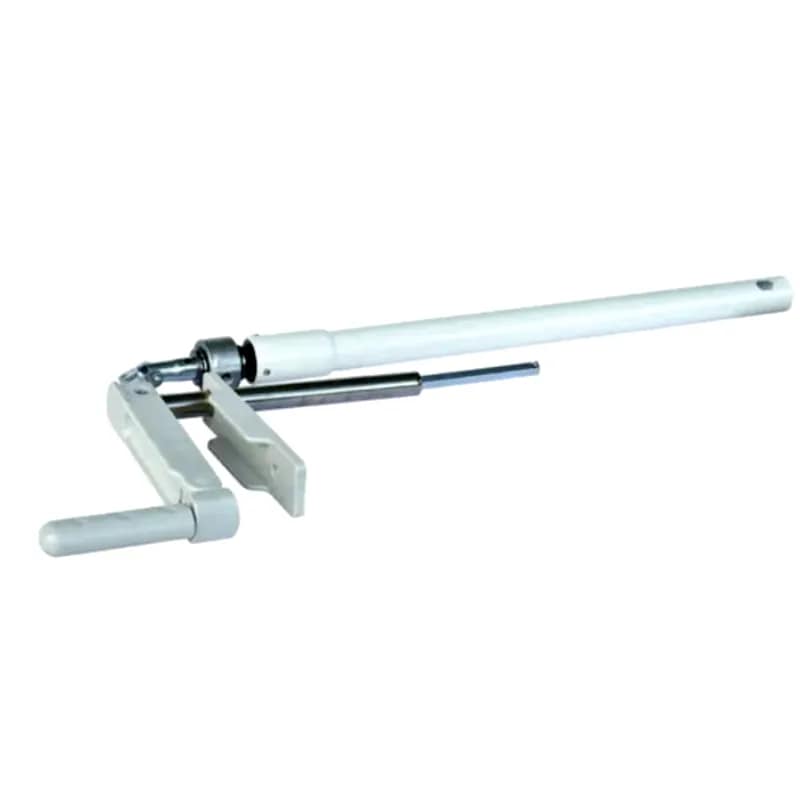
That capability extends to complete systems. When you are ordering casters, you may also be procuring side rails, bed panels, or crank mechanisms for the same trolley or bed. Having one manufacturer produce all the metal parts ensures that the casters fit the frame without field modifications.
Sourcing Wholesale Medical Casters: What to Ask a Manufacturer
When you evaluate a supplier for a wholesale caster order, five pieces of information will tell you more than a glossy catalog.
First, ask for the minimum order quantity and confirm whether the manufacturer holds inventory. At Yingyun Hardware, a standard order starts at 50 pieces, and we keep finished casters in our most common sizes ready for immediate shipment.
Second, request the actual lead time for a container order. Our typical manufacturing cycle is 15 to 20 working days for new production, which includes casting or welding the brackets, moulding the TPR treads, and assembling the finished wheels.
Third, verify the packaging specification. Medical equipment frequently travels by sea freight, and humidity, salt spray, and stacking pressure will destroy poorly packed goods. We pack casters in foam‑lined export‑grade cartons, with each unit separated to prevent abrasion, and we offer custom labelling for the overseas distributor.
Fourth, ask about the warranty. A credible manufacturer will stand behind the mechanism, not just the materials. We warrant the mechanism and structure for one year, and we supply replacement parts for the full product life.
Fifth, confirm the testing documentation. While a visual inspection tells you nothing about fatigue life, a factory that can show you a batch test record with rotation cycles, brake engagement force, and salt spray results is one that treats casters as safety components, not commodities.
The Practical Impact of Choosing the Right Wholesale Medical Trolley Casters
The total cost of ownership for a set of casters is rarely captured in the purchase order. The real costs show up later: a scratched operating room floor that needs costly refinishing, a midnight maintenance call because a trolley brake failed, or a batch of casters seized because the plating was too thin for a tropical climate. We have worked with hospital equipment distributors in Africa and the Middle East, for example, where high humidity and sand dust demand a tighter axle seal and a corrosion‑resistant bracket right from the start.
When you work with a specialised manufacturer, these requirements are part of the initial specification conversation, not a costly afterthought. The wholesale price of a well‑engineered caster is a fraction of the cost of the problems it prevents.

If you are sourcing medical trolley casters for an existing product line or a new trolley design, send your specification details, part numbers, or drawings to [email protected] or call +8613528198959. We provide a quotation, dimensional drawing, and lead time within two working days, along with sample casters for first‑article testing.
Common Questions Hospital Buyers Ask About Casters
What is the minimum order quantity for medical trolley casters?
Our standard production MOQ is 50 pieces per model. For first‑time sample orders, we can supply smaller quantities, typically 10 to 15 pieces, so that you can evaluate fit and finish before committing to a full production run.
Can the tread color be changed to match our trolley or brand?
Yes, we offer OEM color matching on TPR treads and powder‑coated brackets. White is the most common for medical use, but we have produced blue, grey, and custom shades in previous batches. The coloring process adds no more than three working days to the lead time.
How do central‑locking and individual brakes compare in real‑world use?
An individual toe brake on each caster gives you independent control but requires staff to walk around the trolley, bending to lock each wheel. A central‑locking system uses a single pedal to immobilise the trolley instantly, which is faster and reduces strain on nursing staff. Double‑face central locking, as on our YY‑C20 series, stops both rolling and swivelling, making the trolley stationary in all directions. For patient transfer and phlebotomy carts where absolute stillness matters, double‑face is the safer choice.
How long does an order take from payment to delivery?
Production lead time is 15 to 20 working days after order confirmation and deposit. Sea freight transit adds another 3 to 6 weeks depending on the destination. We always provide a shipping schedule and packing list before dispatch, and we can arrange air freight for urgent replenishment orders.
What information do you need to quote exactly the right caster?
To provide a precise quotation, we need the trolley or bed model, the total loaded weight, the floor surfaces it will travel on, the stem type and dimensions, and whether the application requires a central‑locking brake. Sharing a photo of the existing caster and its mounting socket helps us identify the correct replacement in minutes. Send your requirements to [email protected] and we will return a dimensional drawing and quotation within 24 hours.
If you’re interested, check out these related articles:
Comparing Prices for Hospital Bed Parts Manufacturers Effectively
Essential Safety Features for Adjustable Medical Beds
Essential Certifications for Medical Bed Parts Manufacturers
How to Choose the Right Adjustable Medical Bed for Your Clinic: A Comprehensive Guide
Essential Materials for Quality Medical Bed Parts Manufacturing