
Hospital beds crossing international borders face a gauntlet of regulations, quality checks, and logistical hurdles that can derail even experienced exporters. After nearly two decades in this space, we’ve learned that reliability isn’t a single achievement but a continuous practice, one that touches everything from raw material selection to the moment a bed arrives at a facility halfway around the world.
What Actually Gets Your Hospital Beds Into Foreign Markets
Getting hospital beds accepted internationally comes down to meeting specific regulatory benchmarks. These aren’t bureaucratic hurdles for their own sake; they exist because patients will depend on these products, and healthcare systems need assurance that imported equipment won’t fail.
The Certifications That Open Doors
Different markets require different proof of compliance. Some overlap, some don’t, and missing even one can mean your shipment sits in customs indefinitely.
| Certification | Scope | Key Requirements |
|---|---|---|
| ISO 13485 | Medical Device Quality Management Systems | Risk management, design control, traceability |
| CE Marking | European Economic Area (EEA) | Safety, health, environmental protection |
| FDA Registration | United States | Device listing, quality system regulation |
| Country-Specific | Local health authorities | Unique national standards and approvals |
ISO 13485 forms the backbone of medical device manufacturing credibility. Without it, conversations with serious buyers tend to end quickly. CE Marking opens the European market, while FDA registration handles the American side. Then there’s the patchwork of country-specific requirements that can catch exporters off guard. Brazil wants ANVISA approval. Japan has its own PMDA process. Each adds time and documentation, but skipping them isn’t an option.
Where Quality Control Actually Happens
Quality isn’t something you bolt on at the end. It runs through the entire manufacturing process, or it doesn’t exist at all.
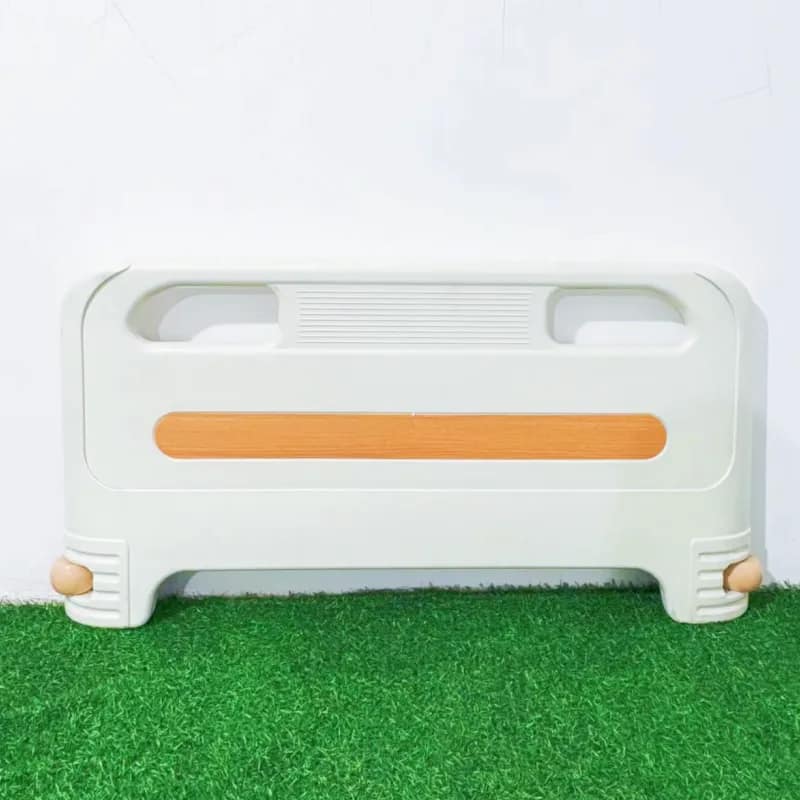
Material traceability starts the chain. Every component, whether it’s the high-strength A3 steel in our manual wheelchair frames or the ABS engineering plastic in headboards, carries documentation back to its source. Problems surface faster when you can trace them.
In-process inspections catch issues during welding and assembly rather than after everything’s put together. Finding a bad weld on a subassembly costs far less than discovering it in a finished bed.
Final product testing puts each unit through its paces. Load capacity verification matters; our Electric 5 Function Hospital Bed gets tested to its 250 KG rating, not just assumed to meet it. Casters get checked for smooth operation. Electronics get powered up and cycled.
Pre-shipment inspection confirms that what’s being packed matches what was ordered. It sounds obvious, but this step catches more errors than anyone likes to admit.
Getting Hospital Beds From Factory Floor to Foreign Facility
Logistics for medical equipment isn’t the same as shipping consumer goods. The stakes are higher, the documentation more complex, and the consequences of mistakes more severe.
What Makes Medical Device Shipping Different
Freight forwarders who specialize in medical equipment understand nuances that general shippers miss. They know which ports have efficient medical device processing, which customs agents ask for additional documentation, and how to route shipments to avoid unnecessary delays.
Packaging requirements go beyond preventing dents. Electronic components need protection from humidity and temperature swings. Mechanical assemblies need immobilization to prevent stress during transit. The packaging that works for a domestic truck shipment often fails on a container ship crossing the Pacific.
| Incoterm | Seller’s Responsibility | Buyer’s Responsibility |
|---|---|---|
| EXW (Ex Works) | Minimal, at seller’s premises | Maximum, all transport & costs |
| FOB (Free On Board) | To port of shipment | From port of shipment to destination |
| CIF (Cost, Insurance, Freight) | To port of destination (includes insurance) | Unloading and onward transport |
| DDP (Delivered Duty Paid) | Maximum, to buyer’s door (includes duties) | Minimal, only unloading |
Incoterm selection affects more than just cost allocation. It determines who handles customs paperwork, who bears risk during transit, and who deals with problems when they arise. For buyers new to international procurement, CIF often makes sense because it shifts complexity to the seller. Experienced importers sometimes prefer FOB for greater control over their supply chain.
How Manufacturing Choices Shape Export Reliability
Vertical integration isn’t just an efficiency play. When you control more of the manufacturing process, you control more of the quality outcomes.
Supplier relationships matter enormously. The 304 stainless steel in our YY-C51 casters and Gynecological Examination Bed comes from partners we’ve worked with for years. They understand our specifications, and we understand their capabilities. That mutual knowledge prevents surprises.
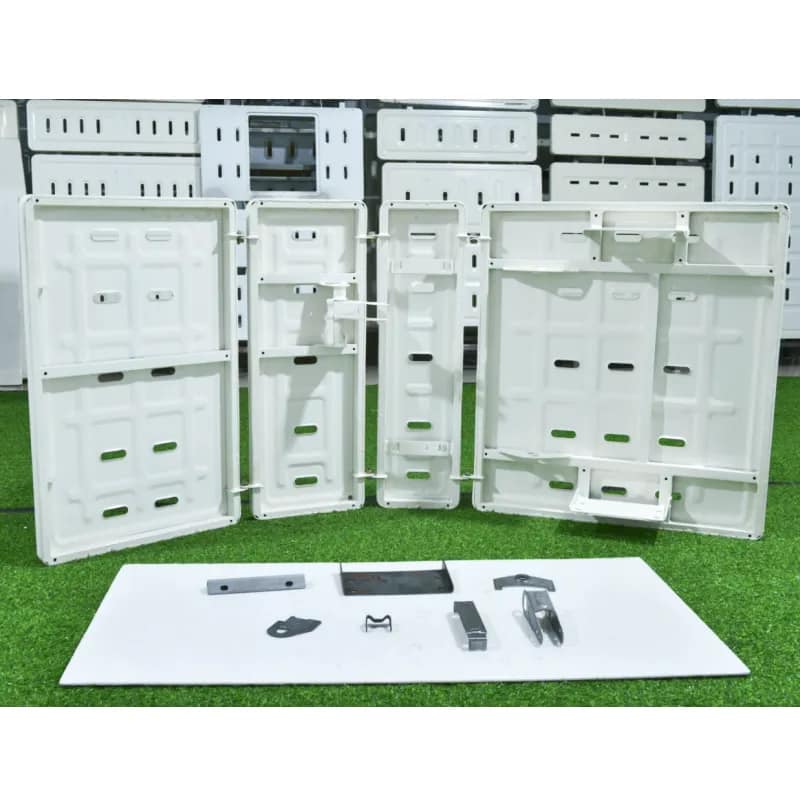
Advanced machinery enables precision that hand processes can’t match. Metal stamping for components like our 7 Shape Force Arm Hardware Products requires consistent tolerances across thousands of units. The same applies to bed panels and frame components.
Training keeps pace with equipment. New machinery means new skills, and our production teams receive continuous education on both operation and quality protocols.
Lead times reflect this integrated approach. Accessories like IV poles and casters typically ship within 15-20 working days. Complete hospital beds require 40-45 working days, accounting for the complexity of assembly and testing.
The Communication Side of Reliability
Products can be perfect and logistics flawless, but poor communication still destroys business relationships. International trade amplifies this because time zones, language differences, and cultural expectations all create friction.
Dedicated account managers maintain continuity throughout the order process. The person who handles your initial inquiry stays with you through delivery and beyond. They know your history, your preferences, and your concerns.
Technical support extends past the sale. Troubleshooting, parts replacement, and warranty service for products like the ABS crank with in-place protection and Electric 5 Function Hospital Bed happen through established channels, not ad-hoc scrambling.
OEM services accommodate specific market needs. Color options, dimensional modifications, and feature customization for products like the High quality aluminum alloy guardrail and ABS bedside cabinet allow buyers to meet local preferences without sourcing from multiple suppliers.
Where the Hospital Bed Market Is Heading
Healthcare equipment markets shift constantly. Aging populations in developed countries drive demand for home care solutions. Emerging markets build out hospital infrastructure. Technology integration changes what buyers expect from basic equipment.
Smart hospital beds with integrated monitoring represent one growth area. Specialized beds for home care mobility represent another. Both require manufacturing capabilities that can adapt quickly.
Sustainability pressures are building. Healthcare systems increasingly ask about environmental impact, recyclability, and manufacturing practices. These questions will only become more pointed.
Our R&D focuses on practical improvements: quieter caster operation for products like the 3’4’5 Double-face caster, more ergonomic transfer chair designs, and more durable component materials. The goal isn’t innovation for its own sake but better outcomes for patients and healthcare workers.
Frequently Asked Questions
What certifications are essential for exporting hospital beds?
ISO 13485 provides the quality management foundation. CE Marking opens European markets, and FDA registration handles the United States. Beyond these, specific countries maintain their own requirements. We verify compliance with all applicable medical bed export regulations before shipping to any destination.
How do you ensure the quality of your hospital bed components?
Multiple inspection stages catch problems early. Material traceability tracks components to their sources. In-process inspections happen at every manufacturing stage. Final product testing verifies functionality and durability. Pre-shipment inspection confirms order accuracy. This applies to everything from bed frames to the 5’8′ Central-locking single-face caster.
What is the typical lead time for hospital bed orders?
Accessories like IV poles (including the 4 hooks IV Pole) and casters typically require 15-20 working days. Complete hospital beds, whether Electric 5 Function or Manual 3 Cranks models, generally need 40-45 working days. Custom orders may require additional time depending on specifications.
Can your hospital beds be customized for specific needs?
OEM services cover dimensions, colors, and specific features. We can modify the 820mm width 4 sections stamped bed panel sizing or adjust color options for ABS bedside cabinets. Customization addresses both client preferences and country-specific standards.
How do you handle international shipping and customs?
Experienced freight forwarders manage the physical transport. We prepare all customs documentation and advise on Incoterm selection to clarify responsibilities. Packaging protects products through international transit, ensuring items like the Emergency Transfer Stretcher arrive undamaged.
Partner with Us for Global Hospital Bed Solutions
ZhongShan YingYun Hardware Products Co.,Ltd has built its reputation on consistent execution over nearly two decades. For product specifications or to discuss your requirements, contact us at lily@yingyunmic.com or +8613528198959.