
Caring for children in hospital settings demands equipment built with their specific needs in mind. Young patients present challenges that adult beds simply cannot address—different body proportions, unpredictable movements, and the psychological weight of being hospitalized at a vulnerable age. The beds we manufacture reflect years of working through these realities with pediatric units, balancing what clinical staff need operationally with what actually keeps kids safe and comfortable during recovery.
Safety Mechanisms That Address Real Pediatric Risks
Patient safety in pediatric wards goes beyond general hospital protocols. Children move unexpectedly, explore their surroundings, and lack the awareness adults bring to avoiding hazards. Our design approach accounts for these behaviors through specific engineering choices rather than generic safety claims.
Anti-entrapment side rails address one of the most documented risks in pediatric bedding—limb entrapment between rails and mattress surfaces. The geometry matters here, and we’ve refined rail spacing based on anthropometric data for different age groups. Braking systems on casters like the 5’6′ Central-locking double-face caster (Model No.: YY-C20/C21) provide stability that prevents bed movement during procedures or when children shift position suddenly.
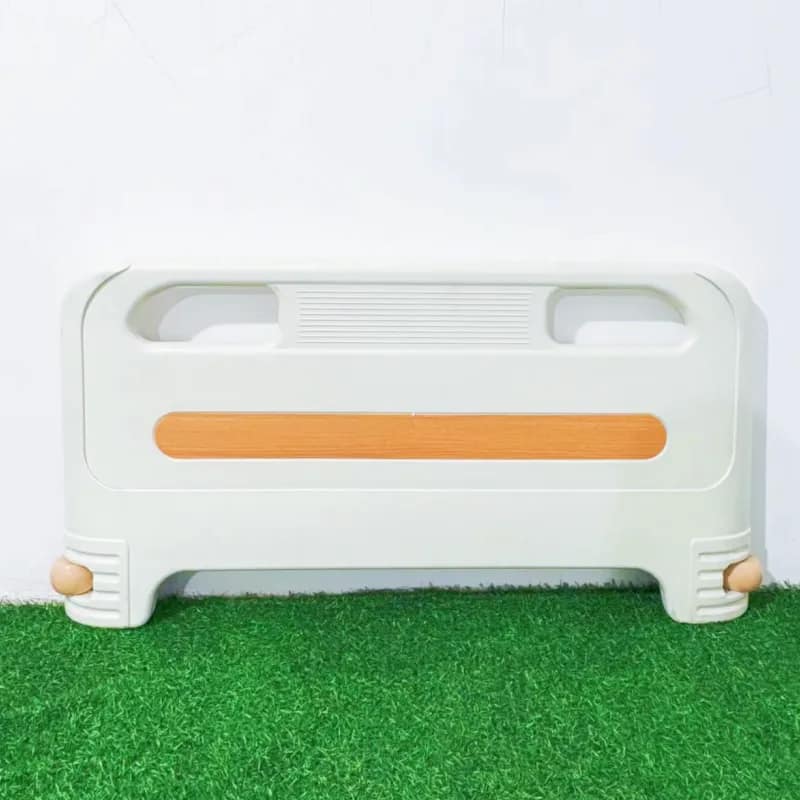
Low height settings reduce fall impact when children attempt to climb out—something that happens regardless of supervision levels. Surface construction uses smooth edges throughout, and materials undergo toxicity testing appropriate for environments where children may mouth or touch bed components. The children bed head & foot board (Model No.: YY-CH01) uses high-quality ABS plastic that withstands aggressive cleaning protocols while maintaining structural integrity over years of use.
Guardrails like the High quality aluminum alloy guardrail (Model No.: YY-AA04) balance protection with accessibility—staff need quick access during emergencies, but the rails must reliably contain patients during normal use. This tension shapes much of pediatric bed design.
Regulatory Compliance Across International Markets
Medical equipment certification involves more than paperwork. Each regulatory framework reflects different healthcare system priorities and risk tolerances, and manufacturers serving international markets must satisfy multiple overlapping requirements.
Our testing protocols address ISO 13485 for quality management systems, CE marking requirements for European distribution, and FDA regulations for US market access. Electric hospital bed models undergo validation covering electrical safety, mechanical reliability, and performance under expected use conditions.
| Standard | Scope | Focus Areas |
|---|---|---|
| ISO 13485 | Quality Management System | Design, production, installation, servicing of medical devices |
| CE Marking | European Economic Area | Safety, health, environmental protection |
| FDA | United States | Safety and efficacy of medical devices |
| IEC 60601 | Medical Electrical Equipment | Basic safety and essential performance |
| EN 50637 | Medical Beds for Children | Specific safety requirements for pediatric beds |
The EN 50637 standard specifically addresses pediatric bed requirements—gap dimensions, entrapment zones, and force limits that differ from adult bed specifications. Meeting this standard requires design decisions that may not be obvious from visual inspection but significantly affect safety outcomes.
For hospitals evaluating suppliers, we’ve documented our approach to procurement considerations: 《Strategic Procurement of Pediatric Hospital Beds for Hospitals》.
Ergonomic Design for Patients and Clinical Staff
Pediatric bed ergonomics serves two distinct user groups with different physical requirements. Children need positioning that supports recovery while accommodating their smaller frames. Clinical staff need access and adjustability that reduces physical strain during daily care tasks.
Height adjustability, backrest articulation, and Trendelenburg positioning allow clinical teams to optimize patient positioning for specific procedures or comfort needs. These adjustments happen frequently in pediatric settings—feeding, respiratory therapy, wound care—and smooth operation matters for workflow efficiency.

Manual adjustment mechanisms like the ABS crank with in-place protection (Model No.: YY-00038) and Iron crank with in-place protection (Model No.: YY-00040) provide backup functionality when electric systems are unavailable or impractical. The in-place protection feature prevents accidental position changes, addressing a common complaint about manual bed controls.
Mattress technology affects both pressure redistribution and thermal regulation. Children’s skin responds differently to sustained pressure, and temperature management matters for patients who may be febrile or have compromised circulation. These factors influence material selection and surface design throughout our product line.
Evaluating Suppliers for Long-Term Value
Hospital procurement decisions extend beyond initial purchase price. Equipment lifecycle costs, maintenance requirements, and supplier reliability affect total ownership costs significantly.
Material specifications matter for durability assessments. Components like the 900mm width single crank stamped bed panel (Model No.: YY-2BP01) or the 820mm width 4 sections stamped bed panel (Model No.: YY-2BP01) undergo stress testing that simulates years of clinical use. Failure modes in bed panels create safety risks and operational disruptions that far exceed replacement part costs.
| Criteria | Description | Importance |
|---|---|---|
| Certifications | ISO, CE, FDA compliance | High |
| Customization | Ability to tailor designs | Medium |
| After-Sales Support | Warranty, spare parts, technical assistance | High |
| Material Quality | Durability, non-toxic materials | High |
| Lead Time | Manufacturing and delivery schedules | Medium |
| Cost-Effectiveness | Value for investment | High |
Customization capability matters for pediatric units with specific ward configurations or patient population characteristics. A supplier’s willingness to adapt standard designs indicates manufacturing flexibility that may prove valuable as hospital needs evolve.
After-sales support—warranty terms, spare parts availability, technical assistance—directly affects equipment uptime. Beds that sit unusable waiting for parts create capacity problems in units that often run near full occupancy.
Related considerations for adjustable bed safety are covered in: 《Essential Safety Features for Adjustable Medical Beds》.
Technology and Material Advances in Pediatric Beds
Infection control drives much of the current innovation in hospital bed materials. Antimicrobial surfaces that maintain effectiveness through repeated cleaning cycles address a persistent challenge in pediatric environments where infection transmission risks are elevated.
Sensor integration enables patient monitoring without additional equipment—weight changes, position shifts, and bed exit attempts can trigger alerts that support clinical surveillance. These capabilities require careful implementation to avoid alarm fatigue while providing genuinely useful information.

Caster design affects both mobility and longevity. The 3’4’5 Double-face caster (Model No.: YY-C1/C2/C3/C4/C5/C6/C7/C8/C9/C16) reflects engineering choices that prioritize smooth operation over extended service life, reducing replacement frequency and associated maintenance costs.
Sustainable manufacturing practices increasingly influence procurement decisions. Material sourcing, production energy consumption, and end-of-life recyclability factor into hospital sustainability commitments. These considerations shape our production methods alongside traditional quality and cost metrics.
Working with an Experienced Manufacturing Partner
ZhongShan YingYun Hardware Products Co.,Ltd has manufactured hospital beds and accessories since 2006. That experience translates into practical knowledge about what works in clinical environments and what creates problems over time.

Our product range covers specialized pediatric beds and supporting accessories including the 4 hooks IV Pole (Model No.: YY-000048) and ABS dinnig board for hospital bed (Model No.: YY-DT04). Component compatibility across our product line simplifies procurement and maintenance for facilities using multiple bed configurations.
Partner with Yingyun Hardware for Pediatric Care Solutions
ZhongShan YingYun Hardware Products Co.,Ltd brings over 18 years of hospital bed manufacturing experience to pediatric equipment needs. Our beds meet international safety standards while addressing the practical realities of children’s hospital operations. Contact us to discuss your specific requirements. Email: lily@yingyunmic.com | Phone: +8613528198959
Frequently Asked Questions About Pediatric Hospital Beds
What are the essential safety features for pediatric hospital beds?
Pediatric beds require anti-entrapment side rails with spacing appropriate for children’s limb dimensions, secure braking systems that prevent unexpected bed movement, and low height settings that reduce fall injury severity. Surface construction should eliminate sharp edges and use non-toxic materials that withstand aggressive cleaning. Weight monitoring and nurse call integration provide additional surveillance capabilities, though their value depends on unit staffing patterns and workflow integration.
How do children’s hospital beds meet international medical standards?
Compliance involves testing against specific standards including ISO 13485 for quality management, CE marking requirements, FDA regulations, and EN 50637 for pediatric-specific safety requirements. Each standard addresses different aspects—material safety, electrical performance, mechanical reliability, and age-appropriate design parameters. Manufacturers document compliance through certification processes that verify testing results and production consistency.
What factors should be considered when selecting a pediatric hospital bed supplier?
Manufacturing experience with pediatric equipment matters because children’s beds involve design constraints that differ from adult products. Certification status confirms regulatory compliance, but customization capability indicates whether a supplier can adapt to specific facility needs. After-sales support—warranty coverage, parts availability, technical assistance response times—affects long-term ownership costs. Material quality documentation helps predict durability, while lead time reliability affects project planning for new units or equipment replacement programs.