
Medical beds shape recovery in ways that often go unnoticed until something goes wrong. A bed that positions a patient poorly can slow healing, strain caregivers, and create problems that ripple through an entire facility. Getting this decision right matters more than most procurement choices.
Manual and Electric Medical Beds Serve Different Operational Realities
Medical beds fall into two fundamental categories based on how they adjust. Manual beds use hand cranks. Electric beds use motors. The choice between them affects daily operations in ways that extend far beyond the initial purchase price.
Manual medical beds like the Single Crank Hospital Bed or Double Crank Hospital Bed operate through mechanical cranks that raise the backrest and leg sections. These beds work without electricity, which makes them practical in settings where power reliability is questionable or budgets are tight. The trade-off is physical effort. Caregivers must crank adjustments by hand, and patients often feel the jerky motion during repositioning.
Electric medical beds, commonly called Electric Hospital Bed, change this dynamic entirely. Motors handle the work. Patients or caregivers press buttons to adjust bed height, backrest angle, and leg positioning. Advanced models like the Electric five-function medical bed include five independent motors for precise control, including Trendelenburg and reverse Trendelenburg positions. The reduction in physical strain is substantial. Caregivers can reposition patients without the repetitive motion injuries that accumulate over time.
The decision often comes down to context. A rural clinic with intermittent power might rely on manual beds out of necessity. A busy urban hospital might find that electric beds pay for themselves through reduced staff injuries and faster patient repositioning. Both types have their place, and our manufacturing of Hospital Bed Metal Parts supports either approach.
| Feature | Manual Medical Beds | Electric Medical Beds |
|---|---|---|
| Adjustment | Hand cranks for back, leg, and sometimes height | Electric motors for back, leg, height, and tilt |
| Power Source | None required | Electrical outlet; battery backup often available |
| Ease of Use | Requires physical effort from caregiver | Button-operated, effortless for patient/caregiver |
| Cost | Generally lower initial cost | Higher initial cost, but long-term savings on labor |
| Maintenance | Simpler mechanical maintenance | More complex electrical and mechanical maintenance |
| Patient Comfort | Repositioning can be less smooth | Smooth, precise adjustments enhance comfort |
| Caregiver Burden | Higher physical strain | Significantly reduced physical strain |
For a deeper look at how these two categories compare in practice, see 《Electric vs Manual Adjustable Beds: A Comprehensive Comparison》.
Specialized Beds Address Conditions That Standard Models Cannot
Standard medical beds work for most patients. Some patients need something different. Specialized beds exist because certain conditions demand features that general-purpose beds simply lack.
Bariatric beds handle patients with obesity. These beds use wider frames, reinforced structures, and higher weight capacities. Many of our electric and manual beds support loads up to 250 KG. Without this reinforcement, standard beds risk structural failure under heavier patients, creating safety hazards for everyone involved.
Pediatric hospital beds present different challenges. Children need lower bed heights and protective side rails designed for smaller bodies. The Bedside rails of children bed (Model no.: YY-CG01) prevents falls while keeping young patients secure. Adult-sized safety features simply do not translate to pediatric care.
ICU beds integrate monitoring and positioning capabilities that general ward beds do not require. Trendelenburg positioning helps manage blood pressure. Continuous lateral rotation therapy reduces pressure ulcer risk. Integrated scales track fluid retention. These features matter when patients cannot communicate their own needs.
Rehabilitation beds focus on mobility. Lower height ranges make transfers easier. Assist devices support patients during exercises. The goal shifts from passive support to active recovery.
Home care beds occupy a middle ground. They offer essential adjustments without the complexity of hospital-grade equipment. The Manual three-crank medical bed (Product Name: Manual 3 Cranks Hospital Bed) provides back, leg, and overall bed lift functions. Family caregivers can manage these adjustments without specialized training.

What are the key differences between manual and electric medical beds?
Manual medical beds adjust through hand cranks for the backrest and leg rest. They work during power outages and cost less upfront. Electric Hospital Bed use motors for automated adjustments, including bed height, back angle, and leg positioning. The automation reduces physical strain on caregivers and gives patients more independence. Electric beds cost more initially but often reduce labor costs over time.
Features and Accessories Determine Daily Functionality
The bed frame provides the foundation. Features and accessories determine how well that foundation serves actual patient care. These components prevent complications, streamline caregiver tasks, and improve patient comfort in measurable ways.
Adjustable frames allow back, leg, and height adjustments. Electric beds like our Electric five-function medical bed use independent motors for each function, including Trendelenburg and reverse Trendelenburg positions. These adjustments support circulation, respiratory function, and patient positioning during procedures. Stamped Hospital Bed Panels provide the structural precision that makes smooth, reliable movement possible.
Mattresses prevent pressure ulcers. Bedridden patients develop skin breakdown when pressure concentrates on the same areas for extended periods. Specialized pressure-redistributing mattresses use alternating pressure or low-air-loss systems to shift pressure points. High-density foam and air cell designs address this problem through different mechanisms, but both aim to keep tissue viable.
Side rails prevent falls and support patient mobility. Our High-quality aluminum alloy guardrail (Model No.: YY-AA04) and Horizontal tube folding guardrail (Model no.: YY-HT06) serve both functions. Patients use rails to reposition themselves. Rails also keep confused or sedated patients from rolling out of bed.
Casters determine whether beds stay put or move when needed. Central-locking casters like the 5’6′ Central-locking double-face caster (Model No.: YY-C20/C21) and 5’8′ Central-locking single-face caster (Model No.: YY-C22/C23) lock beds in place during care and release for transport.
Accessories complete the care environment. IV poles (4 hooks IV Pole and 2 hooks IV Pole support medication administration. Overbed tables like the ABS desktop overbed table provide surfaces for meals and activities. Bedside cabinets such as the ABS bedside cabinet keep personal items within reach. These additions seem minor until they are missing.

| Accessory Type | Description 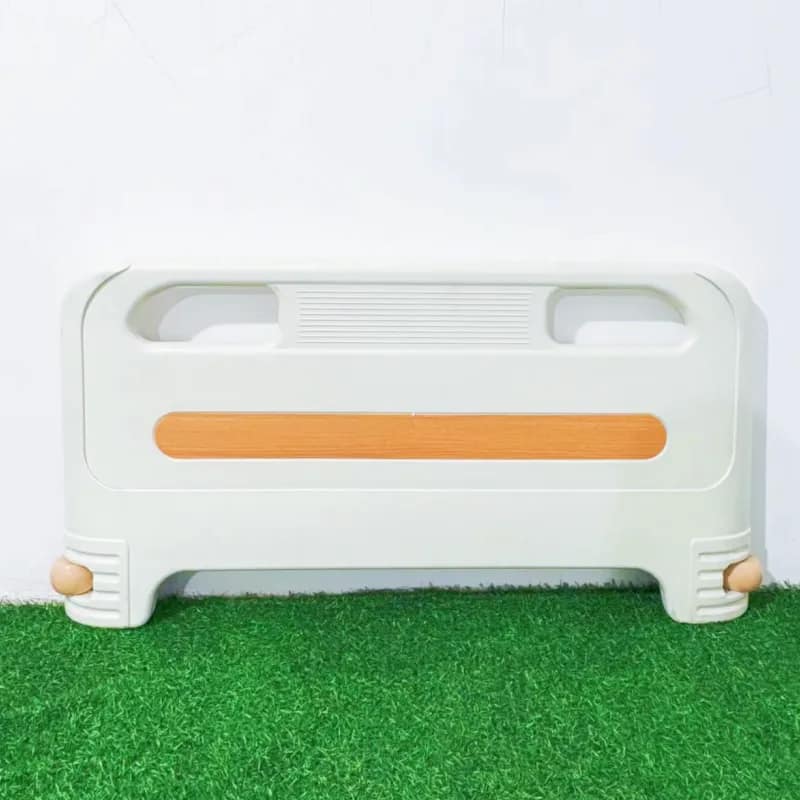
Regulatory Standards Shape What Medical Beds Can and Cannot Do
Medical bed manufacturing operates within strict regulatory frameworks. These standards exist because beds that fail can injure or kill patients. Compliance is not optional.
International standards from the International Electrotechnical Commission, particularly the IEC 60601 series, govern electrical safety, electromagnetic compatibility, and mechanical stability for electric hospital beds. These requirements ensure that motors do not malfunction, electrical systems do not interfere with other medical equipment, and beds do not collapse under load. ISO 13485 certification demonstrates that a manufacturer maintains quality management systems capable of meeting customer and regulatory requirements consistently.
National regulations add local requirements. The FDA in the United States and the Medical Device Regulation in Europe impose rules covering product design, manufacturing processes, post-market surveillance, and documentation. Our products undergo load capacity testing at 250 KG for the Electric 5 Function Hospital Bed and durability assessments that verify long-term reliability.
Safety features often appear in regulations as specific requirements. Patient safety rails like the High-quality stretcher guardrail must meet entrapment prevention standards. Electric beds must include emergency stop functions. These requirements reflect lessons learned from past incidents where inadequate safety features led to patient harm.
Maintenance and inspection protocols extend compliance beyond initial manufacturing. Regular preventative maintenance catches problems before they cause failures. This proactive approach protects patients and extends equipment life.
What safety features should I look for in a hospital bed?
Sturdy side rails prevent falls. Our High-quality aluminum alloy guardrail provides this protection. Reliable braking mechanisms on casters, like our 5’6′ Central-locking double-face caster, keep beds stable during care. Electric models should have accessible emergency stop buttons. Look for designs that minimize entrapment risks between rails and mattresses. Smooth, controlled movements during adjustments reduce the chance of patient injury.
Matching Medical Beds to Facility Needs Requires Honest Assessment
Choosing the right medical bed starts with understanding what your facility actually needs, not what sounds impressive on paper. The wrong choice wastes money and creates problems that persist for years.
Start with the primary application. Critical care units need Electric Hospital Bed with multi-functionality. Trendelenburg positioning, integrated scales, and precise motor control matter when patients cannot advocate for themselves. General wards or home care settings often work well with a Manual Hospital Bed or simpler electric models that handle back and leg adjustments without the complexity of full ICU functionality.
Patient population shapes requirements. Bariatric patients need beds with higher weight capacities and wider frames. Pediatric units require specialized safety features like those in our Children bed head & foot board (Model no.: YY-CH01). Long-term care facilities should prioritize comfort, cleaning ease, and features that support whatever independence patients can maintain.
Budget matters, but total cost of ownership tells a more accurate story than purchase price alone. Manual beds cost less upfront. Electric beds reduce caregiver strain, which translates to fewer injuries, lower turnover, and better operational efficiency over time. Maintenance costs, potential repairs, and staff training all factor into the real expense.
Customization addresses unique requirements. Specific dimensions, specialized Hospital Bed Structural Parts, and particular accessories can make standard beds work in non-standard situations. We provide OEM electric hospital bed and OEM manual hospital bed options for facilities with needs that off-the-shelf products cannot meet.
How do I select the right medical bed for long-term patient care?
Durability comes first. Long-term care beds see constant use over years, not months. Choose beds with robust construction and features that support patient independence, like smooth electric adjustments for positioning. Integrated safety rails and pressure ulcer prevention mattress compatibility matter for patients who spend extended time in bed. Easy-to-clean materials and readily available replacement Hospital Bed Structural Parts keep beds operational without extended downtime.


Frequently Asked Questions About Medical Bed Categories
What are the primary factors influencing the cost of medical beds?
Bed type drives the biggest cost differences. Electric beds cost more than manual beds. The number of functions matters too. A five-function bed with independent motors costs more than a two-function model. Integrated technology, bariatric capabilities, and material quality all add to the price. Brand reputation and additional bed accessories round out the total investment.
How often should hospital beds undergo maintenance and inspection?
Quarterly or semi-annual preventative maintenance is standard practice, following manufacturer recommendations and local regulations. Regular inspection catches problems with mechanical and electrical components, including 3’4’5 Double-face caster and motors, before they cause failures during patient care.
Are there specific medical bed categories designed for bariatric patients?
Bariatric beds exist specifically for heavier patients. Reinforced frames, wider sleeping surfaces, and weight capacities often exceeding 250 KG distinguish these beds from standard models. Specialized features support safe patient handling for both patients and caregivers.
What are the benefits of electric medical beds over manual models?
Electric Hospital Bed eliminate the physical effort required for adjustments. Patients and caregivers can change bed height, back angle, and leg positioning with button presses. This reduces caregiver strain, improves patient comfort, and enables advanced positioning like Trendelenburg that manual cranks cannot achieve smoothly.
Can medical beds be customized for unique facility requirements?
Customization is available for most medical bed types. Options include specific dimensions, color choices, material upgrades, and integration of specialized Hospital Bed Side Rail Parts or accessories. Custom configurations ensure beds fit the operational and aesthetic requirements of different healthcare environments.
Partner with ZhongShan YingYun Hardware Products Co.,Ltd. for Superior Medical Bed Solutions
Since 2006, ZhongShan YingYun Hardware Products Co.,Ltd. has manufactured hospital beds and accessories designed for patient care and operational efficiency. Our product lines address diverse facility requirements. Contact us at lily@yingyunmic.com or +8613528198959 for consultation or to request a detailed product catalog.