
Hospital bed panel supports rarely get the attention they deserve until something goes wrong. A bed that wobbles, a panel that flexes under patient weight, or a caster that sticks mid-transfer—these small failures create real problems in clinical settings. After 18 years of manufacturing these components at ZhongShan YingYun Hardware Products Co.,Ltd., we’ve learned that the difference between adequate and excellent often comes down to details that most buyers never think to ask about.
What Actually Makes Hospital Bed Panel Supports Reliable
The engineering behind bed panel supports starts with understanding how hospital beds actually get used. Patients shift position constantly. Staff adjust bed angles multiple times per shift. Equipment gets rolled across floors that aren’t perfectly level. These realities shape every design decision we make.
Our engineering process relies heavily on CAD/CAM software and finite element analysis to identify stress points before they become problems in the field. FEA lets us simulate years of use in days, revealing where material fatigue will eventually show up. This isn’t theoretical—it directly influences material thickness choices and reinforcement placement.
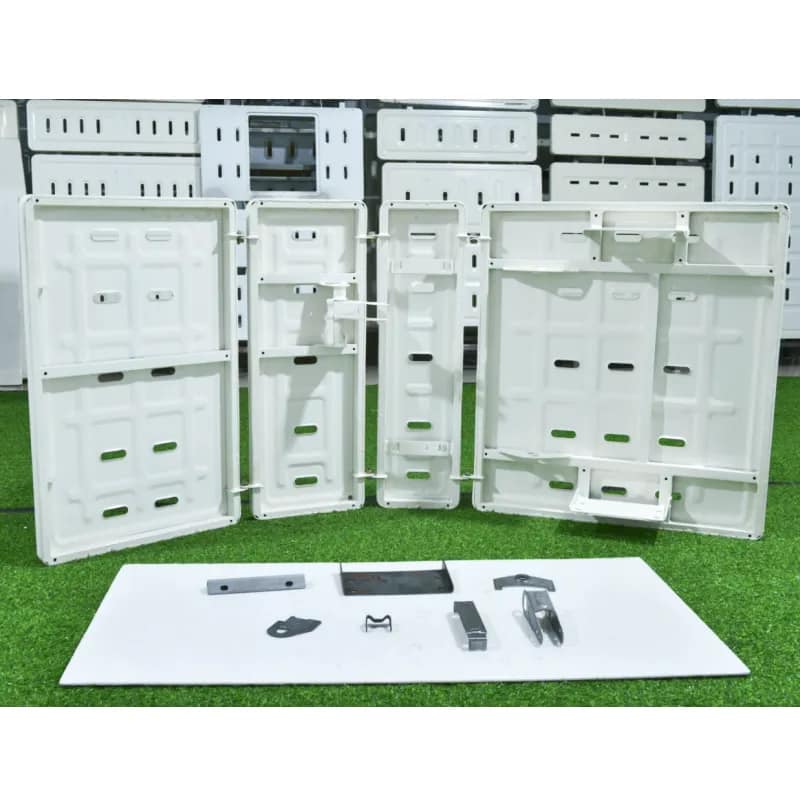
Take our stamped bed panels as an example. The 820mm width 4 sections stamped bed panel uses Willow Steel specifically because it handles repeated flexing without developing micro-cracks. The 900mm width single crank stamped bed panel and 840mm width single crank stamped bed panel both use 0.9mm material thickness—thin enough to keep weight manageable, thick enough to maintain structural integrity under continuous load. We offer these with or without welding depending on how the final assembly needs to come together.
Every component gets tested for load-bearing capacity and fatigue resistance before it ships. This isn’t just checking boxes for compliance. It’s about knowing that the part will perform the same way on day one thousand as it did on day one.
How Manufacturing Choices Affect Patient Outcomes
The connection between manufacturing quality and patient safety isn’t always obvious, but it’s direct. A caster that develops a flat spot creates vibration during transport. A bed panel that develops a slight bow changes pressure distribution. These small degradations accumulate into real comfort and safety issues.
Our manufacturing uses automated stamping, laser cutting, and robotic welding. Automation matters here not because it’s faster—though it is—but because it’s more consistent. Human welders have good days and bad days. Robots don’t.
Caster production illustrates this well. Our 5’6′ Central-locking double-face caster and 5’8′ Central-locking single-face caster use TPR material selected specifically for its combination of smooth rolling, quiet operation, and load capacity. The 3’4’5 Double-face caster and 3’4’5′ Full-wrapped caster use PP & TPR blends that balance wear resistance against sliding noise. These material choices come from testing, not guesswork.
Quality control includes dimensional inspections, material hardness tests, and functional performance checks on every production batch. We maintain complete traceability records—not because regulations require it, but because when something does go wrong, we need to understand exactly what happened and why.
 ### Evaluating Bed Panel Support Manufacturers
Choosing a manufacturer for OEM medical components involves more than comparing prices. The factors that matter most often don’t show up on a quote sheet.
| Criteria | Description | Importance |
|---|---|---|
| Experience | Years in medical device component manufacturing | High |
| Certifications | ISO 13485, CE, FDA compliance | Critical |
| Customization | Ability to produce OEM medical components to exact specifications | High |
| Quality Control | Robust inspection and testing protocols | Critical |
| Lead Times | Consistent and reliable production and delivery schedules | Medium |
| Material Sourcing | Traceability and quality of raw materials | High |
Experience matters because medical device manufacturing has specific requirements that general metal fabrication doesn’t prepare you for. Certifications like ISO 13485 indicate that a manufacturer has systems in place to maintain quality consistently. Customization capability determines whether you can get exactly what your design requires or whether you’ll need to compromise.
Building Custom Solutions for Specific Clinical Needs
Standard components work for standard applications. But medical device design often requires something more specific—a different dimension, a modified attachment point, a material substitution for a particular use case.
Our customization process starts with understanding what the component actually needs to do. We use modeling and simulation tools to develop designs efficiently, then move through rapid prototyping to verify that the design performs as expected. This iterative approach catches problems early when they’re cheap to fix.
The Orthopedica Leg Split Bed Panel demonstrates this flexibility. We produce it in multiple sizes with either 0.8mm or 0.9mm Willow Steel thickness depending on the application requirements. Headboards and footboards offer similar flexibility. Our High quality headboard and footboard with anti-collision corners use ABS engineering plastic and can be customized in size and color to match specific bed designs.
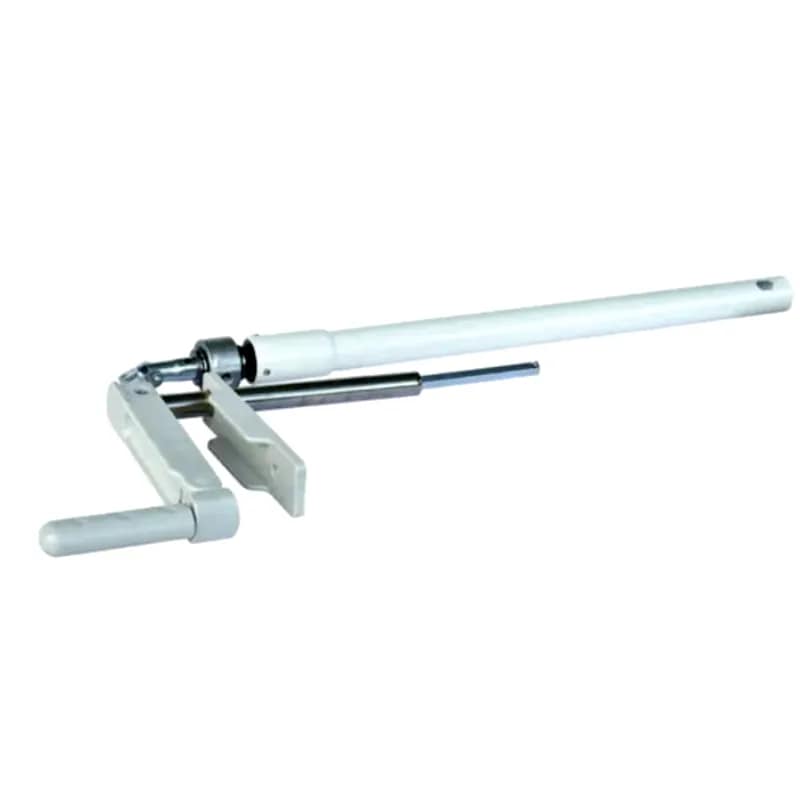
Manual adjustment components like our ABS crank with in-place protection and Iron crank with in-place protection systems come in custom sizes to ensure proper fit and function. The in-place protection feature prevents over-rotation, which matters more than most people realize until they’ve seen what happens when a crank mechanism fails.
 OEM services cover the full production lifecycle—material selection, process optimization, testing, and compliance verification. Managing everything under one roof eliminates the coordination problems that arise when different suppliers handle different stages.
Why Bed Panel Supports Matter for Patient Care
The connection between bed panel supports and patient outcomes is straightforward once you think about it. A bed that maintains its structural integrity keeps patients positioned correctly. Even weight distribution reduces pressure points. Stability during position changes prevents the small jolts and shifts that disturb rest and healing.
Our stamped bed panels, including the 900mm Width 4 Sections Stamped Willow Steel Hospital Bed Panel, provide the foundation for proper patient positioning. They support the weight distribution that prevents pressure injuries during extended stays. They maintain alignment during transfers when patients are most vulnerable.
Guardrails represent another critical safety component. Our High quality aluminum alloy guardrail and Horizontal tube folding guardrail provide fall prevention that patients and families depend on. These aren’t complicated products, but they need to work reliably every single time. A guardrail that’s difficult to raise gets left down. A guardrail that’s hard to lower delays emergency response. Good design accounts for how products actually get used.
!High quality aluminum alloy guardrail
 ## Meeting Regulatory Requirements Without Slowing Down
Medical device regulations exist for good reasons, but compliance can become a bottleneck if it’s not built into your processes from the start. We’ve structured our operations around ISO 13485 requirements so that compliance happens as a natural part of production rather than as a separate verification step.
Material selection follows specific protocols. The Willow Steel we use for bed panels and the TPR for casters meet medical-grade requirements for durability, biocompatibility, and resistance to sterilization processes. Each material choice is documented and traceable.
Product testing covers load capacity, fatigue resistance, and environmental stability. We test under conditions that simulate actual use, not just conditions that are easy to pass. This approach occasionally reveals problems that simpler testing would miss—problems that would eventually show up in the field.
| Standard/Regulation | Description | Relevance to Bed Panel Supports |
|---|---|---|
| ISO 13485 | Quality management systems for medical devices | Ensures consistent product quality and safety |
| CE Marking | Conformance with EU health, safety, and environmental protection standards | Required for market access in Europe |
| FDA Regulations | U.S. Food and Drug Administration requirements | Ensures safety and efficacy for U.S. market |
| ASTM F3156 | Standard for medical bed safety | Guides design for patient protection |
| IEC 60601 | Electrical safety for medical equipment | Relevant for motorized bed components |
Standards That Matter for Bed Panel Support Manufacturing
ISO 13485 sits at the center of medical device quality management. It requires manufacturers to demonstrate consistent ability to provide products that meet customer and regulatory requirements. This isn’t a one-time certification—it requires ongoing compliance and regular audits.
CE marking opens European markets. FDA compliance opens U.S. markets. ASTM F3156 provides specific guidance for medical bed safety. IEC 60601 applies to electrical components in motorized beds. A manufacturer that understands these standards can help navigate compliance requirements rather than creating additional obstacles.
What Partnership with an Experienced Manufacturer Provides
Working with an established manufacturer offers advantages that go beyond component supply. R&D collaboration can improve designs before they reach production. Supply chain reliability prevents the delays that disrupt production schedules. Cost optimization through efficient processes and strategic sourcing keeps projects financially viable.
Our engineering team contributes design input and material recommendations based on what we’ve learned from thousands of production runs. We’ve seen what works and what doesn’t across a wide range of applications. That experience translates into practical suggestions that improve manufacturability and performance.
Supply chain management ensures consistent access to quality materials. We maintain relationships with suppliers who understand medical device requirements and can provide the documentation that compliance demands. This infrastructure takes years to build and provides real value to partners who need reliable component supply.
Products like our 4 hooks IV Pole and 2 hooks IV Pole demonstrate our range. Both use 201 or 304 Stainless steel depending on the application requirements. These products, along with our broader Hospital Bed Metal Parts catalog, show the breadth of components we can supply reliably.
 ### FAQs
What types of hospital bed parts does ZhongShan YingYun Hardware specialize in?
ZhongShan YingYun Hardware specializes in a comprehensive range of hospital bed parts, with a deep focus on high-quality bed panel supports and various bed accessories, ensuring durability and patient safety. Our expertise extends to components for diverse medical bed frames. We offer stamped bed panels, casters, cranks, and guardrails, all designed to meet stringent medical requirements.
How does Yingyun Hardware ensure the quality and reliability of its medical bed frames and supports?
Yingyun Hardware employs stringent quality control protocols throughout the manufacturing process, adhering to international medical device standards like ISO 13485. We utilize advanced testing methods and premium materials to guarantee the reliability and structural integrity of all our bed support systems. Each component undergoes rigorous inspection to ensure consistent quality and performance.
Can ZhongShan YingYun Hardware provide custom OEM medical components for specific hospital bed designs?
Absolutely. As an experienced bed panel support manufacturer, ZhongShan YingYun Hardware excels in providing custom OEM medical components. We collaborate closely with clients to develop tailored solutions that meet unique design specifications and functional requirements for patient safety solutions. Our engineering team supports customization from concept to production.
Start a Conversation About Your Project
Quality bed panel supports make a measurable difference in medical device performance. If you’re developing hospital bed designs or need reliable component supply for existing products, we should talk. Contact us at lily@yingyunmic.com or +8613528198959 to discuss your specific requirements.