
A hospital bed designed for a busy clinic environment must solve a specific set of challenges: it needs to be durable enough for daily multi-patient turnover, compact enough to navigate narrow corridors and treatment rooms, and functional enough to support a wide range of outpatient procedures without the complexity of an ICU-grade unit. Too often, clinics end up with beds that were simply scaled down from acute-care models, overlooking the actual workflow of a clinic where quick patient positioning, easy cleaning, and reliable manual operation matter more than advanced Trendelenburg features. Having spent nearly twenty years in hospital bed manufacturing, I’ve seen how a mismatched bed can slow down a clinic team and shorten the service life of the furniture. What makes the difference isn’t a longer feature list; it’s paying attention to the details that directly affect daily clinical use.
What Makes a Hospital Bed Suitable for a Clinic?
Not every hospital bed is right for a clinic. In a general hospital, beds often stay with one patient for days or weeks. In a clinic, the same bed may see five or ten patients in a single morning. That means three things become non-negotiable: rapid cleaning and infection control, quick and quiet adjustments, and the ability to fit through standard doorways without disassembly.
A clinic bed must have smooth, crevice-free surfaces. The bed panels are especially critical. Stamped metal panels, like the 840mm-wide four-section models we manufacture, offer a continuous surface with rolled edges that prevent fluid pooling and can be wiped down in seconds between patients. 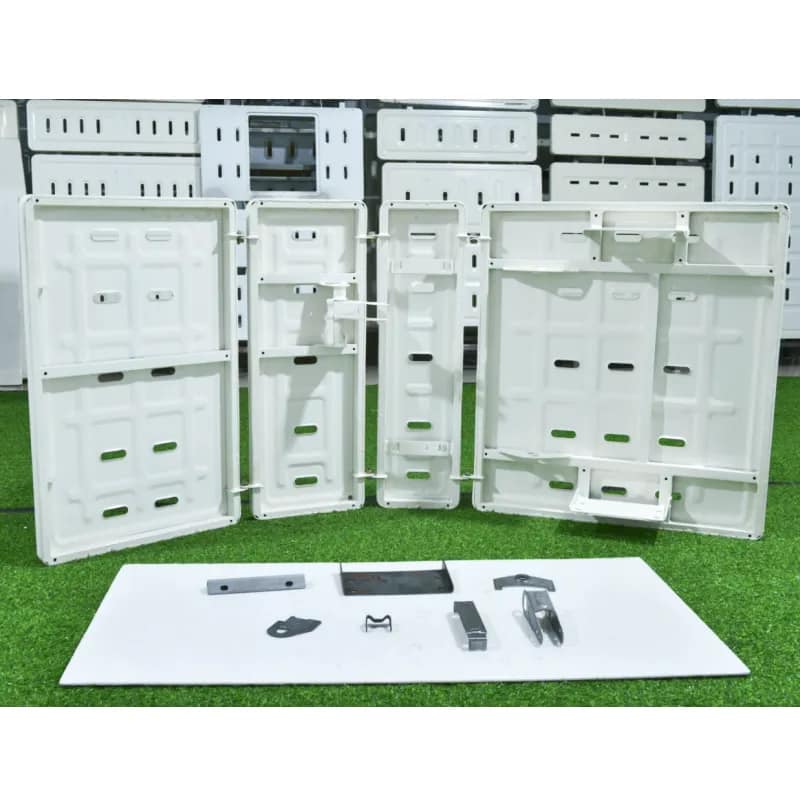 These are far easier to disinfect than padded surfaces or complex jointed sections typical of luxury patient beds. For a clinic, a stamped bed panel with a high-quality powder coat finish is a practical choice—it resists chipping even with daily disinfectant use and keeps its appearance over years of heavy traffic.
The bed frame itself must be sturdy but not overbuilt. Clinics seldom need the 250 kg load capacity of a bariatric bed, but a capacity of 180–200 kg is reasonable to accommodate a broad patient population. The frame should be made of formed steel with welded joints; bolt-on connections tend to loosen over time with constant repositioning.
Manual vs. Electric Beds: Choosing What Works for Clinic Flow
One of the first questions I hear from clinic directors is whether to invest in electric hospital beds or stay with manual cranks. The answer depends on how the bed will be used, not just the budget.
Electric beds, especially models with three or five functions, give effortless positioning at the push of a button. That’s valuable in clinics where patients need frequent position changes during procedures. However, electric beds add maintenance complexity: motors, control boxes, and backup batteries all have finite lifespans. In a clinic setting where beds are moved frequently between rooms, the motor and wiring are subject to bumps and cable strain. A broken actuator in a busy clinic can take a bed out of service for days.
Manual crank beds, on the other hand, are mechanically simpler and less expensive. A three-function manual bed with ABS cranks gives reliable backrest, knee rest, and height adjustment. The crank mechanism we produce with in-place protection prevents the handle from spinning out of the user’s hand and makes the adjustment feel controlled and secure. 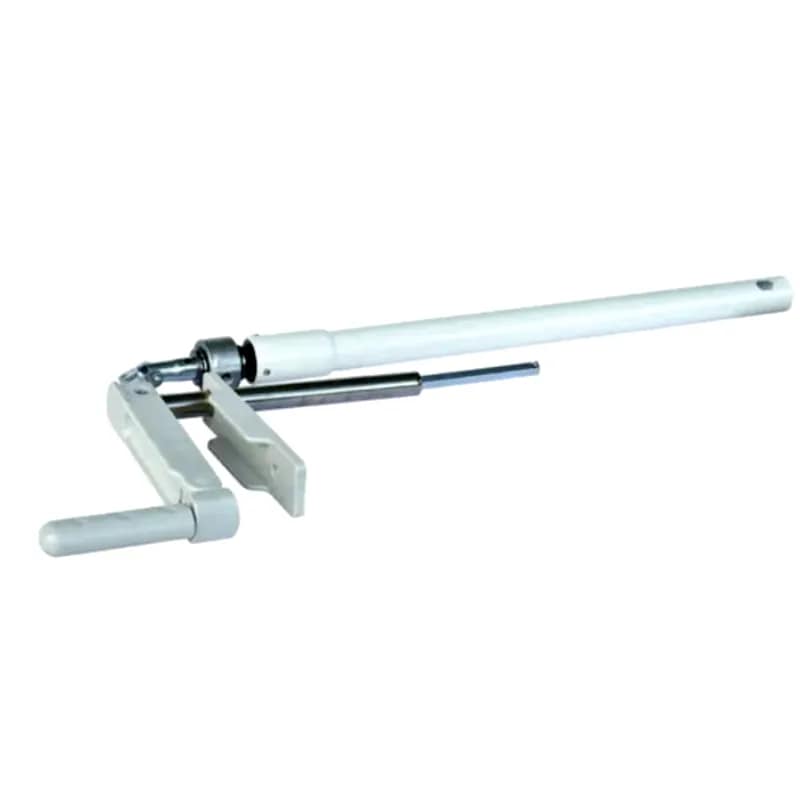 In many clinics, this is enough: nurses can quickly position a patient for an exam or minor treatment without needing an electrical outlet nearby.
For clinics that perform longer procedures—such as minor surgery, endoscopy, or physiotherapy—an electric bed with height adjustment, backrest, and leg elevation offers clear advantages. But for standard consultation rooms and short-term recovery areas, a well-made manual bed usually hits the sweet spot between usability and cost.
| Feature | Manual Crank Bed | Electric Bed |
|---|---|---|
| Backrest adjustment | Hand crank, smooth with in-place protection | Push-button, instant |
| Height adjustment | Crank-operated, requires staff effort | Motorized, low effort |
| Leg rest adjustment | Crank | Push-button |
| Maintenance complexity | Low, mechanical only | Moderate, electronics and motor |
| Power requirement | None | AC power with battery backup |
| Best for | High-turnover exam, treatment rooms | Procedure rooms, recovery |
Bed Components That Drive Everyday Clinic Reliability
Beyond the motor versus crank decision, the bed’s component quality directly affects how long it lasts and how safe it is in a clinic. Four components deserve particular attention.
The casters are the first thing to check. A clinic bed is pushed from room to room several times a day. Standard single-face casters with TPR treads are common, but for heavy use, central-locking double-face casters offer much better stability when parked and smoother rolling.  The brakes must engage positively with a simple foot pedal—staff should not have to bend down to fiddle with four individual toe locks. Our 5-inch central-locking casters, for example, allow a single pedal to lock both rotation and swivel on one side, making the bed instantly stable.
Side rails in a clinic serve more than fall prevention; they become handholds during transfers. A horizontal folding guardrail made from powder-coated steel tubing provides a secure grip and can be folded completely out of the way for procedures.  The folding action must be smooth and lock into both positions with an audible click so the clinical staff knows it’s secure.
The head and foot boards should be made of ABS plastic or at minimum a high-impact polymer that won’t crack if the bed bumps into a doorframe. A snap-on design, like our ordinary ABS head/foot board, allows removal within 30 seconds for emergency access or deep cleaning. That quick release is worth its weight in a clinic where time matters.
Finally, the bed panels themselves—whether stamped steel as mentioned or molded plastic—must resist flexing under a patient’s weight. A flimsy bed panel causes the mattress to sag and makes the patient feel unstable. For a clinic, I recommend panels at least 0.9 mm thick stamped from cold-rolled steel, with a reinforced edging.
When the Room Shapes the Bed Choice
Clinic rooms are rarely as generous as hospital wards. A bed that is too wide or too long becomes a daily obstacle. Standard clinic beds are around 900 mm wide and 2,100 mm long, but sometimes a 840 mm width is a better fit for tight corridors and smaller exam rooms.  Pay attention to the overall length including the headboard—some beds push past 2,200 mm and become difficult to turn through a 90 cm doorway.
Castor size also affects maneuverability. Larger 5-inch casters roll over door thresholds and uneven floors more easily than 3-inch ones. In older clinic buildings with narrow doors or steps, a bed with smaller casters may struggle. A clinic should always test the bed’s turning radius in its actual space before ordering in bulk.
Sourcing Clinic Beds That Meet Budget and Long-Term Needs
Buying a hospital bed for a clinic often means working with a specialized manufacturer rather than a general medical equipment distributor. A manufacturer can offer OEM design options—custom panel sizes, color matching to clinic decor, and specific component upgrades like stainless steel casters or wood-grain guardrails—without the extra margin layers.
When evaluating supplier reliability, I look at three practical indicators: the thickness of the steel used in the bed frame (at least 1.2 mm tube for the main frame), the type of surface coating (Aksu powder coating, for instance, offers proven antibacterial protection), and the warranty on structural components. A one-year warranty on mechanisms is standard; anything less signals cost-cutting that will show up later in bent frame members or seized adjustment screws.
Yingyun Hardware has been manufacturing beds and accessories since 2006, and in that time we’ve come to understand that a clinic bed must survive a different kind of punishment than an ICU bed—not from being stationary, but from constant movement, cleaning chemicals, and rapid patient turnover. If your clinic is planning a new facility or replacing aging furniture, sharing your room dimensions and expected patient throughput with a manufacturer early on can prevent a costly mismatch. Send your clinic layout and daily patient volume to [email protected] or call +8613528198959, and we’ll work with you to confirm the bed specifications that will hold up year after year.
Common Questions About Hospital Beds for Clinics
How is a clinic bed different from a regular ward bed?
The biggest difference is in how the bed is used. A ward bed may stay in one room for years and support a single patient for days. A clinic bed is moved and cleaned multiple times a day. This means it must have a more durable surface finish, a lighter but still stable frame, and casters that lock and unlock quickly without requiring the staff to bend down repeatedly.
Do clinics need electric beds or are manual ones enough?
In programs we’ve supported, the choice often comes down to the type of procedures. Clinics doing mostly consultations and quick exams are well served by manual three-function beds because they never depend on an electrical outlet and the staff quickly becomes familiar with the crank effort. Clinics that do day surgery or sedation-based procedures prefer electric backrest and height adjustment to position the patient precisely without physical strain.
Can the bed color and panel size be customized for our clinic’s branding?
Yes, a manufacturer with in-house stamping and powder coating capacity can match bed panel sizes and colors to your requirements. We’ve supplied beds with custom-width panels and specific RAL colors for clinics that wanted a uniform interior look. The minimum order quantity for customization is usually around 50 units, so it’s practical for new clinic openings or equipment overhauls.
What safety certifications should a clinic bed have?
At a minimum, look for ISO 13485 certification for the manufacturer’s quality management system and CE marking for the product itself. These indicate the bed has passed electrical safety and mechanical durability tests. For export to markets like the USA, FDA registration is also necessary. A reliable manufacturer will provide test reports on load capacity, castor braking force, and side rail latch strength upon request.
How long should a clinic bed last before replacement is needed?
With proper daily cleaning and periodic bolt tightening and caster maintenance, a well-built clinic bed should function well for five to seven years in a busy environment. The limiting factors are usually the caster bearings and the adjustment screws in manual cranks. Both are replaceable components, and a manufacturer that stocks spare parts can extend the bed’s service life significantly. If your clinic needs to replace beds or source spare parts, share your model numbers and we’ll help you assess what’s still serviceable and what should be updated.
If you’re interested, check out these related articles:
Ensuring Quality Control in Hospital Bed Parts: A Comprehensive Guide
Electric vs Manual Adjustable Beds: A Comprehensive Comparison
Identifying Reliable Brands for Adjustable Hospital Beds