
A lightweight hospital bed that is genuinely easy to move depends on far more than a low number on a specification sheet. After nearly twenty years of manufacturing hospital beds and their components, I have seen facilities replace beds that looked light on paper but proved exhausting to reposition on the ward floor. What separates a bed that glides from one that fights the staff is the intersection of caster design, frame engineering, and material selection. This article breaks down the specific design features that determine real-world maneuverability so procurement teams can evaluate beds beyond the weight specification alone.
What Determines Whether a Hospital Bed Is Truly Easy to Move
Three factors govern how a hospital bed feels during daily movement, and none of them are captured by a single weight figure. The first is rolling resistance, which is almost entirely a function of the casters. The second is weight distribution across the frame, which affects how force transfers from the staff member’s hands to the floor. The third is the bed’s structural rigidity under load because a frame that twists when pushed absorbs energy that should go into forward motion.
Of these three, rolling resistance dominates. Even a bed weighing 120 kg can feel light if its casters are correctly specified. Conversely, a 90 kg bed fitted with undersized or hard-tread casters will frustrate staff within the first shift. I have walked production lines where the same bed frame was fitted with two different caster sets, and the perceived effort to move the bed changed dramatically despite the total mass remaining identical.

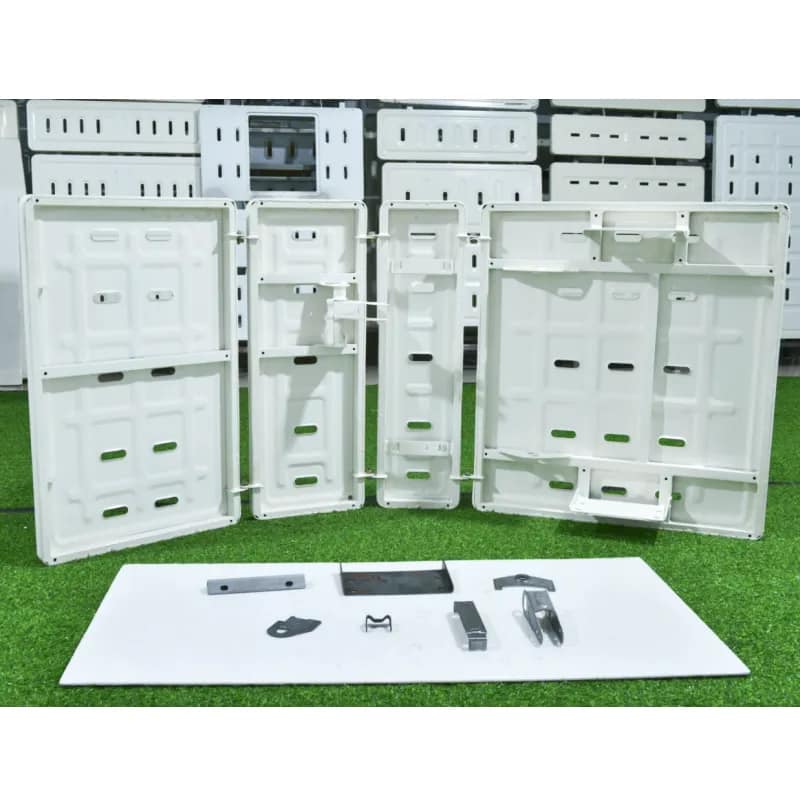
Weight distribution matters most when the bed is occupied. A patient’s mass shifts the center of gravity, and if the bed frame does not transfer that load evenly to all four casters, one or two wheels bear disproportionately. That increases rolling resistance on the overloaded casters and creates a pivot point that makes straight-line steering difficult. In our manufacturing experience, beds with a four-section stamped steel bed panel design tend to distribute patient weight more evenly than two-section designs because each panel segment can flex independently, keeping the load path consistent.
Caster Selection and Its Impact on Bed Maneuverability
Casters are where the bed meets the floor, and choosing the wrong type undermines every other lightweight design decision. The key variables are wheel diameter, tread material, bearing type, and whether the caster is a single-wheel or twin-wheel design.
Wheel diameter is the single largest lever for reducing rolling resistance. A 5-inch caster rolls over floor irregularities and door thresholds with substantially less effort than a 3-inch caster, because the larger wheel encounters a shallower angle of attack against obstacles. We manufacture both sizes at Yingyun, and for hospital beds that facilities expect to move frequently between rooms or wards, we consistently recommend 5-inch casters minimum. The YY-C51 5-inch 304 stainless steel casters with TPR tread, for example, combine a larger diameter with a tread compound that maintains low rolling resistance even on linoleum and epoxy hospital flooring.
Tread material is the second critical variable. Hard plastic wheels slide rather than roll on smooth floors and transmit vibration directly into the frame. TPR (thermoplastic rubber) treads offer a better balance: soft enough to grip without slipping, hard enough to avoid the high rolling resistance of pure rubber. Full-wrapped TPR casters like our YY-C3 and YY-C10 series provide consistent traction regardless of whether the bed is being pushed straight or turned, because the TPR compound wraps around the entire wheel circumference rather than being applied as a thin outer band.

Central-locking casters add another layer to this decision. The locking mechanism itself adds weight, and the pedal linkage introduces slight drag if not precisely aligned during assembly. For lightweight bed applications where easy movement is the priority, a single-face central-locking system with proper bearing preload, such as our YY-C22 and YY-C23 series, provides reliable locking without the added mechanism mass of a double-face system.
| Caster Feature | Impact on Maneuverability | Recommended Specification |
|---|---|---|
| Wheel Diameter | Larger wheels overcome obstacles with less force | 5-inch minimum for frequent movement |
| Tread Material | Softer treads grip better but increase rolling resistance | TPR full-wrapped for balanced performance |
| Bearing Type | Precision bearings reduce rotational friction | Sealed ball bearings |
| Locking Mechanism | Central-locking adds weight; check alignment | Single-face with proper preload |
| Swivel vs Fixed | Swivel casters enable steering; all four swivel reduces straight-line stability | Two swivel, two fixed or four swivel with directional lock |
If your facility involves frequent room-to-room transfers, I would suggest confirming caster specifications before finalizing any bed order. The difference between a poorly specced caster and a properly selected one is noticeable within the first meter of pushing.
Frame Materials and Construction for Lightweight Durability
Reducing frame weight while maintaining a 250 kg safe working load requires material choices that balance density against strength. Most lightweight hospital beds use one of three frame strategies: thin-gauge steel with strategic reinforcement, aluminum alloy primary structures, or hybrid designs that combine steel load paths with aluminum or ABS non-structural components.
Steel remains the default for load-bearing members because its fatigue resistance is well understood. The weight savings in steel frames come from using higher-grade material that can be formed into thinner sections without sacrificing yield strength. Our stamped bed panels use Liuzhou steel at 0.8 mm to 0.9 mm thickness, formed with curled edges and stamped ribs that add rigidity without adding material. A flat panel of the same gauge would deflect unacceptably; the ribs and edge geometry create structural depth from thin material, which is the core principle of lightweight steel design.
Aluminum alloy offers a more direct weight reduction path. Our aluminum alloy guardrails and side rail systems weigh roughly 40 percent less than equivalent steel components while providing adequate strength for fall prevention. The trade-off is cost and, in some designs, long-term fatigue performance under cyclic loading. Aluminum guardrails that are cast rather than extruded can develop stress cracks at mounting points if the casting quality is not tightly controlled. We use die-cast aluminum with post-casting heat treatment for critical connection points to address this.
ABS plastic components contribute to weight reduction in non-structural roles. Headboards, footboards, and bedside cabinets made from ABS engineering plastic reduce total bed weight by 8 to 12 kg compared to steel equivalents. Our ABS head and foot boards use a snap-on construction that can be removed in under 30 seconds, which is useful not only for weight reduction but also for emergency access and cleaning.

The frame connection design is the detail most procurement teams overlook. Bolted connections are heavier than welded joints because they require overlapping material and fastener mass. Welded joints are lighter but must be executed with consistent penetration to avoid fatigue failures. In our production, critical load-path welds on the bed frame undergo dimensional checks after welding to verify that heat distortion has not misaligned mounting points. A misaligned caster mount of even 2 mm creates uneven floor contact, which directly increases rolling resistance.
Manual vs Electric: Weight Trade-offs in Powered Beds
Electric hospital beds inherently weigh more than manual equivalents because each actuator motor adds between 3 and 6 kg, and the control box, wiring harness, and backup battery add further mass. A manual three-crank bed from our production line weighs approximately 80 kg in its packed configuration. An equivalent electric three-function bed adds roughly 15 to 20 kg from the motor systems alone.
The mobility question is whether the added weight of electric actuation is offset by the operational benefit of powered positioning. In practice, electric beds are moved less frequently than manual beds because staff can adjust patient position without repositioning the entire bed. A nurse can raise the backrest or adjust bed height at the bedside control panel rather than walking to the foot of the bed to turn a crank. For facilities where beds are repositioned infrequently, say once per shift or less, the added motor weight has minimal impact on daily operations.
For facilities that need to move beds multiple times per shift, such as those transferring patients between wards and treatment areas, manual beds with well-designed crank systems still have a place. Our ABS cranks with in-place protection use a foldable handle design that stores compactly and requires low input torque thanks to the gear reduction in the crank mechanism. The crank itself is an often-neglected factor in perceived ease of use; a crank with a short handle radius requires more force, while a longer handle moves the bed with less effort but takes more space to operate.
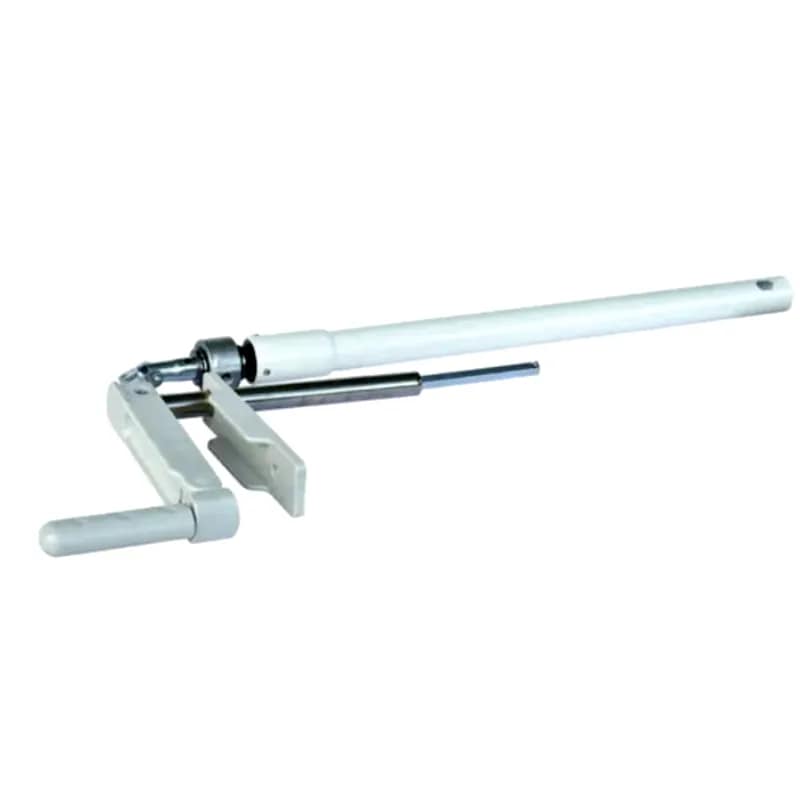
The five-function electric bed represents the upper end of the weight spectrum at approximately 100 kg or more depending on configuration, but it adds Trendelenburg and reverse Trendelenburg positioning that manual beds cannot provide. For ICU and high-acuity wards where clinical positioning requirements outweigh mobility concerns, the weight penalty is justified. Our recommendation to procurement teams is to map the expected movement frequency against the clinical positioning requirements floor by floor, rather than standardizing on one bed type facility-wide.
Verifying Lightweight Bed Quality Before Procurement
A lightweight bed that cannot maintain its structural integrity under daily use is not lightweight, it is underbuilt. The verification process should focus on three areas: material quality, assembly precision, and caster alignment under load.
Material quality starts with the steel grade used in the bed frame and panels. Request the mill certificate for the steel used in the bed panels and frame tubes. For stamped panels, verify that the material thickness matches the specification at multiple measurement points. Stamping processes can thin the material at draw points; a 0.9 mm panel that thins to 0.6 mm at the rib corners has lost a third of its designed strength in the areas that need it most.
Assembly precision is most visible at the caster mounts and the bed panel attachment points. On a production line visit, I would suggest watching how the caster sockets are aligned. A caster that bolts into a socket that was welded 1 degree off vertical will not sit flat on the floor. Over time, the uneven wear on the tread will increase rolling resistance and potentially create a pull to one side during movement.
Load testing should be observed at the full rated capacity, not a partial load. A bed rated for 250 kg should be tested with 250 kg distributed across the bed surface, and the casters should be checked for free rotation under that load. Some caster designs that roll freely when unloaded develop significant binding when the full patient weight compresses the bearing surfaces. This is a design limitation that no amount of maintenance can fix, and it is only visible under full load.
For facilities evaluating multiple suppliers, I suggest requesting a sample bed or at minimum a sample caster set and bed panel section. The tactile feedback of pushing a loaded bed across a threshold plate or flooring transition reveals more about real-world mobility than any specification sheet value. In our experience supporting hospital projects across multiple regions, the procurement teams that invest time in physical evaluation before bulk ordering consistently report higher staff satisfaction with bed mobility after installation.
If your project requires specific mobility performance targets, such as a maximum push force of 50 N to initiate movement on a loaded bed on vinyl flooring, share those requirements with potential suppliers early in the evaluation process. A manufacturer that understands your operational conditions can recommend the appropriate caster and frame configuration rather than offering a standard specification that may not meet your needs. For any questions about lightweight bed configurations or to discuss specific mobility requirements for your facility, reach out to us at [email protected] or call +8613528198959.
Common Questions About Lightweight Hospital Bed Mobility
Does a lighter bed always mean an easier bed to move?
Not necessarily. Total bed mass is only one factor. A 95 kg bed with properly specified 5-inch TPR casters and a rigid frame will move with less effort than an 80 kg bed with undersized hard-plastic casters. Rolling resistance from the casters, weight distribution across the four contact points, and frame stiffness under load all contribute to perceived effort. We have tested configurations where adding 5 kg in higher-quality casters reduced the push force required to move the bed because the improved rolling efficiency more than offset the added mass.
How much weight can a lightweight hospital bed safely support?
Most lightweight hospital beds are designed and tested to a 250 kg safe working load, which is the standard across our manual and electric bed range. The lightweight designation refers to the bed’s own structural weight, not its load capacity. The engineering challenge is achieving that 250 kg rating with a lighter frame, which is done through material selection, ribbed panel designs, and optimized tube wall thickness rather than by reducing the safety margin. Always verify that the manufacturer’s load rating is backed by physical testing, not calculated from material properties alone.
What is the minimum caster size needed for easy bed movement?
For beds that need to cross door thresholds, elevator gaps, or flooring transitions regularly, 5-inch casters are the minimum we recommend. A 3-inch caster requires roughly twice the force to overcome the same obstacle compared to a 5-inch caster, because the smaller wheel hits the obstacle at a steeper angle. For facilities with particularly uneven floors or frequent outdoor transfers, 6-inch casters provide additional capability. The trade-off is that larger casters raise the minimum bed height slightly, which affects patient transfer ergonomics.
Can existing hospital beds be retrofitted with better casters for easier movement?
In most cases, yes, provided the caster stem diameter and mounting type match the bed frame’s caster socket. We supply replacement casters to facilities upgrading their existing beds, and the improvement in mobility is often immediate. The key is matching the stem specification: our casters use standard stem diameters that fit most hospital bed frames, but I recommend measuring the existing stem before ordering. If your beds use central-locking casters, the pedal linkage may also need adjustment after replacement to maintain proper locking engagement.
Are aluminum-framed beds durable enough for daily hospital use?
Aluminum frames can be durable when the alloy selection and manufacturing process are correctly specified. The areas to scrutinize are welded joints and threaded mounting points, where aluminum’s lower fatigue strength compared to steel requires more careful design. We use aluminum primarily in non-structural or semi-structural applications like guardrails rather than in the main load-bearing frame, which gives weight savings where they matter without compromising the fatigue life of the bed’s primary structure. For facilities considering an aluminum-frame bed, request fatigue test data for the specific frame model, particularly for the caster mounting areas and bed panel attachment points. If you are evaluating a bed configuration and want to confirm that the frame and caster combination will perform under your facility’s usage patterns, share your requirements with us at [email protected] and we can provide specific recommendations based on nearly two decades of hospital bed manufacturing experience.
If you’re interested, check out these related articles:
Comparing Prices for Hospital Bed Parts Manufacturers Effectively
What is an Adjustable Hospital Bed and How Does It Work: A Comprehensive Guide
Essential Safety Features for Adjustable Medical Beds
How Much Does an Adjustable Hospital Bed Cost on Average