
Procurement teams sourcing transfer shower chairs for hospitals and nursing homes know the category looks simple: a frame, four casters, a commode bucket, and a seat. In practice, the difference between a chair that performs reliably for five years and one that develops rust, wobble, and caster failure within 18 months often comes down to half a dozen engineering decisions made at the manufacturing level. After nearly two decades producing hospital furniture and accessories at Yingyun Hardware, I have seen how small differences in material grade and weld quality separate long-term durability from premature replacement. For wholesale buyers committing to container-sized orders, understanding those differences before issuing a purchase order is the most direct way to control lifecycle cost.

What Makes a Transfer Shower Chair Reliable in Daily Clinical Use
A transfer shower chair needs to handle a specific set of stressors that general ward furniture rarely encounters. Staff wheel patients across threshold gaps from bed to bathroom, the chair sits in wet environments with cleaning chemicals, and the patient weight shifts dynamically during transfers. Three performance areas define baseline reliability.
Frame construction dictates structural integrity. Our YY‑HS01 and YY‑MTC11 models both use chrome-plated steel pipe with wall thickness engineered to resist bending under the full 125 kg load rating. The chrome plating is not decorative; in a shower environment, it provides the primary barrier against moisture attack. A chair with painted mild steel tubing may look acceptable on arrival but will show rust at weld joints within months if used daily in wet conditions.
Caster performance is the second critical factor. Medical silent wheels with individual brakes allow staff to lock the chair securely during patient transfer. If a caster locks but slides under body weight because the brake pad material is too hard, the resulting shift can cause a fall. We specify TPR tread on our caster wheels because the material offers predictable friction on wet tile floors without leaving marks, something harder plastic wheels do not deliver.
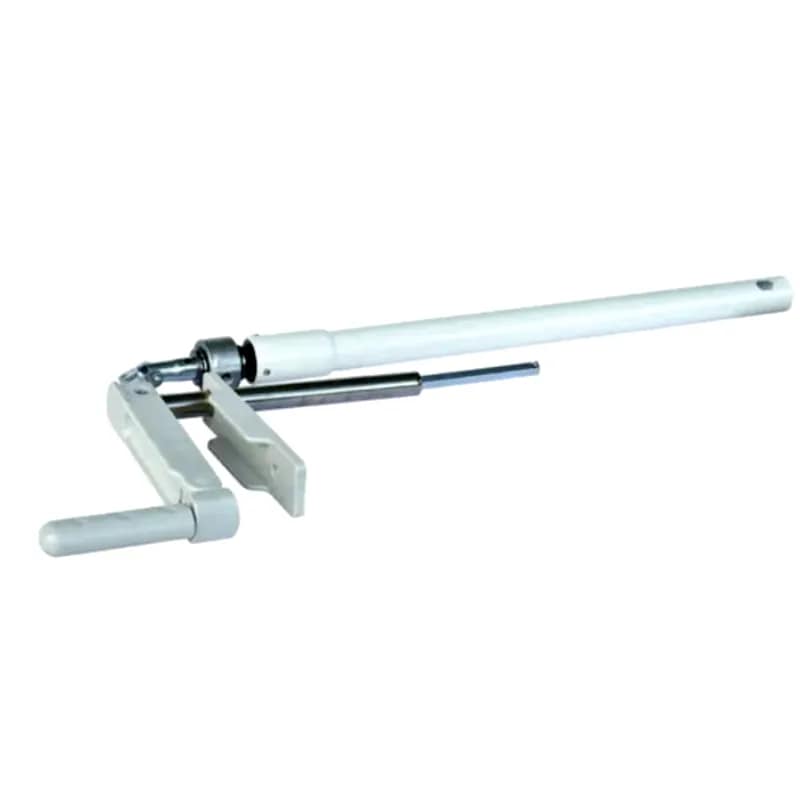
The third differentiator is adjustment range. Staff who operate the chair across bed heights, toilet seats, and shower benches need the seat height to adjust smoothly. The YY‑HS01 hand‑crank mechanism gives precise height control from 45 cm to 61 cm, while the manual‑lift version achieves the same range with a simpler mechanism at a lower unit cost. For facilities with staff who do multiple transfers per shift, the hand‑crank version reduces physical effort because the mechanical advantage of the gear drive requires less force than direct lifting.
Material Selection: Why Corrosion Resistance Matters in Wet Environments
If you compare data sheets from six different wholesale suppliers, the frame material description may look identical: “chrome-plated steel”. What that phrase omits is the base steel grade, the plating thickness, and whether the chrome layer includes a nickel undercoat. In our production, we use steel tube sourced to a consistent specification and apply chrome plating over a nickel base layer, because chrome alone is porous at the microscopic level and water will eventually reach the steel if there is no nickel barrier.
Stainless steel offers still better corrosion resistance, but the cost increase pushes the unit price above what many government tender budgets will accept for standard nursing home chairs. We build stainless steel versions only for hospital projects that specifically require them, such as isolation wards or intensive care units where aggressive disinfectants are used multiple times per day. For most high-volume wholesale orders, a properly executed chrome-plated steel frame provides the right balance of durability and cost, provided the plating process is validated.
A practical check procurement teams can perform during supplier evaluation: request a cut section of frame tube that shows the plating cross-section. If the supplier cannot provide one, that tells you the plating is not a controlled process parameter. After-sales rust claims are disproportionately concentrated in chairs where the plating thickness was never measured because the factory treated it as an appearance finish rather than an engineering specification.

Load Capacity and Stability: Engineering Tests That Prevent Accidents
A stated load capacity of 125 kg means little without knowing the test method that verified it. In our factory, we perform static load testing at 125% of rated capacity (approximately 156 kg) with weight applied to the center of the seat, and a separate side-load test at the armrest to simulate a patient leaning during transfer. The chair must show no permanent deformation, no weld crack, and the casters must remain fully functional after the test.
Stability during movement is equally important. If the wheelbase is narrow relative to the seat height, the chair can tip when crossing a threshold from a hard floor onto a bathroom mat. Our models use a footprint of 69 cm long by 53 cm wide, with the casters placed at the outermost corners. That dimension was selected after observing real transfer scenarios: a nurse stands behind the chair, pushes through a doorway, and then pivots in a narrow bathroom. A wider base would make the turn impossible; a narrower one would reduce tip resistance.
For buyers comparing suppliers, insist on the specific load test standard the manufacturer uses. If the answer is only “EN 60601‑2‑52” or a general medical bed standard, that standard covers beds, not shower chairs. Transfer chairs fall under different test requirements, so a manufacturer who cannot name the applicable chair‑specific test may be extrapolating bed test data, which does not account for side‑loading or wet‑floor braking.
Customizing Chairs for Different Facilities: OEM Capabilities
Wholesale buyers rarely need an off-the-shelf chair exactly as the manufacturer catalogs it. A nursing home chain may want wider seats for bariatric residents, a hospital rehabilitation ward may need folding armrests for lateral transfers, and a homecare distributor may require marketing-ready packaging in a specific language.
Yingyun Hardware offers OEM customization on frame dimensions, seat width and depth, caster type, and surface finish color. The minimum order quantity for customized dimensions is typically 200 units, because altering the tube cutting and bending jigs incurs a setup cost that is only practical when amortized across a reasonable production run. For standard color changes or logo printing on existing models, the MOQ can be as low as 50 units, the figure stated on our YY‑HS01 and YY‑MTC11 product sheets.
One specification that merits attention during the customization discussion is the commode bucket seat interface. The plastic seat must mate precisely with the bucket rim, or the bucket will shift during use. When a buyer changes the seat width, we recalibrate the bucket opening and, if necessary, source a different bucket mold. Not every factory does this; some will ship a larger seat with the original bucket, creating a gap. Ask the supplier to show you the bucket interface detail for your requested dimensions before approving the production sample.
Wholesale Supply Chain Considerations: MOQ, Packaging, and Lead Time
Bulk ordering introduces logistics factors that single-unit buyers never consider. Our transfer chairs are packed one unit per export-grade carton with foam cushioning, then palletized. A 20‑foot container typically holds around 120 units, while a 40‑foot container holds approximately 250, depending on pallet configuration. Weight per unit (net 19–25 kg depending on model) means ocean freight cost per unit is sensitive to the carrier’s weight breakpoints, so fine‑tuning pallet density can save several hundred dollars on a full container.
Lead time for standard models from our factory is 15–20 working days after order confirmation. Customized models add an additional 7–10 working days for sampling and approval. Buyers ordering for a new facility opening should build in at least 30 days of sea transit plus customs clearance, and ideally a further two weeks as buffer for port delays.
Warranty terms also deserve scrutiny. We provide a one‑year warranty on mechanism and structure, covering frame failure, weld breakage, caster locking malfunction, and crank mechanism seizure under normal use. Warranty does not cover surface rust if the user submerges the chair in saltwater or uses unapproved chemical cleaning agents, but we have rarely seen that scenario outside coastal facilities with unmanaged water treatment. The practical value of a warranty is not the paper guarantee; it is the speed of replacement parts shipment when a problem arises. Ask any potential supplier how long it takes to ship replacement casters or a seat assembly to your location from their warehouse. If the answer exceeds 10 working days, factor that downtime into your stocking plan.
Common Questions About Sourcing Transfer Shower Chairs in Bulk
Which is better for daily shower use: chrome-plated or stainless steel?
For most facilities, chrome-plated steel with a nickel undercoat provides sufficient corrosion resistance at a lower unit cost. The key is verifying the coating process, not the label on the data sheet. If your facility uses aggressive chemical disinfectants daily, stainless steel becomes the safer choice, but expect approximately 30–40% higher unit cost. In projects we have supplied for tropical coastal hospitals where humidity and saline air accelerate corrosion, stainless steel was the only material that met the five‑year durability target.
Can I get a transfer chair rated for more than 125 kg?
Yes, bariatric‑capacity chairs can be designed with reinforced frames and wider seats. The engineering challenge is not just adding thicker steel; the caster load rating must also increase, because four casters share the total weight, and the front casters take a disproportionate share during movement. We have produced chairs rated to 180 kg for specific clients, but the minimum order quantity for a custom frame of that capacity is higher due to the additional structural testing required.
How do I confirm a manufacturer’s quality control before placing a container order?
Request the load‑test video or report for the exact model you are buying, showing the chair at 125% of rated load with no permanent deformation. Ask for a cut‑section of the frame showing plating thickness. And, if possible, order a single‑unit sample shipped by air so your team can inspect welds, caster brake function, and seat‑bucket alignment before committing to production volumes. We routinely provide these three items for new wholesale clients.
What is the lead time situation for large orders right now?
Standard lead time from our factory is 15–20 working days. During Chinese national holidays or the pre‑Chinese‑New‑Year logistics peak, we recommend adding 10 working days of buffer. Sea freight transit time depends on destination—approximately 25–30 days to West Africa, 30–35 days to Europe, and 18–22 days to the Middle East. If your project timeline is tight, share your deadline when requesting a quotation. We will confirm whether we can meet it or suggest an air freight partial shipment for the most urgent units. Email your timeline and quantity to [email protected] and we will return a precise delivery estimate within one working day.
If you’re interested, check out these related articles:
What is an Adjustable Hospital Bed and How Does It Work: A Comprehensive Guide
Unlocking Comfort and Care Benefits of Adjustable Hospital Beds
Ultimate Guide to Cleaning and Maintaining Your Adjustable Hospital Bed
Choosing a Reliable Hospital Bed Parts Manufacturer: A Comprehensive Guide