
Sourcing a five function electric hospital bed from an overseas supplier involves more than comparing price sheets. It means verifying whether the manufacturer can deliver consistent quality, meet the demanding load and duty-cycle requirements of an ICU, and support the project long after the container leaves the port. This guide draws on nearly twenty years of hands-on engineering and export work to help procurement teams, hospital planners, and distributors evaluate exporters not on promises but on the production realities that determine whether the beds will perform reliably in a high-acuity ward.
What Specifications Define a Five Function Electric Hospital Bed?
A five function bed is distinguished by five motorized movements: backrest angle, leg rest angle, overall height, Trendelenburg (head-down tilt), and reverse Trendelenburg (feet-down tilt). In practice, these movements are not just features, they determine how the clinical team positions a patient for respiratory support, circulatory management, or pressure injury prevention.
The bed we manufacture carries a 250 kg safe working load, driven by five independent motors with a noise level below 45 dB. That noise figure matters more than many buyers realize. In a quiet ICU, a motor that hums at 50 dB or more becomes a constant irritation for both staff and patients. We use Liuzhou steel for the bed platform because it holds its flatness under repeated loading, which is critical when the backrest is elevated to 75° (±5°) and the knee board to 40° (±5°). The Trendelenburg and reverse Trendelenburg angles each reach at least 12°.
Equally important is what happens during a power failure. The bed includes a manual override and backup battery operation so that positioning does not stop when the mains supply does. For an ICU team, that is not a convenience, it is a clinical safety requirement.

How to Assess an Exporter’s Manufacturing and Quality Systems
The first sign of a capable exporter is not a polished catalogue, it is whether they can walk you through their material sourcing, stamping procedures, welding control, and final load testing. When I visit supplier factories for our own component qualification, I look at the bed frame steel: is it cold-rolled, is the wall thickness consistent, are the weld joints dressed and coated before powder coating? These small process steps determine whether a bed develops rust in humid storage or loosens at the joints after a year of daily repositioning.
Our factory uses laser-cut and stamped iron components with a powder-coat finish applied over an antibacterial pretreatment. The ABS head and foot boards, side rails, and other plastic parts are molded from engineering-grade ABS, which withstands impact without cracking and can be disassembled in under 30 seconds for emergency access or cleaning. This snap-on design is not a marketing detail; it is a functional decision that saves staff time during a code.
Ask the exporter about their casting process for metal parts like the swing arms, bed panel connectors, and crank housings. If they cannot explain the steps from blanking to finishing, they are likely a trading company rather than a manufacturer. We produce all those components in-house, which gives us direct control over tolerance and lead time.
Customization Capabilities: From Bed Panels to Guardrails
Most hospital projects require some adaptation, even if slight. A public hospital in West Africa may need beds with extra corrosion resistance for a tropical climate. A private clinic in the Middle East may want wood-grain headboard finishes and specific color-matching for brand consistency. A nursing home chain in Southeast Asia may require narrower bed width to fit existing room dimensions.
We have delivered customized stamped bed panels in widths of 820 mm, 840 mm, and 900 mm, in four-section configurations that allow independent movement of the back, seat, thigh, and foot sections. The bed platform can be supplied as a simple strip panel or with a curled-edge profile for easier cleaning. The head and foot boards are offered in standard ABS, stainless steel, or children’s designs with anti-collision corners. Guardrail options range from European-style ABS rails and aluminum alloy rails to horizontal tube foldable rails and inflatable side rails for homecare beds. Each variant affects the bed’s overall width, weight, and shipping cube, so we advise customers to confirm the final accessory selection before locking a container order.

Caster selection is another underrated specification. The standard option is a central-locking 5-inch or 6-inch twin caster with TPR tread, which provides quiet rolling and holds position securely. For hospitals that move beds frequently, we recommend double-face casters with independent brakes. Die-cast aluminum central-locking pedals and stainless steel caster housings are available for environments where corrosion resistance is non-negotiable.
Navigating International Shipping, Documentation, and Lead Times
Exporting a full container of hospital beds requires more than boxing a finished product. Our electric five function bed is packed in a wooden crate with reinforced corners to prevent damage during transshipment. One 40-foot container typically holds 28–30 units, depending on the chosen accessory package. We supply a precise loading plan and packing list before shipment so that the purchaser’s clearing agent can prepare documentation in advance.
Production lead time for a standard electric five function bed order is 40–45 working days, though this extends if the bed involves extensive custom tooling or new mold development for plastic parts. For buyers managing a hospital construction timeline, that 6–8 week window is critical. We build buffer stock for repeat components but do not stock finished electric beds speculatively because each order’s voltage, plug type, and accessory configuration can differ.
Documentation includes the commercial invoice, packing list, bill of lading, and, upon request, a certificate of origin and a quality inspection report detailing the results of load testing, electrical safety checks, and noise measurements. Some destination countries require additional pre-shipment inspection by an appointed third party. We accommodate those inspections at our facility and provide the necessary test environment.
If your project involves beds for more than 100 wards with varying ICU and general ward configurations, confirming factory capacity and production scheduling early will reduce downstream delays. For a specific timeline check, contact [email protected] with your bed quantity and delivery port.
Why After-Sales Support and Spare Parts Access Define a Good Exporter
Hospital beds are not single-use equipment. They accumulate thousands of articulation cycles, and component wear is inevitable. A well-run hospital expects caster wheels to need replacement after a few years, guardrail locking mechanisms to be occasionally serviced, and motor controllers to require troubleshooting. The difference between a good exporter and a problematic one is whether they make those spare parts available at a reasonable cost and lead time.
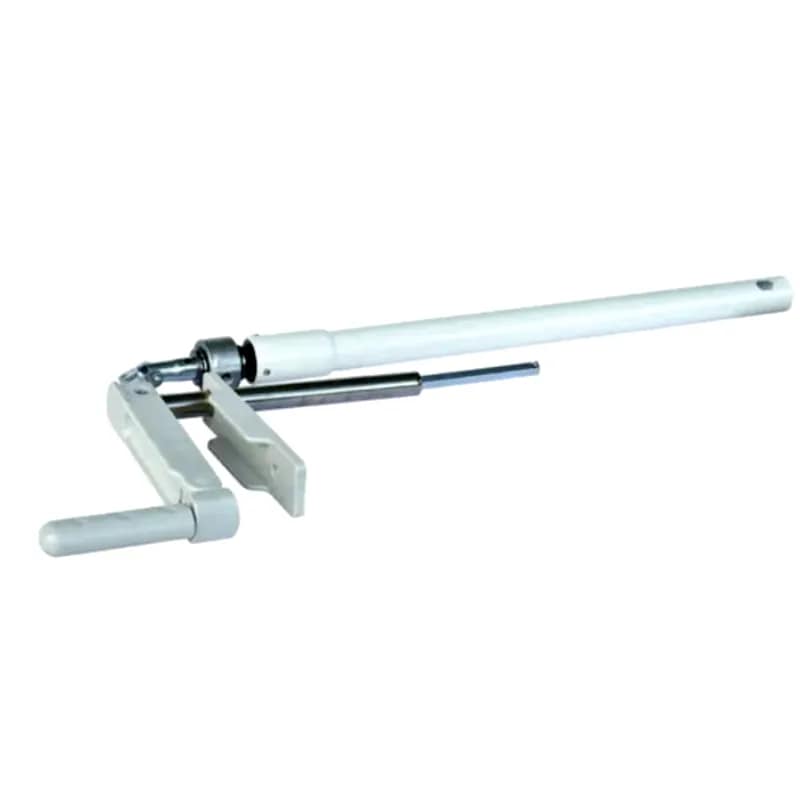
Our warranty covers the mechanism and structure for one year. Beyond that, we maintain inventory of high-wear items: TPR casters in 3-inch, 4-inch, and 5-inch sizes, full-wrapped and double-face configurations; ABS and iron crank handles with in-place protection limiters; motor fixing seats; guardrail fixed plates; bed panel connectors; and transmission arms. We ship spare parts by air courier for urgent needs and by sea for planned maintenance orders. For customers who operate large fleets of beds, we recommend holding a small consignment of fast-moving parts at their central warehouse, which we can help identify based on historical failure patterns.

The bed controller and actuator motors are the components most likely to generate a support request. Common failure modes include a disconnected hand pendant cable, a limit switch out of adjustment, or a motor overloaded because the bed was moved with the brakes engaged. We provide a troubleshooting guide and, if the issue cannot be resolved remotely, ship a replacement within the warranty period. The goal is to minimize bed downtime because an out-of-service ICU bed has a direct clinical consequence.
Sourcing five function electric hospital beds from an exporter demands attention to far more than the headline specification sheet. The steel grade under the powder coat, the tolerance of the stamped bed panel hinges, the noise signature of the motor at full load, and the availability of a replacement caster three years after installation are all part of the same decision. We have been manufacturing hospital beds and bed accessories since 2006, and the most successful long-term partnerships we see are those where the buyer treats the exporter as an engineering partner, not just a shipping address.
Share your bed specifications, target quantity, and project timeline with us at [email protected] or call +8613528198959. We will provide a detailed quotation that includes the bed, selected accessories, packing, shipping, and a spare parts recommendation so you can make your buying decision with full clarity.
What Hospital Procurement Teams Frequently Ask
What is the minimum order quantity for a five function electric bed?
The standard minimum order quantity is 50 units per model. This volume keeps tooling amortization and per-unit freight costs at a practical level. That said, we have accommodated smaller trial orders for distributors opening a new market by combining multiple bed types into one container. The best approach is to outline your first-year estimated volume rather than fixating on the initial shipment; we can then plan a phased delivery schedule.
Are the beds certified for import into Europe or North America?
Our electric five function bed uses motors and control systems that meet CE electrical safety requirements. We can supply the Declaration of Conformity, test reports for EMC and LVD, and material traceability documentation. For FDA-regulated markets, we have worked with third-party 510(k) consultants on behalf of our distributor partners. The certification path depends on the specific bed configuration and the importing country’s classification, so we recommend discussing regulatory requirements early in the sourcing process.
How do you handle the risk of shipping damage?
We pack each bed in a fumigated wooden crate with internal bracing, and the crate is lined with moisture barrier film for sea freight. The headboard, footboard, and side rails are wrapped separately to prevent surface abrasion. In the unlikely event of transit damage, we ask for photographic documentation within three working days of container arrival, and we cover replacement of defective parts under our shipping insurance. The response time depends on whether a replacement part can be drawn from local stock or shipped from factory, but we prioritize our customers who have ongoing projects.
What is involved in the installation of a five function bed?
The beds arrive partially disassembled to minimize shipping volume. Assembly requires assembling the bed frame sections, attaching the motor actuators, connecting the control box and hand pendant, and mounting the head/foot boards and side rails. We supply an illustrated assembly manual, and a video walkthrough is available. The process typically takes 20–30 minutes per bed for a technician with basic mechanical skills. For large projects, we can arrange supervised assembly and commissioning. If your project will involve biomedical technicians who need to understand the bed’s wiring and limit switch logic, share your requirements with us and we will include training materials in the documentation package.
If you’re interested, check out these related articles:
Essential Materials for Quality Medical Bed Parts Manufacturing
Essential Safety Features for Adjustable Medical Beds
Understanding Lead Times for Hospital Bed Parts Manufacturing
Can Adjustable Hospital Beds Be Customized for Homecare Needs
What is an Adjustable Hospital Bed and How Does It Work: A Comprehensive Guide